A buyers agent in Sydney is a licensed professional who works exclusively for you, the buyer, to find, evaluate, negotiate, and secure property on your behalf. They provide expert market knowledge, off-market access, and skilled negotiation to help you avoid overpaying and secure the right property faster.
If you're searching for property in Sydney, you're facing one of Australia's most competitive and expensive markets. The median house price is forecast to reach $1.92 million by the end of 2026, making every purchasing decision critical.
Whether you're a first-home buyer overwhelmed by auctions or an investor chasing high-yield opportunities, a buyers agent in Sydney can give you the edge you need. Buyers Agency Australia specialises in helping buyers secure properties through strategic search, off-market access, and expert negotiation.
What Is a Buyers Agent and What Do They Actually Do
A buyers agent, also known as a buyers advocate, is a licensed real estate professional who represents the buyer's interests throughout the property purchase process.
Unlike selling agents who work for the vendor, a buyers agent works exclusively for you. They search for properties that match your criteria, conduct due diligence, negotiate the purchase price, and guide you from initial search through to settlement.
Core Responsibilities of a Buyers Agent

Buyers agents handle the heavy lifting so you don't have to.
They research the market, shortlist suitable properties, attend inspections on your behalf, and provide honest assessments of value. They also prepare negotiation strategies, bid at auctions, and liaise with selling agents and solicitors.
For time-poor professionals, this means you can continue working while your buyers agent does the legwork. For first-home buyers, it means you have an experienced advocate who can cut through the noise and help you make informed decisions.
Difference Between a Buyers Agent and a Selling Agent
Selling agents are paid by the vendor to achieve the highest possible sale price.
Buyers agents are paid by you to secure the property at the best possible price and terms. This fundamental difference means your buyers agent has no conflict of interest and no incentive to push you into a property that doesn't suit your goals.
According to the Real Estate Buyers Agents Association of Australia (REBAA), all buyers agents must hold the appropriate real estate licence for the state they operate in and should carry professional indemnity insurance.
Licensing and Professional Standards
In New South Wales, buyers agents must hold a full real estate licence or be registered under a licensed agency.
REBAA members are required to meet strict licensing, insurance, and ethical standards. This ensures you're working with a qualified professional who understands the legal and practical aspects of property transactions.
Buyers Agency Australia operates with full licensing across all states and maintains membership with REBAA, ensuring you receive professional, accountable service.
Why the Sydney Property Market Is Challenging for Buyers Right Now
Sydney's property market is fast-moving, expensive, and fiercely competitive.
According to recent Domain forecasts, Sydney house prices are expected to rise 7% in 2026, pushing the median to $1.92 million. Unit prices are also climbing, with increased demand for affordable housing driving competition across all price brackets.
High Prices and Limited Supply
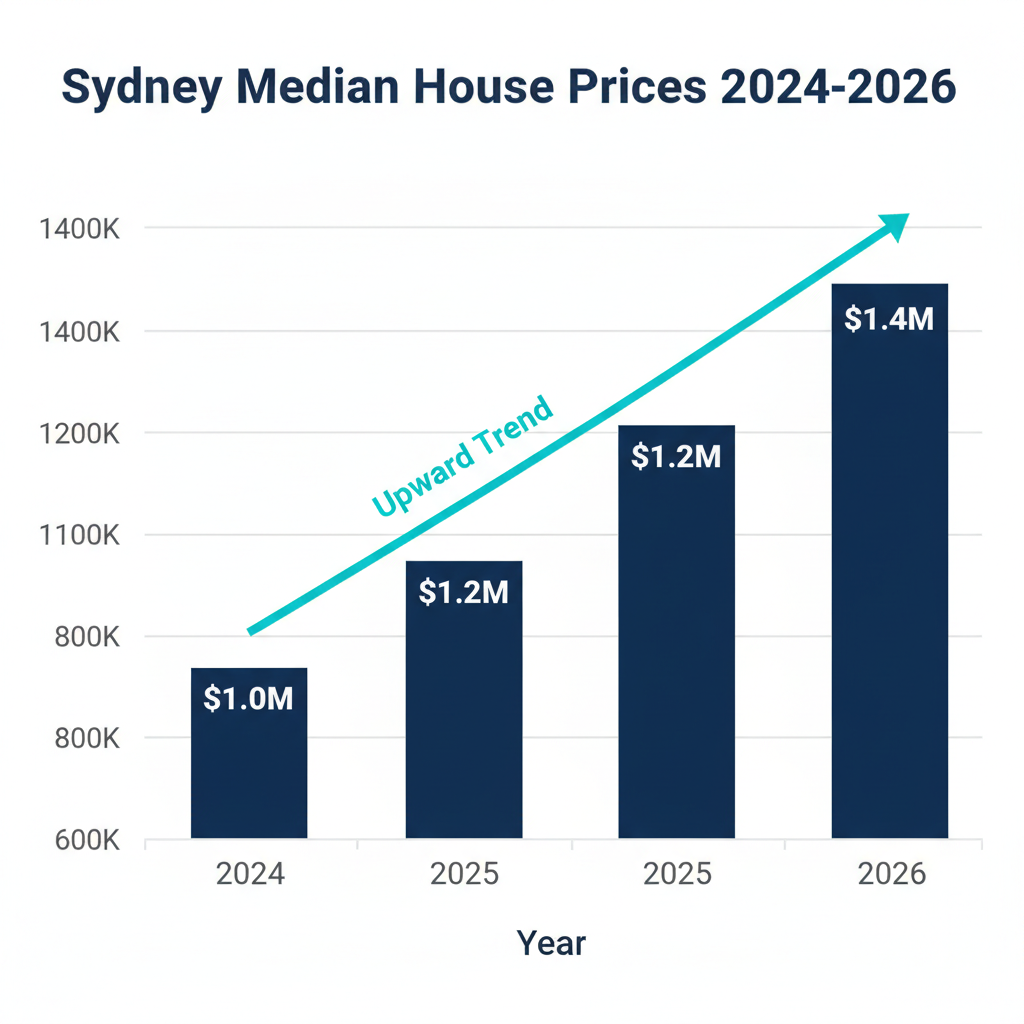
Sydney remains Australia's most expensive capital city.
With over 650,000 new residents expected by 2034, demand continues to outpace supply. Vacancy rates are at record lows, and rental yields are rising, making Sydney attractive for investors but difficult for buyers trying to enter the market.
First-home buyers now face a $1.5 million price cap under the expanded First Home Guarantee scheme, but borrowing capacity remains a significant constraint. Many buyers find themselves priced out of their preferred suburbs or forced to compromise on location and property type.
Auction Fatigue and Emotional Decision-Making
Auctions in Sydney can be stressful and emotionally charged.
Buyers often overpay due to auction pressure, lack of market knowledge, or fear of missing out. Without a clear strategy and objective advice, it's easy to get caught up in the moment and make decisions you'll regret.
A buyers agent removes the emotion from the process. They set a maximum bid based on market data, not feelings, and walk away if the price exceeds value.
Off-Market Properties and Hidden Opportunities
Many of Sydney's best properties never reach the open market.
Selling agents often prefer to sell off-market to avoid marketing costs and achieve a quick, discreet transaction. According to industry sources, up to 70% of properties purchased by buyers agents are secured off-market, giving clients access to opportunities most buyers never see.
Without a buyers agent, you're limited to publicly advertised listings, which means you're competing with dozens of other buyers in the same pool.
How a Buyers Agent Helps You Buy Property in Sydney
A buyers agent in Sydney provides end-to-end support, from defining your property criteria to settlement.
They save you time, reduce stress, and help you avoid costly mistakes. Here's how they do it.
Property Search and Shortlisting
Your buyers agent starts by understanding your goals, budget, and preferences.
They then conduct a comprehensive search across multiple sources, including off-market databases, agent networks, and public listings. They shortlist properties that match your criteria and present you with only the most suitable options.
This targeted approach saves you hours of scrolling through property portals and attending inspections that don't meet your needs.
Market Analysis and Due Diligence
Before recommending a property, your buyers agent conducts thorough due diligence.
This includes analysing recent sales data, assessing market value, reviewing building and pest reports, checking zoning regulations, and identifying any potential risks or red flags.
They provide you with an objective, data-driven assessment so you can make informed decisions with confidence.
Negotiation and Auction Bidding
Negotiation is where a buyers agent delivers real value.
They understand market dynamics, know how to read selling agents, and have the experience to negotiate favourable terms. Whether it's a private sale or auction, they represent your interests and aim to secure the property at the best possible price.
At auctions, they bid strategically on your behalf, keeping emotions in check and sticking to your budget. This often results in savings that exceed the buyers agent fee.
Settlement and Post-Purchase Support
Once your offer is accepted, your buyers agent coordinates with solicitors, conveyancers, and other parties to ensure a smooth settlement.
They can also connect you with trusted tradespeople, property managers, and other services to help you transition into your new property seamlessly.
Key Benefits of Using a Buyers Agent in Sydney
Hiring a buyers agent offers tangible advantages that go beyond convenience.
Here are the most significant benefits.
Access to Off-Market Properties

Off-market properties give you a competitive edge.
These listings are shared privately between agents and their networks, often before they're advertised publicly. Buyers agents have established relationships with selling agents across Sydney, giving them early or exclusive access to these opportunities.
This means less competition, better negotiating power, and the chance to secure a property others never knew existed.
Expert Market Knowledge and Suburb Insights
Buyers agents specialise in specific regions and have deep knowledge of local market trends, infrastructure projects, and suburb growth potential.
They can tell you which streets are most sought-after, which suburbs offer the best capital growth, and where investors are getting the highest rental yields. This insight is invaluable for making strategic, long-term decisions.
Time Savings and Reduced Stress
Searching for property is time-consuming and stressful.
A buyers agent handles the entire process, from research and inspections to negotiations and paperwork. This frees up your time and reduces the emotional burden of navigating the market alone.
For busy professionals and interstate buyers, this service is particularly valuable.
Objective Advice and Emotional Detachment
Property purchases are emotional.
A buyers agent provides objective, unemotional advice based on data and experience. They help you avoid falling in love with the wrong property and ensure you stay focused on your goals and budget.
Better Negotiation Outcomes
Skilled negotiation can save you tens of thousands of dollars.
Buyers agents know how to negotiate effectively with selling agents, understand market value, and identify when a property is overpriced. They also negotiate contract terms beyond price, such as settlement dates, conditions, and inclusions.
On average, clients working with buyers agents in Sydney report savings of $40,000 to $120,000 per purchase, according to industry data.
How Buyers Agency Australia Helps Sydney Buyers Secure the Right Property

Buyers Agency Australia is a national buyers advocacy firm specialising in data-driven investment strategies and end-to-end purchasing solutions.
Led by Dragan Dimovski, who brings over 20 years of property experience. His team focuses on helping buyers secure properties that align with their long-term wealth creation goals.
Transparent, Fixed-Fee Pricing Model
Unlike many buyers agents who charge a percentage of the purchase price, Buyers Agency Australia operates on a transparent, fixed-fee model.
This aligns their interests with yours, ensuring they focus on securing the best property at the best price, not inflating the purchase price to increase their commission.
Access to Off-Market Opportunities Across Sydney
The team has cultivated strong relationships with selling agents across all Sydney regions, from the Eastern Suburbs and Lower North Shore to Western Sydney and the Inner West.
This network gives clients early access to off-market listings and pre-market opportunities that never reach public portals.
10-Year Portfolio Modeling for Investors
For property investors, Buyers Agency Australia provides 10-year portfolio modeling to ensure every purchase contributes to long-term wealth creation.
They assess capital growth potential, rental yield, tax benefits, and equity release strategies to help you build a high-performing portfolio over time.
End-to-End Support from Search to Settlement
Whether you're a first-home buyer or a seasoned investor, the team provides personalised, end-to-end support.
From initial strategy sessions to auction bidding and settlement coordination, you'll have an experienced advocate by your side every step of the way. You can book a free strategy session to discuss your goals and see how they can help.
What to Look for When Choosing a Buyers Agent in Sydney
Not all buyers agents are created equal.
Here's what to consider when selecting the right professional for your needs.
Licensing and Professional Memberships
Ensure your buyers agent holds a full real estate licence for New South Wales.
Membership with REBAA is a strong indicator of professionalism and commitment to industry standards. REBAA members are required to hold appropriate licensing, professional indemnity insurance, and adhere to a strict code of conduct.
Experience and Track Record
Look for a buyers agent with a proven track record in the Sydney market.
Ask about the number of properties they've purchased, the types of properties they specialise in, and the results they've achieved for clients. Testimonials and case studies are a good way to gauge their expertise.
Fee Structure and Transparency
Understand the fee structure upfront.
Some buyers agents charge a percentage of the purchase price, while others use a fixed-fee model. Fixed fees are generally preferable as they eliminate conflicts of interest and align the agent's incentives with your goal of securing the best deal.
Specialisation and Local Knowledge
Choose a buyers agent who specialises in the suburbs and property types you're interested in.
Local knowledge is critical for assessing value, identifying growth potential, and negotiating effectively. A buyers agent who operates across multiple cities may not have the same depth of insight as one who focuses exclusively on Sydney.
Communication and Compatibility
You'll be working closely with your buyers agent, so it's important to choose someone you trust and feel comfortable with.
Look for clear communication, responsiveness, and a genuine interest in understanding your goals. A good buyers agent will listen, ask questions, and tailor their approach to your needs.
Frequently Asked Questions About Buyers Agents in Sydney
What does a buyers agent do?
A buyers agent searches, evaluates, negotiates, and purchases property on your behalf, providing expert advice and representation throughout the process.
How much does a buyers agent cost in Sydney?
Fees vary but typically range from $10,000 to $30,000 fixed fee, or 1-3% of the purchase price for percentage-based models.
Are buyers agent fees tax deductible?
For investment properties, buyers agent fees may be tax deductible as a cost of acquiring the asset. Consult your accountant for advice.
Can a buyers agent help me find off-market properties?
Yes, buyers agents have access to off-market listings through their networks and relationships with selling agents, giving you exclusive opportunities.
Do I need a buyers agent if I'm a first-home buyer?
First-home buyers benefit greatly from buyers agents, who provide market knowledge, negotiation skills, and objective advice to help you avoid costly mistakes.
Take the Next Step with Buyers Agency Australia
Buying property in Sydney doesn't have to be stressful or overwhelming.
With the right buyers agent by your side, you can navigate the market with confidence, secure the right property, and avoid overpaying. Buyers Agency Australia has helped hundreds of clients across Sydney achieve their property goals through strategic search, expert negotiation, and transparent service.
Whether you're a first-home buyer, investor, or time-poor professional, the team can help you find and secure property that aligns with your goals. Contact Buyers Agency Australia today or book a free strategy session to get started.
 General
Discover how a buyers agent in Sydney helps you find, negotiate, and secure the right property with less...
Property investment in Australia remains one of the most reliable paths to long-term wealth creation, offering investors the dual benefits of rental income and capital growth while providing tax advantages unavailable in many other asset classes.
If you're searching for a proven way to build wealth that doesn't rely on the stock market or a single income stream, you're in the right place.
Property investment has created more wealth for everyday Australians than almost any other investment vehicle. With median dwelling values rising 9.4% annually through early 2026 and rental yields staying strong due to chronic housing shortages, the fundamentals remain solid. But here's the thing: successful property investment isn't about chasing hot suburbs or following social media hype. It's about strategy, research, and understanding the market dynamics that truly drive returns.
This guide walks you through everything you need to know about property investment in Australia, from the first-time buyer taking the plunge to the intermediate investor looking to scale a portfolio. We'll cover the critical factors like location selection, rental yield versus capital growth, finance structures, and how to avoid the costly mistakes that derail so many beginners. You'll also get current market insights for 2026, including which cities are outperforming and where Buyers Agency Australia sees the best opportunities for long-term investors.
Why Australians Choose Property Investment Over Other Assets
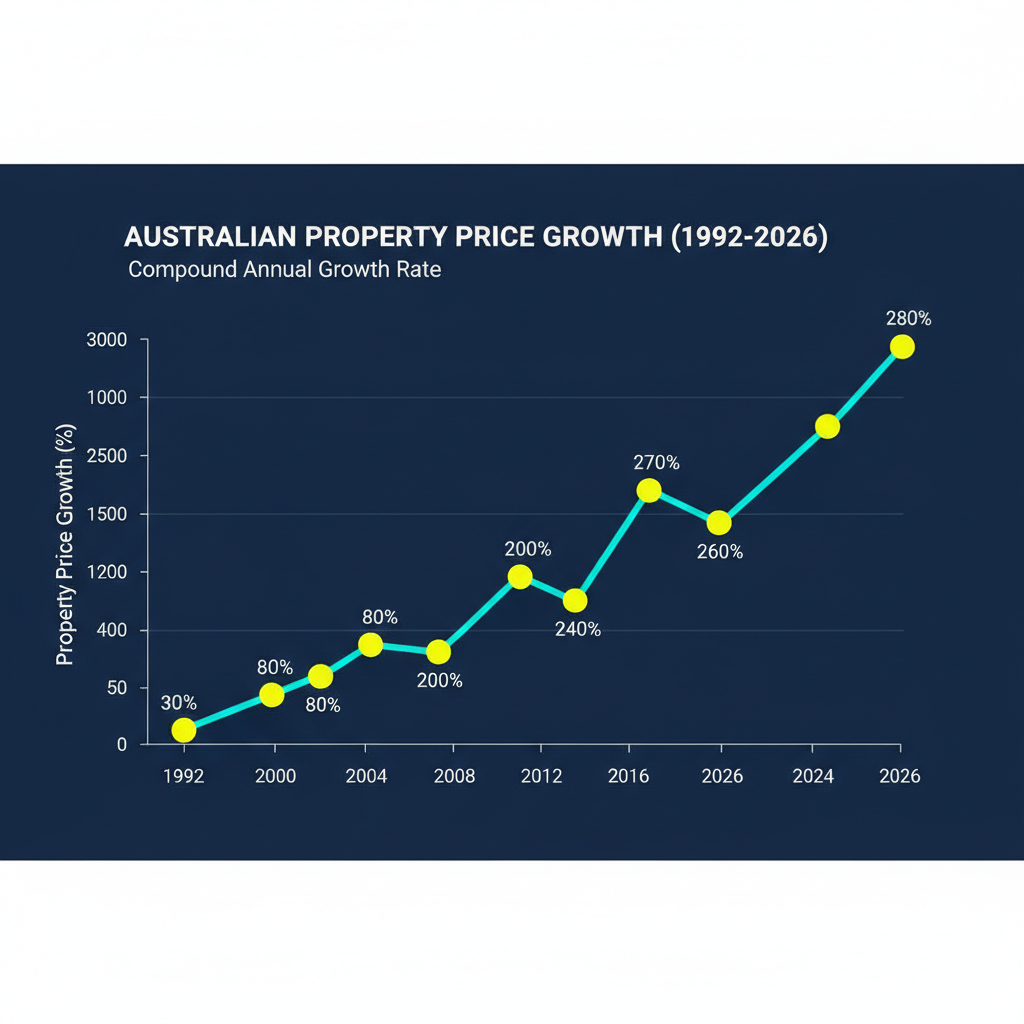
The Wealth-Building Power of Bricks and Mortar
Australians have a deep cultural affinity with property investment, and it's not hard to see why. Over the past three decades, national dwelling prices have increased at an average annual rate of 5.4%, according to CoreLogic data through 2026.
That's significantly higher than inflation, which has averaged around 2-3% over the same period. What makes property especially attractive is that it's a tangible asset. Unlike shares or cryptocurrency, you can see it, touch it, and rent it out for monthly income.
Property also allows investors to use something called positive leverage. This means borrowing money to magnify your returns. For example, if you put down a 20% deposit on a $600,000 property and it grows 6% in value, you've gained $36,000 on your $120,000 investment. That's a 30% return on your actual cash, not just the property value.
Tax Benefits That Reduce Your Investment Costs
Australia's tax system offers several incentives for property investors. Negative gearing allows you to deduct rental losses against your taxable income, which can be particularly beneficial for high-income earners.
Depreciation on the building structure and fixtures also provides non-cash deductions that improve cash flow. For example, a new or recently renovated property can deliver $10,000 to $20,000 in depreciation deductions annually for the first few years.
Capital gains tax discounts mean if you hold an investment property for more than 12 months, you only pay tax on 50% of the capital gain when you sell. These tax advantages, when used strategically, can significantly improve your after-tax returns.
Rental Demand Continues to Strengthen Across Australia
Australia's rental market remains undersupplied heading into 2026. National vacancy rates sit at just 1.4%, well below the long-term average of 2.5-3%.
This tight supply is driving rent growth. National rents increased 5.2% annually through late 2025, with regional areas seeing even stronger growth at 6.2%. Rising rents translate directly to higher yields for investors and stronger cash flow.
Population growth continues to fuel demand. Australia's population is forecast to exceed 30 million by 2030, meaning close to 3 million more people will need somewhere to live over the next few years. Net overseas migration remains strong despite government efforts to moderate temporary arrivals, and this ongoing demand underpins long-term investment fundamentals.
How to Get Started with Property Investment in Australia
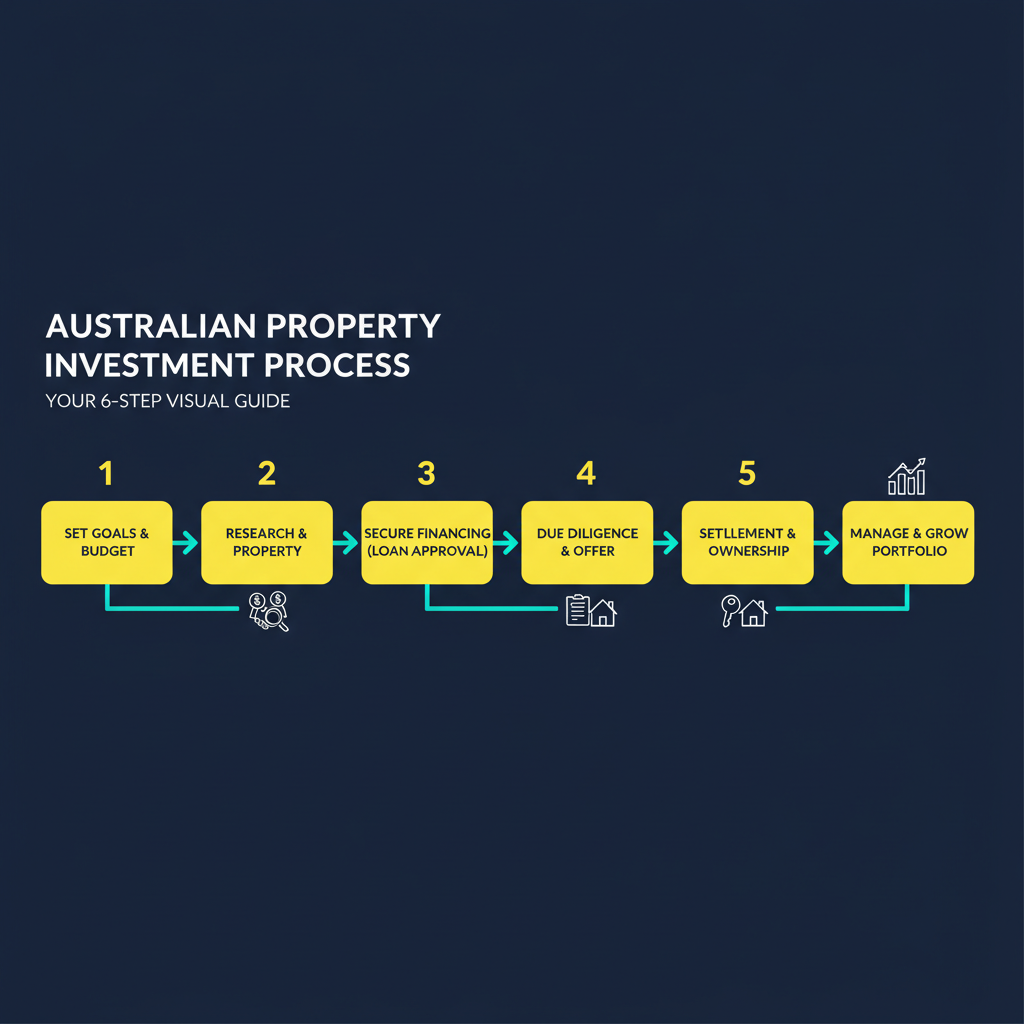
Step 1: Clarify Your Investment Goals and Timeline
Before you start searching for properties, you need to be crystal clear about what you're trying to achieve. Are you looking for immediate cash flow through high rental yields? Or are you focused on long-term capital growth to build equity over 10-20 years?
Your investment goal will determine everything else: where you buy, what type of property you target, and how you structure your finance. For example, investors focused on cash flow often target regional markets with yields above 6%, while those prioritising capital growth typically look at established suburbs in capital cities with strong infrastructure and owner-occupier appeal.
You also need to think about your timeline. Property is not a short-term play. You should be prepared to hold any investment for at least 7-10 years to ride out market cycles and capture meaningful growth.
Step 2: Understand Your Borrowing Capacity and Deposit Requirements
Most Australian investors in 2026 need a deposit of at least 10-20% of the property value to secure finance. A 20% deposit avoids Lenders Mortgage Insurance (LMI), which can add $10,000 to $30,000+ to your upfront costs.
Your borrowing capacity depends on your income, existing debts, living expenses, and the lender's assessment criteria. With APRA's new debt-to-income (DTI) limits capping high-DTI lending at 20% of new loans, borrowing capacity is more restricted than in previous years, particularly for investors.
Get pre-approval before you start shopping. This tells you exactly what you can afford and shows sellers you're a serious buyer. Pre-approval also helps you move quickly when the right property comes up, which matters in competitive markets.
If you already own a home, you may be able to use equity from that property as a deposit for your investment. This is one of the fastest ways to scale a portfolio without needing to save additional cash.
Step 3: Research Locations Based on Fundamentals, Not Hype
Location is the single most important factor in property investment success. The right location can deliver strong capital growth and consistent rental demand for decades. The wrong location can leave you with vacancies, stagnant values, and regret.
Focus on areas with strong economic fundamentals. Look for job growth, infrastructure investment, population increases, and limited new housing supply. These are the factors that drive both capital growth and rental demand.
Avoid chasing "hot suburbs" based on recent price growth alone. By the time a suburb hits the headlines, the easy gains are often behind you. Instead, look for suburbs that are undergoing transformation: gentrifying areas with improving demographics, new transport links, or hospital/university precincts that attract stable tenant demand.
In 2026, Brisbane, Perth, and Adelaide continue to show strong growth momentum due to relative affordability, interstate migration, and economic strength. Sydney and Melbourne remain patchy, with pockets of strong performance in supply-constrained areas but slower growth overall.
Step 4: Choose the Right Property Type for Your Strategy
Once you've identified a target location, you need to decide what type of property to buy. Houses typically offer stronger long-term capital growth than units because of the land component, which appreciates over time.
Units and apartments can deliver higher rental yields and lower entry prices, making them attractive for cash-flow-focused investors or those with limited capital. However, they're more exposed to oversupply risk and typically experience weaker capital growth over the long term.
Townhouses and duplexes can offer a middle ground: better yields than houses, with more land than units. For first-time investors, a well-located house in an established suburb with good transport links and owner-occupier appeal is often the safest bet.
Avoid properties that require major renovations unless you have experience and a clear budget. Beginners should look for properties that are "rent-ready" with minimal work required.
Step 5: Conduct Thorough Due Diligence Before You Commit
Due diligence is where many first-time investors cut corners, and it costs them dearly. Never skip building and pest inspections. Hidden structural issues or termite damage can cost tens of thousands to fix and destroy your returns.
Review the contract carefully with a conveyancer or solicitor. Look for special conditions, settlement deadlines, zoning restrictions, and any clauses that could create unexpected costs or obligations.
Research recent sales in the area to confirm you're not overpaying. Check vacancy rates, average rental yields, and days on market for rental properties to ensure tenant demand is strong. If you're buying a unit, review the strata report for sinking fund balances, upcoming special levies, and building defects.
This is where working with an experienced buyers agent can save you from costly mistakes. They know what red flags to look for and have access to off-market deals and suburb-level data that most investors never see.
Key Factors That Drive Property Investment Success
Location: Why It Matters More Than Any Other Factor
You've probably heard the saying "location, location, location." It's a cliché because it's true. A well-located property in a growth corridor will outperform a cheaper property in a declining area every single time.
What makes a location great for investment? Start with proximity to employment hubs, transport infrastructure, quality schools, and lifestyle amenities. Properties within 20 minutes of CBDs or major employment centres typically see stronger demand from both tenants and buyers.
Look for areas with constrained supply. Inner and middle-ring suburbs of capital cities often have limited new development opportunities due to zoning, topography, or heritage overlays. This supply constraint supports long-term value growth.
Population growth is another critical driver. Areas attracting young families, professionals, and migrants tend to see consistent rental demand and price appreciation. Check ABS migration data and local council population forecasts to identify growth corridors.
Rental Yield: Calculating Your Return on Investment
Rental yield is the annual rent you receive expressed as a percentage of the property's value. It's calculated as: (Annual rent ÷ Property value) × 100.
For example, a $600,000 property renting for $550 per week generates $28,600 in annual rent, which is a gross yield of 4.77%. A yield of 4% or higher is generally considered solid in Australian capital cities, while regional areas can deliver 6-8%+.
Gross yield doesn't tell the full story. You need to factor in holding costs like council rates, strata fees, property management, insurance, maintenance, and interest on your loan. Net yield (after expenses) gives you a truer picture of cash flow.
High-yield properties provide better cash flow and reduce the amount you need to contribute out-of-pocket each month. This is particularly important for investors building multiple-property portfolios, where serviceability and cash flow management become critical.
Capital Growth: Building Equity Over the Long Term
Capital growth is the increase in your property's value over time. It's the primary driver of wealth creation in Australian property investment. Over the past 30 years, national median dwelling values have grown at 6.8% annually, according to CoreLogic data.
Compounding is where the magic happens. A property purchased for $600,000 that grows at 6% per year will be worth over $1 million in 10 years and close to $2 million in 20 years. That equity can be used to purchase additional properties, fund renovations, or provide financial security in retirement.
Capital growth is driven by location fundamentals, not speculation. Focus on areas with strong owner-occupier demand, gentrifying suburbs, and supply constraints. These are the locations where locals are willing to pay a premium to live, which drives long-term value appreciation.
Don't expect linear growth. Property moves in cycles. You'll experience flat periods and even short-term declines. That's normal. The key is to hold quality assets through the cycles and let time work in your favour.
Finance Structure: Interest-Only vs Principal and Interest
How you structure your investment loan has a major impact on cash flow and tax efficiency. Most investors choose interest-only loans for investment properties because it minimises monthly repayments and maximises tax deductions.
With interest-only, you're not reducing the loan balance, but you're keeping more cash in your pocket each month. This improves serviceability and makes it easier to qualify for additional loans when you're ready to expand your portfolio.
Principal and interest loans reduce your debt over time, which builds equity faster and provides a safety buffer if property values fall. However, repayments are higher, which can strain cash flow, particularly if you own multiple properties.
Consider using an offset account linked to your investment loan. Any funds you park in the offset reduce the interest you pay, without locking up your cash. This gives you flexibility to access funds quickly if needed, while still reducing your interest costs.
Property Management: Why DIY Often Costs More Than It Saves
Many first-time investors think they'll save money by managing their property themselves. In reality, DIY property management usually costs more than it saves due to longer vacancy periods, lower rents, and compliance mistakes.
Professional property managers know the local market. They can price your property correctly, attract quality tenants quickly, and handle maintenance issues efficiently. They also understand tenancy laws and keep you compliant with state regulations.
Property management fees typically range from 5-8% of weekly rent plus leasing fees. For a property renting at $500 per week, you're paying $25-$40 per week for professional management. That's a small price for peace of mind and maximised returns.
Your time is valuable. Unless property management is your profession, your time is almost certainly better spent on your career, business, or finding your next investment opportunity.
Property Investment Strategies for Australian Investors
Buy and Hold: The Time-Tested Wealth Builder
Buy and hold is the most common and reliable property investment strategy in Australia. The concept is simple: purchase a well-located property, rent it out, hold it for the long term, and let capital growth and rental income do the heavy lifting.
This strategy works because it captures the full benefit of compounding growth over multiple property cycles. Properties held for 15-20+ years can increase in value several times over, while rents rise with inflation and income growth.
The key is buying the right property in the right location from the start. Focus on areas with strong fundamentals, owner-occupier appeal, and limited supply. These properties will weather market downturns better and deliver more consistent growth over time.
Patience is essential. You won't get rich overnight with buy and hold. But if you can hold quality assets for decades, you'll be rewarded with substantial equity and potentially life-changing wealth.
High-Yield Strategy: Targeting Positive Cash Flow
A high-yield strategy focuses on generating strong rental income relative to property value. Investors using this approach typically target regional areas, mining towns, or lower-priced suburbs where yields of 6-8%+ are achievable.
Positive cash flow (where rent exceeds all holding costs) provides a financial buffer and makes it easier to expand your portfolio without straining serviceability. It's particularly attractive for retirees or investors looking to replace active income with passive rental income.
The trade-off is typically weaker capital growth. High-yield areas often have lower price growth because they're less desirable to owner-occupiers or experience economic volatility. This means you're trading long-term wealth accumulation for immediate cash flow.
In 2026, regional Queensland, Western Australia, and parts of South Australia continue to offer strong yields due to mining activity, agricultural strength, and relative affordability. Townsville, Geraldton, and Port Lincoln are examples of markets delivering yields above 6%.
Value-Add Strategy: Renovations and Subdivisions
Value-add strategies involve buying properties below market value and increasing their worth through renovations, subdivisions, or rezoning. This approach can create instant equity and significantly boost returns.
Renovations that add bedrooms, modernise kitchens and bathrooms, or improve street appeal can increase property values by 10-30% or more. Subdividing a large block into two or more lots can unlock even greater value, particularly in high-demand locations.
This strategy requires expertise, capital, and time. You need to accurately estimate renovation costs, understand council approval processes, and manage contractors effectively. Beginners often underestimate costs and timelines, turning potential profits into losses.
If you're new to property investment, it's usually smarter to start with a rent-ready property and build experience before attempting value-add projects. Once you have a solid foundation, strategic renovations and subdivisions can be powerful wealth accelerators.
How Buyers Agency Australia Helps Investors Build Long-Term Wealth
Data-Driven Research and Suburb Selection
Dragan Dimovski and the team at Buyers Agency Australia have over 20 years of experience identifying high-performing investment opportunities across every major Australian capital city.
They don't rely on gut feel or guesswork. Every recommendation is backed by rigorous data analysis, including vacancy rates, rental yields, historical capital growth, demographic trends, infrastructure pipelines, and supply constraints.
This research-driven approach means you're investing based on fundamentals that drive long-term returns, not short-term hype or speculation. It's the difference between buying a property and buying a strategic asset.
Access to Off-Market Opportunities
Many of the best investment properties never hit the public market. Sellers prefer the privacy and speed of off-market sales, and buyers agents with strong networks can access these opportunities before they're advertised.
Buyers Agency Australia actively identifies off-market deals across Brisbane, Sydney, Melbourne, Perth, and Adelaide. However, they reject over 90% of off-market opportunities because they don't meet their strict investment criteria.
Just because a property is off-market doesn't mean it's a good deal. The team only presents opportunities that stack up on fundamentals, offer genuine value, and align with your specific investment goals and risk profile.
Transparent Fixed-Fee Model with No Commissions
Unlike selling agents who work for vendors and are incentivised to maximise price, Buyers Agency Australia works exclusively for buyers. They charge a transparent fixed fee, not a commission based on purchase price.
This fee structure eliminates conflicts of interest and ensures the advice you receive is genuinely in your best interests. The goal is to help you buy the right property at the best possible price, not to inflate the sale price.
Clients typically save far more through expert negotiation, avoiding overpriced properties, and identifying value opportunities than they pay in fees. It's an investment in expertise that pays for itself many times over.
End-to-End Support from Search to Settlement
Buying an investment property involves dozens of steps, from finance pre-approval to contract reviews, building inspections, negotiations, and settlement. For time-poor professionals and first-time investors, the process can be overwhelming.
Buyers Agency Australia provides end-to-end support throughout the entire journey. They handle property search, due diligence, negotiations, and coordinate with conveyancers, building inspectors, and lenders on your behalf.
This hands-off approach means you get expert guidance without needing to become a property expert yourself. You can focus on your career and family while the team handles the heavy lifting.
Ready to start building your property portfolio? Book a free discovery call with Buyers Agency Australia today.
Common Mistakes First-Time Investors Must Avoid
Buying with Your Heart Instead of Your Head
The biggest mistake new investors make is buying emotionally rather than analytically. You're not looking for a home you'd want to live in. You're looking for an asset that delivers strong returns based on objective fundamentals.
This means ignoring personal preferences like interior design, street appeal, or whether you'd enjoy living there. What matters is whether the property will attract quality tenants, deliver solid rental yields, and appreciate in value over time.
Investors who buy emotionally often overpay for properties, choose the wrong locations, or over-capitalise on renovations that don't add value. Stay disciplined, focus on the numbers, and let logic drive your decisions.
Chasing Hot Suburbs Based on Recent Price Growth
Every property cycle, inexperienced investors pile into "hot suburbs" that have just delivered strong price growth. By the time a suburb makes headlines, the opportunity has usually passed and competition has driven prices beyond fair value.
Smart investors look for suburbs before they boom, not after. This requires understanding the fundamentals that drive growth: infrastructure investment, demographic shifts, gentrification, and supply constraints.
The crowd is usually late. When everyone is talking about a suburb, you've probably missed the best buying window. Focus on fundamentals, not hype, and you'll consistently find better value opportunities.
Neglecting Due Diligence to Save Time or Money
Skipping building inspections, pest reports, or contract reviews to save a few hundred dollars is a false economy. Hidden defects, structural issues, or unfavourable contract terms can cost tens of thousands to fix or result in financial penalties.
In fast-moving markets, investors feel pressure to act quickly. But rushing due diligence to beat other buyers is how you end up with a lemon. Always insist on thorough inspections and professional legal advice before you commit.
If you're using a buyer's agent, they'll coordinate all due diligence for you and identify red flags before you make an offer. This professional oversight can save you from catastrophic mistakes.
Overleveraging Without a Financial Buffer
Borrowing at the absolute maximum of your capacity leaves no room for error. If interest rates rise, rents fall, or you experience extended vacancies, you can quickly find yourself in mortgage stress.
Smart investors maintain financial buffers: an emergency fund to cover 6-12 months of expenses, offset accounts to reduce interest costs, and borrowing capacity held in reserve for future opportunities or unexpected costs.
Don't tie up every dollar in property deposits and renovations. Liquidity and flexibility are just as important as maximising returns. The ability to weather short-term challenges is what separates successful long-term investors from those forced to sell at the worst possible time.
Expecting Instant Results in a Long-Term Game
Property investment is not a get-rich-quick scheme. Many beginners expect rapid capital growth and panic when values stagnate for six or twelve months. But property moves in long cycles, and short-term fluctuations are normal.
Successful investors take a 10-20 year view. They understand that flat periods are part of the cycle and that compounding growth happens over decades, not months. Impatience leads to poor decisions like selling too early or over-trading between properties.
If you're not prepared to hold a property for at least 7-10 years, you're probably not ready to invest yet. Patience and discipline are the secret weapons that turn average investors into wealthy ones.
2026 Market Insights: Where to Invest in Australia
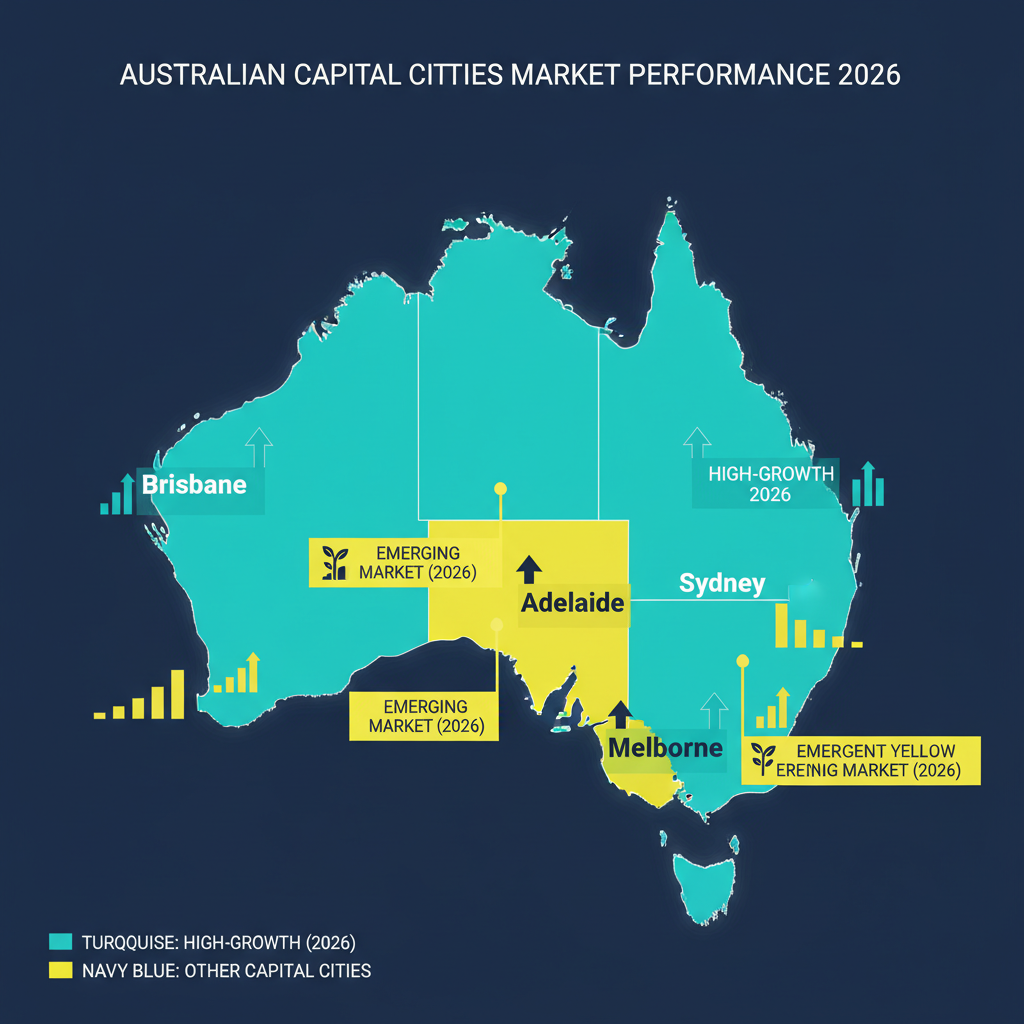
Brisbane: Sustained Growth with Affordability Advantages
Brisbane continues to attract interstate migrants from Sydney and Melbourne seeking more affordable housing and lifestyle benefits. The city recorded 1.7% monthly price growth through late 2025, driven by tight supply and strong demand.
The lead-up to the 2032 Olympics is fueling infrastructure investment across South East Queensland. New rail links, road upgrades, and urban renewal projects are transforming suburbs like Woolloongabba, Bowen Hills, and Coorparoo into higher-density precincts with strong investment appeal.
Rental yields remain solid at 4-5% for houses and 5-6% for units, while vacancy rates sit well below the long-term average. For investors seeking a balance of growth and yield, Brisbane offers compelling opportunities in both established inner suburbs and growth corridors like Springfield and Ripley Valley.
Perth: Strongest Growth Momentum but Entering Later Cycle Stage
Perth delivered the strongest capital growth of any Australian capital in 2025, with values rising over 16% annually. Median house prices now exceed $690,000, up from historic lows just a few years ago.
The boom has been driven by mining sector strength, interstate migration, and chronically low housing supply. New dwelling approvals remain well below demand, which continues to support price growth.
However, Perth is now in a later cycle stage. The easy gains are behind us, and affordability is deteriorating. Investors entering now need to be selective: focus on supply-constrained suburbs within 15km of the CBD or growth corridors linked to infrastructure like the Forrestfield Airport Link.
Areas like Wellard, Geraldton, and Port Hedland still offer yields above 5%, but investors should be cautious about markets heavily exposed to single-industry risk.
Adelaide: Steady Growth with Strong Fundamentals
Adelaide has quietly become one of Australia's most consistent performers, with values rising 10-14% annually through 2025-2026. The city offers relative affordability compared to Sydney and Melbourne while maintaining solid economic fundamentals.
Interstage migration, defence sector investment, and constrained housing supply are driving demand. Vacancy rates remain low, and rental yields of 4.5-5.5% make Adelaide attractive for investors prioritising both growth and cash flow.
Look for established suburbs within 10km of the CBD, areas near defence precincts like Edinburgh, and growth corridors in Adelaide's north and south. Adelaide's undersupply problem won't be solved quickly, which supports a multi-year growth runway.
Sydney and Melbourne: Patchy Performance Requires Selectivity
Sydney and Melbourne are experiencing slower, more uneven growth in 2026 compared to mid-sized capitals. Both cities saw slight monthly value declines through late 2025 as affordability constraints and higher price points reduced buyer activity.
However, pockets within both cities continue to perform strongly. Sydney's supply-constrained inner and middle-ring suburbs with good transport links still attract owner-occupiers willing to pay a premium. Melbourne's recovery is concentrated in areas like Coburg, Geelong, and infrastructure-linked corridors around the Metro Tunnel.
Yields in Sydney and Melbourne typically sit at 3-4% for houses, making these markets more suitable for growth-focused investors with longer timeframes rather than cash-flow seekers. Selectivity is critical: avoid oversupplied apartment precincts and focus on established suburbs with strong owner-occupier demand.
Regional Markets: Higher Yields but Greater Volatility
Regional Australia delivered 9.7% value growth in 2025, outpacing combined capital cities at 8.2%. Regional Queensland and Western Australia led the pack with growth above 12%, driven by mining activity, agricultural strength, and lifestyle migration.
Regional markets often offer yields of 6-8%+, significantly higher than capital cities. This makes them attractive for investors prioritising cash flow and portfolio diversification across geographies.
However, regional markets are typically more volatile and exposed to economic cycles. Mining towns can boom and bust based on commodity prices, while smaller regional centres may lack the employment diversity to sustain long-term growth.
If you're considering regional investment, focus on larger centres with diverse economies, strong infrastructure, and population growth. Examples include Townsville, Geelong, Newcastle, and Wollongong. Avoid small towns dependent on single industries or lacking employment depth.
Frequently Asked Questions About Property Investment in Australia
How much money do you need to start investing in property in Australia?
Most investors need $100,000 to $150,000 in savings or usable equity for a deposit and costs on a $600,000-$750,000 property.
What is a good rental yield for investment property in Australia?
A gross rental yield of 4%+ is solid in capital cities, while regional areas can deliver 6-8% or higher.
Should I buy a house or unit for investment?
Houses typically deliver stronger long-term capital growth, while units offer higher yields and lower entry costs. Choose based on your strategy.
Is negative gearing still worth it in 2026?
Yes, negative gearing remains a valuable tax strategy for high-income earners, allowing rental losses to offset taxable income and reduce tax bills.
How long should I hold an investment property?
Aim to hold investment properties for at least 7-10 years to capture meaningful capital growth and ride out market cycles.
Take the First Step Toward Financial Freedom Today
Property investment in Australia remains one of the most reliable paths to long-term wealth, but success requires strategy, research, and expert guidance.
Whether you're a first-time buyer looking to get started or an experienced investor ready to scale your portfolio, the fundamentals haven't changed: focus on location, understand your numbers, avoid emotional decisions, and take a long-term view.
The best time to invest is when you're financially prepared, properly educated, and have access to expert advice. Waiting for the "perfect" market timing often means missing years of compounding growth.
Buyers Agency Australia has helped hundreds of investors identify high-performing properties across Brisbane, Sydney, Melbourne, Perth, and Adelaide. With over 20 years of experience, a transparent fixed-fee model, and access to off-market opportunities, they remove the guesswork and stress from property investment.
Ready to start building long-term wealth through property? Book your free strategy session today and discover how Buyers Agency Australia can help you find your next investment opportunity with confidence.
 General
A complete guide to property investment in Australia for beginner to intermediate investors covering how to start, key...
Positive cash flow property in Australia is an investment where annual rental income exceeds all ownership costs including mortgage, rates, and expenses after tax deductions, creating weekly passive income instead of draining your household budget.
We’ve all been frustrated watching property prices climb while rental yields shrink. Most investors accept negative gearing as the cost of entry, tipping in $200 to $500 every month just to hold an asset.
But here’s what the data shows: properties delivering 5% to 8% yields exist right now across Brisbane, Perth, Adelaide, and regional centres. The investors finding them aren’t chasing mining towns or taking wild risks. They’re using proven strategies like co-living conversions, granny flat additions, and dual occupancy builds that turn standard homes into multi-income assets. Buyers Agency Australia helps investors nationwide source these opportunities through data-driven market analysis and 20+ years of boots-on-the-ground experience.
What Positive Cash Flow Property Actually Means
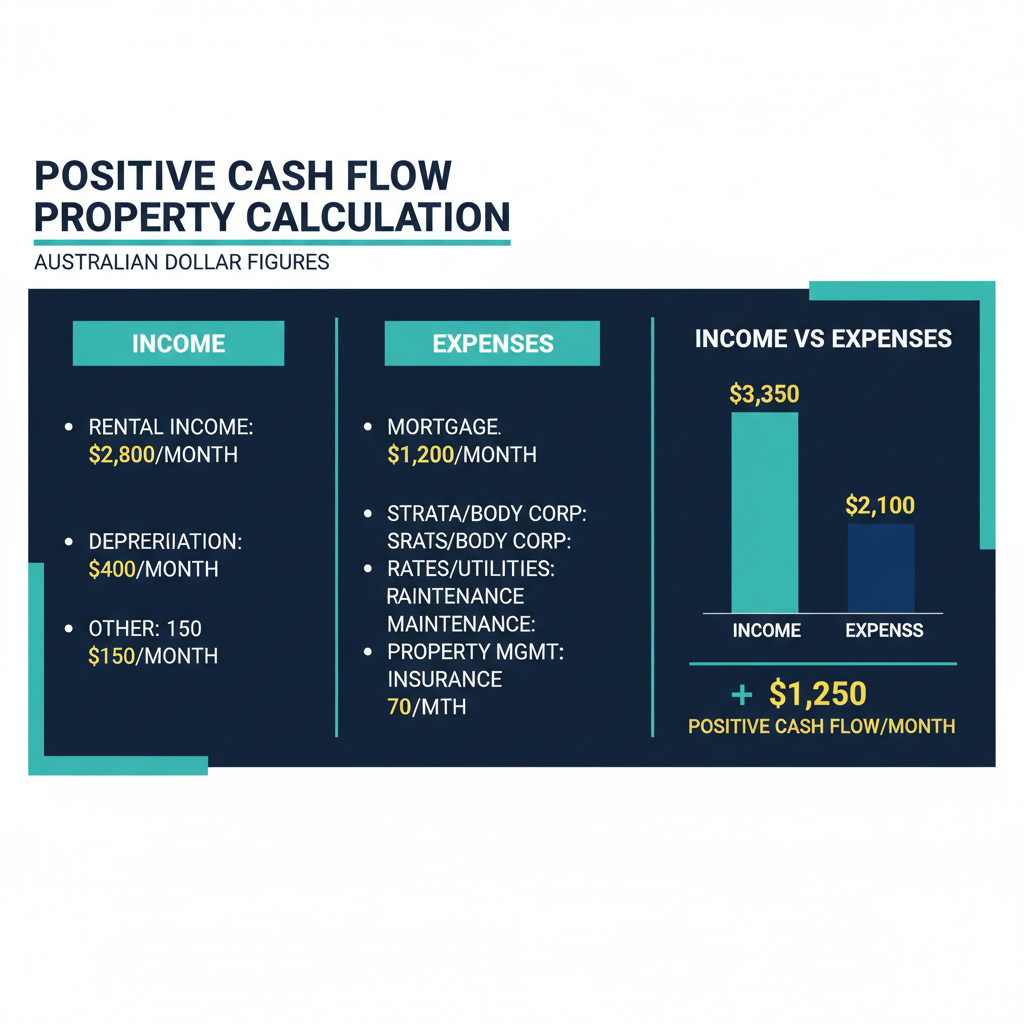
Let’s cut through the confusion. Positive cash flow means the property puts money in your pocket every week, not the other way around.
The Real Definition vs Marketing Hype
A genuine positive cash flow property generates annual rent that covers your loan interest, council rates, insurance, maintenance, property management, and still leaves surplus income. After you claim depreciation and tax deductions, you’re ahead financially.
Most properties marketed as “positive cash flow” fail this test. They might be positively geared (rental income covers the mortgage payment) but ignore the $4,000 annual rates bill, the $2,500 insurance premium, and the $1,800 agent fees.
You need to run the full numbers before signing anything.
How Interest Rates Change the Equation
In 2024, interest rates sitting at 6.5% to 7% made positive cash flow harder to achieve than the 2020-2021 period when rates hovered near 2%.
Here’s the maths: a $500,000 property renting for $600 per week ($31,200 annually) with a $400,000 loan at 6.8% generates $27,200 in annual interest alone. Add $5,000 in other costs and you’re $1,000 negative before depreciation.
The same property at 3% interest? You’d be $10,000 ahead annually.
This is why strategies that boost rental income (co-living, granny flats, dual occupancy) matter more now than they did four years ago. You can’t rely on cheap debt to make the numbers work.
Capital Growth vs Cash Flow
Property investors face a persistent trade-off. High capital growth markets (Sydney, inner Melbourne) typically deliver 2.5% to 3.5% rental yields. High cash flow markets (regional Queensland, mining towns, converted multi-tenant properties) deliver 6% to 12% yields but slower price appreciation.
The smart play? Build a portfolio that includes both.
Use cash flow properties to fund serviceability for your next purchase. Use capital growth properties to build equity you can access for renovations or conversions that boost yield.
Dragan Dimovski built a $10M+ portfolio using this exact approach – buying growth assets in Brisbane and Sydney while converting underperforming properties into high-yield co-living and dual occupancy investments.
Why Standard Investment Properties Drain Your Cash
Most Australians never buy a second investment property. They purchase one, watch it cost them $300+ monthly, and decide property investing isn’t worth the stress.
Here’s what’s actually happening.
The Hidden Costs Nobody Warns You About
Your property manager quotes “8% to 10% of rent plus GST.” That sounds reasonable until you calculate the real number.
$500 weekly rent equals $26,000 annually. At 8.8% (8% + GST), that’s $2,288 in management fees. Add council rates ($2,200), water rates ($800), insurance ($1,400), repairs and maintenance ($1,500 conservative estimate), and you’re paying $8,188 annually in non-mortgage costs.
That’s $157 per week before you’ve paid a cent of interest or principal.
If your loan is $400,000 at 6.8%, you’re paying $520 weekly in interest. Total weekly cost: $677. Your $500 rent covers 74% of expenses.
You’re tipping in $177 weekly or $9,204 annually.
Most investors underestimate these figures by 30% to 40% because they forget to include vacancy periods, letting fees when tenants change, or one-off repairs like a broken hot water system.
Vacancy Periods That Kill Returns
The Australian average vacancy rate in 2025 sits around 1.2% to 1.5% nationally according to SQM Research. That sounds tight, but vacancy rates tell you market conditions, not your individual property’s performance.
Your property will sit empty during tenant transitions. Budget for two to three weeks annually in strong markets, four to six weeks in softer markets.
Three weeks empty on a $500 weekly property costs you $1,500 in lost rent plus re-letting fees (typically one week’s rent) for a $2,000 total hit.
If you’re already negative $9,000 annually, that vacant period pushes your loss to $11,000.
Why 70% of Investors Never Buy Property Two
Banks assess your borrowing capacity on your current income minus your current expenses. When your investment property costs $9,000 annually to hold, that’s $173 weekly the bank deducts from your serviceability.
To borrow another $400,000, you need to demonstrate you can service an additional $520 weekly in interest. Your income needs to cover $693 weekly ($520 new interest + $173 existing shortfall) plus your personal living expenses.
For someone earning $100,000, that’s extremely difficult once you factor in personal loan repayments, credit cards, or family expenses.
Positive cash flow properties solve this problem because they add income to your serviceability instead of subtracting it.
7 Strategies to Create Positive Cash Flow
Let’s get practical. These strategies work in 2026 and they’re backed by current rental data.
Strategy 1: Co-Living Property Conversions
Co-living properties deliver 10% to 15% rental yields in the right locations by leasing individual rooms instead of the entire dwelling.
Here’s how it works: A standard three-bedroom house in regional Victoria rents for $350 to $400 weekly. Convert that same property into a purpose-built co-living home with three fully self-contained rooms (each with ensuite, kitchenette, and private access) and you can charge $200 to $250 per room.
Three tenants at $225 weekly equals $675 total weekly rent – a 70% income increase on the same property.
The conversion typically costs $80,000 to $120,000 depending on the existing layout. You need council approval, Class 1B certification in most states, and specialist property managers who understand multi-tenant coordination.
Buyers Agency Australia works with clients nationwide to identify properties suitable for co-living conversion, particularly in growth corridors around Melbourne, Adelaide, and Perth where demand from young professionals, students, and essential workers remains strong.
Where Co-Living Works Best
Not every property suits co-living. You need:
- Block size of 500m² minimum for adequate parking and outdoor space
- Location within 5km to 10km of universities, hospitals, or major employment centres
- Council zoning that permits rooming accommodation or multi-tenant dwellings
- Floor plan that allows three to five separate rooms without compromising communal areas
Geelong, Ballarat, and outer Melbourne suburbs like Werribee and Cranbourne deliver strong co-living returns. Brisbane’s outer suburbs and Adelaide’s northern growth corridor also show solid demand.
The Risks and How to Manage Them
Co-living carries operational complexity. You’re managing multiple tenancies, coordinating move-ins and move-outs, and ensuring communal areas stay clean and functional.
Partner with property managers who specialise in co-living. The best maintain 98%+ occupancy rates and can place new tenants within 24 to 48 hours when a room becomes vacant.
Don’t attempt co-living without proper certification. Properties operating as rooming houses without Class 1B approval face fines exceeding $125,000 and potential jail time in some jurisdictions.
Strategy 2: Granny Flat Construction for Dual Income
Granny flats offer one of the fastest paths to positive cash flow by adding a second dwelling to your existing property.
Rental income ranges from $350 to $600 weekly depending on location and quality. In Sydney’s western suburbs, a well-designed two-bedroom granny flat can achieve $450 to $500 weekly. Perth granny flats in established suburbs rent for $400 to $600 weekly according to recent REIWA data.
Construction costs sit between $120,000 and $200,000 for a compliant 60m² dwelling, with timelines of 12 to 20 weeks from approval to completion.
The return on investment calculation looks like this: $150,000 construction cost generating $450 weekly rent equals $23,400 annually. After management fees, rates, and insurance (approximately $4,000), you’re netting $19,400 – a 12.9% cash-on-cash return.
State-by-State Size Limits
Regulations vary significantly:
- NSW and Victoria: Maximum 60m² floor area
- Western Australia and South Australia: Up to 70m²
- Tasmania and Northern Territory: Maximum 80m²
- Queensland: 60m² under Complying Development, larger sizes require Development Application
Check with your local council before planning. Some councils impose additional setback requirements, parking mandates, or heritage overlays that restrict development.
Best Suburbs for Granny Flat ROI
Look for suburbs where:
- Main house values sit between $600,000 and $900,000 (you need equity to fund construction)
- Rental demand remains strong with vacancy rates below 2%
- Median rents for granny flats exceed $400 weekly
- Council approval processes are streamlined
Sydney’s western suburbs (Blacktown, Mount Druitt, Campbelltown) and Brisbane’s northern growth corridor (Caboolture, Morayfield, Narangba) tick these boxes.
Strategy 3: Dual Occupancy
Dual occupancy properties place two separate dwellings on one title, generating two rental incomes while avoiding subdivision costs and body corporate fees.
Modern dual occupancy designs feature a main three-bedroom house alongside a two-bedroom secondary unit. Total construction costs range from $600,000 to $900,000 on suitable land.
The rental equation works like this:
- Main dwelling: $550 weekly
- Secondary dwelling: $450 weekly
- Combined income: $1,000 weekly or $52,000 annually
With total acquisition and construction costs of $850,000 and an 80% LVR loan ($680,000 at 6.8% interest), you’re paying $888 weekly in interest. Add $200 weekly in non-mortgage costs and your total outgoings are $1,088 weekly.
The numbers are tight, but depreciation and tax deductions typically push you into positive territory by year two or three.
Where to Build Dual Occupancy
Target growth corridors where:
- Land costs remain under $400,000 for blocks between 600m² and 800m²
- Council zoning explicitly permits dual occupancy
- Infrastructure investment is driving population growth
- Rental demand supports two separate tenancies
Melbourne’s outer west (Wyndham Vale, Tarneit), Brisbane’s south (Logan, Beenleigh), and Perth’s northern suburbs (Baldivis, Byford) offer strong opportunities.
Buyers Agency Australia maintains relationships with builders specialising in dual occupancy construction and can negotiate fixed-price contracts that protect you from cost blowouts.
Strategy 4: Regional High-Yield
Regional markets deliver rental yields of 5% to 8%+ without requiring property modifications.
According to CoreLogic data, Western Australia dominates high-yield rankings. Mining towns like Pegs Creek, Baynton, and Newman show yields above 9% to 12%. Queensland regional centres including Dysart, Moranbah, and Gladstone deliver 8% to 11% yields.
These returns come with trade-offs. Mining towns experience cyclical demand tied to commodity prices. When iron ore or coal prices drop, rental demand falls and vacancy periods extend.
Balancing Yield with Capital Growth
Don’t build a portfolio entirely in high-yield regional markets. Use them strategically to boost serviceability while maintaining exposure to capital growth markets.
A balanced portfolio might include:
- 40% in capital growth markets (Brisbane, Adelaide, Perth metro)
- 40% in moderate-yield regional centres (Geelong, Toowoomba, Ballarat)
- 20% in high-yield but higher-risk markets (mining towns, remote regional)
This structure gives you income to fund acquisitions while building long-term equity.
Due Diligence for Regional Properties
Before buying regional, verify:
- Local employment diversity (avoid single-industry towns)
- Population trends over the past five years
- Infrastructure projects planned or underway
- Vacancy rates and median rent levels
- Historical property price movements
Sources like SQM Research and Domain rental reports provide suburb-level data. Buyers Agency Australia conducts on-ground inspections to verify property condition and rental potential before recommending regional acquisitions.
Strategy 5: Dual Key Investment Properties
Dual key properties feature two self-contained residences under one roof on a single title. Unlike duplexes (which can be sold separately), both dwellings remain together.
A typical layout includes a three-bedroom main residence and a one-bedroom studio, each with separate entrances, kitchens, and bathrooms.
Rental income potential:
- Main residence: $500 to $550 weekly
- Studio: $350 to $400 weekly
- Combined: $850 to $950 weekly
Purchase prices in growth corridors range from $650,000 to $850,000. With an 80% loan ($680,000 at 6.8%), weekly interest costs sit at $888. Combined with $180 weekly in other expenses, you’re cash flow neutral or slightly positive from day one.
The major advantage? You’re paying one set of council rates, one insurance premium, and managing one property title.
Depreciation Benefits
Dual key properties attract significant depreciation deductions because they contain two kitchens, two bathrooms, and duplicate fixtures and fittings.
Annual depreciation typically ranges from $12,000 to $18,000 in the first decade, creating tax refunds of $4,000 to $7,000 annually for investors in the 37% tax bracket.
Work with quantity surveyors like BMT Tax Depreciation to maximise your deductions.
Resale Considerations
Dual key properties appeal primarily to investors, not owner-occupiers. With Australia’s owner-occupier rate at 67%, you’re marketing to a smaller buyer pool at resale.
This can limit capital growth compared to traditional family homes. Balance this risk by ensuring the property sits in an area with strong rental fundamentals and infrastructure growth.
Strategy 6: Off-Market Opportunities
Off-market properties aren’t advertised publicly. They’re sold through agent networks, buyer’s agents, or direct vendor approaches before hitting Domain or realestate.com.au.
Why does this matter for cash flow? Off-market deals typically sell 5% to 10% below market value. That discount improves your yield calculation immediately.
Example: A property worth $550,000 purchased for $500,000 and renting for $450 weekly shows a 4.69% yield on market value but a 4.68% yield on purchase price. Over time, that $50,000 equity buffer provides refinancing capacity or renovation funds to boost income further.
Buyers Agency Australia accesses off-market listings across Brisbane, Sydney, Melbourne, Perth, and Adelaide through established relationships with agents and developers. Many sellers prefer off-market to avoid public auction pressure or lengthy marketing campaigns.
How to Access Off-Market Deals
Three pathways exist:
- Engage a buyer’s agent with strong networks and track record. They see opportunities before they’re listed.
- Build relationships with local agents in your target suburbs. Let them know your criteria and budget.
- Direct mail campaigns to property owners in target streets, though this requires time and persistence.
The first option delivers the fastest results if you’re time-poor or investing interstate.
Strategy 7: Renovate to Increase Rental Income
A strategic renovation can boost weekly rent by $50 to $150, dramatically improving cash flow without buying additional property.
High-impact renovations include:
- Kitchen and bathroom updates: Replacing dated cabinetry, benchtops, and fixtures can add $40 to $80 weekly rent
- Additional bedroom: Converting large living areas or garages into compliant bedrooms adds $60 to $100 weekly
- Outdoor entertaining areas: Decking, pergolas, and landscaping can add $30 to $50 weekly in family-focused suburbs
- Split-system air conditioning: Essential in Brisbane, Perth, and Adelaide – adds $20 to $40 weekly
Renovation costs range from $30,000 to $80,000 for comprehensive updates. The yield improvement often justifies the investment within three to five years.
Renovation ROI Calculation
A $50,000 renovation that increases rent by $75 weekly ($3,900 annually) delivers a 7.8% return on the renovation capital. Combined with existing cash flow, this can turn neutral or negative properties into positive performers.
Always obtain rental appraisals from three property managers before committing to renovation. They’ll tell you which improvements matter in your specific suburb and which don’t justify the cost.
How Dragan Dimovski Identifies Cash Flow Opportunities
Buyers Agency Australia uses a systematic approach to source positive cash flow properties that most investors never see.
The 118-Point Property Analysis System
Every potential acquisition undergoes detailed evaluation across:
- Economic drivers: Employment diversity, population growth, infrastructure investment
- Supply and demand: Vacancy rates, days on market, rental listing volumes
- Property-specific factors: Land size, floor plan, renovation potential, council zoning
- Financial modelling: Cash flow projections across multiple interest rate scenarios
This process filters out approximately 85% of opportunities, leaving only properties with genuine positive cash flow potential and acceptable long-term growth prospects.
Boots on the Ground Verification
Data analysis identifies candidates. On-ground inspection confirms whether they’re actually worth buying.
Dragan personally inspects properties in target markets, assessing:
- Street appeal and neighbourhood quality
- Property condition and immediate maintenance requirements
- Tenant appeal (would quality renters choose this property?)
- Comparable rental evidence from nearby properties
This combination of data and local knowledge prevents costly mistakes like buying in areas where high yields reflect underlying risk rather than genuine opportunity.
Negotiation That Protects Your Position
Buyers Agency Australia negotiates fixed-price contracts for new builds and achieves purchase prices 3% to 8% below asking price on established properties.
Those savings compound over time. A $30,000 discount on a $550,000 property is $30,000 you didn’t need to borrow, saving $2,040 annually in interest at 6.8%.
Across a 10-property portfolio, that’s $20,400 annually in interest saved – money that can fund your next deposit or boost cash flow.
Ongoing Portfolio Strategy
Property investing isn’t a one-time transaction. It’s a decade-long wealth-building strategy requiring regular reviews and adjustments.
Buyers Agency Australia clients receive:
- Annual portfolio reviews assessing performance against objectives
- Refinancing strategies to access equity for next purchases
- Renovation recommendations to boost yield on existing holdings
- Market updates on emerging opportunities in target locations
This ongoing support ensures your portfolio adapts as your financial situation evolves and market conditions change.
Where to Find Positive Cash Flow Properties in 2026
Brisbane and South East Queensland
Brisbane’s outer suburbs and regional centres offer strong cash flow potential:
- Logan and Beenleigh: Median house prices $550,000 to $650,000, rents $450 to $550 weekly, yields 4% to 4.5%
- Caboolture and Morayfield: Strong rental demand from young families, yields 4.5% to 5%
- Toowoomba: Regional centre with economic diversity, yields 5% to 6% on houses under $500,000
Dual occupancy and granny flat strategies work exceptionally well in these markets due to streamlined council approvals and strong tenant demand.
Perth and Regional WA
Western Australia dominates high-yield rankings:
- Baldivis and Byford: Growth corridors south of Perth, yields 4.5% to 5.5%
- Mandurah: Established regional city, strong retiree and family demand, yields 5% to 6%
- Mining towns (higher risk): Pegs Creek, Baynton, Newman showing yields 9% to 12%
Perth’s rental market tightened significantly in 2024-2025 as interstate migration increased and construction slowed. This created strong yield opportunities across metro and regional locations.
Adelaide Growth Corridors
Adelaide offers Australia’s most affordable capital city entry point with improving yields:
- Munno Para and Smithfield: Northern growth corridor, median prices $450,000 to $550,000, yields 4.5% to 5%
- Mount Barker: Hills location with lifestyle appeal, yields 5% to 5.5%
- Port Adelaide: Gentrifying inner suburb, yields 4% to 5% with capital growth potential
Co-living conversions perform well in Adelaide’s northern suburbs where demand from healthcare workers and university students remains strong.
Regional Victoria and NSW
Selective regional markets offer cash flow without extreme remoteness:
- Geelong (VIC): Second-largest Victorian city, yields 4% to 5% on houses, 6% to 7% on units
- Ballarat (VIC): University and healthcare employment, yields 5% to 6%
- Tamworth (NSW): Regional centre with economic diversity, yields 5.5% to 6.5%
These locations balance yield with capital city proximity (60 to 120 minutes drive) and employment diversity that reduces single-industry risk.
Taking Action: Your Next Steps
Knowledge without execution doesn’t build wealth. Here’s how to start.
Step 1: Clarify Your Investment Goals
Be specific about what you’re trying to achieve:
- How many properties do you want to own?
- What annual passive income target are you working toward?
- What timeline are you working with (5 years, 10 years, retirement date)?
- How hands-on do you want to be with property management?
Answers to these questions determine whether co-living conversions (higher involvement, higher returns) or turnkey granny flat packages (lower involvement, moderate returns) suit you better.
Step 2: Assess Your Financial Position
Before property shopping, know your borrowing capacity:
- Total household income after tax
- Existing debts (home loan, car loans, credit cards)
- Available deposit and costs capital (20% deposit plus 5% to 7% costs)
- Current property equity if you already own
Most investors can borrow 5 to 6 times their net household income. A couple earning $180,000 combined can typically borrow $900,000 to $1,080,000 depending on existing debts and living expenses.
Step 3: Choose Your Strategy
Based on your goals and capacity, select 1-2 strategies to focus on:
- New investors with owner-occupied property: Start with granny flat construction on your existing land
- Investors with equity but limited time: Off-market established properties in high-yield regional centres
- Experienced investors seeking maximum yield: Co-living conversions or dual occupancy new builds
Step 4: Engage Professional Support
Successful property investors rarely work alone. Build your team:
- Buyer’s agent: Sources and negotiates acquisitions
- Finance broker: Structures loans for maximum serviceability and tax efficiency
- Accountant: Optimises tax strategies and depreciation claims
- Property manager: Handles tenant placement and ongoing management
Buyers Agency Australia offers end-to-end support or can recommend trusted partners in each category for clients who prefer to manage parts of the process themselves.
Step 5: Start with One Property
Don’t try to build a 10-property portfolio in year one. Buy one property, get it settled and tenanted, learn the process, then move to property two within 12 to 18 months.
This measured approach builds confidence, demonstrates to lenders that you can manage investment properties successfully, and allows you to refine your strategy based on real-world results.
Common Mistakes That Destroy Cash Flow
Avoid these traps that turn promising properties into financial drains.
Buying in Mining Towns Without Exit Strategy
Mining towns deliver spectacular yields during boom periods. Moranbah houses rented for $1,500+ weekly in 2022.
Then commodity prices drop, mines reduce staff, and those same houses sit vacant or rent for $400 weekly.
If you invest in mining-dependent locations, budget for 30% to 50% vacancy assumptions and plan to hold through full mining cycles (typically 7 to 10 years).
Underestimating Renovation Costs
Co-living conversions quoted at $80,000 often finish at $110,000. Granny flats quoted at $140,000 end up costing $165,000.
Contingency buffers of 15% to 20% are essential. If you don’t have this buffer, don’t start the project.
Incomplete renovations that run out of money before finishing cost you rental income while you scramble for additional funding.
Ignoring Council Approval Requirements
Operating rooming houses without proper certification exposes you to:
- Fines exceeding $125,000 in Queensland
- Forced tenant evictions
- Insurance policy voiding
- Difficulty selling the property later
Never skip approval processes to save time or money. The risks far exceed any short-term savings.
Overleveraging Your Portfolio
Positive cash flow properties reduce but don’t eliminate risk. If interest rates rise another 1.5% to 2%, your positive property might become neutral or slightly negative.
Maintain emergency funds covering 6 to 12 months of expenses and avoid borrowing at maximum capacity. Leave buffer room for rate increases, unexpected repairs, or extended vacancy periods.
Frequently Asked Questions
What rental yield is considered positive cash flow in Australia?
Properties yielding 5.5% to 6%+ gross rental return typically achieve positive cash flow after expenses and tax deductions, though the exact threshold depends on your loan size, interest rate, and ownership costs.
Can first home buyers invest in positive cash flow properties?
Yes, but strategy matters. First home buyers can purchase dual occupancy or granny flat properties, live in the main dwelling, and rent the secondary dwelling to offset mortgage costs while accessing first home buyer grants and concessions.
Are granny flats worth building for investment purposes?
Granny flats delivering $400+ weekly rent typically provide 12% to 15% returns on construction costs, making them one of the highest-yield property investments available in 2026 across Perth, Brisbane, Sydney, and Adelaide growth corridors.
How do buyers agents help find positive cash flow properties?
Buyers agents access off-market listings, conduct detailed cash flow analysis across multiple scenarios, negotiate purchase prices 3% to 8% below asking, and verify rental potential through local market knowledge before recommending acquisitions.
What are the risks of co-living property investments?
Co-living requires specialist management, Class 1B certification compliance, higher maintenance costs from multiple tenancies, and operates in a smaller resale market, though these risks are offset by 10% to 15% rental yields in suitable locations.
Start Building Your Positive Cash Flow Portfolio
Positive cash flow property isn’t a myth or marketing fiction. It’s a systematic strategy used by investors who understand that rental income comes from smart property selection, strategic improvements, and local market knowledge.
You don’t need to accept negative gearing as the only path to wealth.
Buyers Agency Australia has helped hundreds of investors across Australia identify and acquire properties that fund their lifestyle instead of draining it. Whether you’re targeting co-living conversions in Melbourne, granny flats in Perth, or high-yield regional properties in Queensland, the team brings 20+ years of experience and a proven track record.
Book your free strategy session to discuss your specific situation and discover which positive cash flow strategies align with your goals. Or contact the team to discuss your investment criteria and timeline. The Passive with Property podcast also features case studies and interviews with investors who’ve successfully built cash flow portfolios – access episodes here.
The properties delivering 6% to 12% yields exist. The question is whether you’ll find them before other investors do.
 General
Learn how to identify and acquire positive cash flow properties across Australia using 7 proven strategies, from co-living...
How to Invest in Property Australia Step by Step Guide for Beginners and Experienced Buyers
Investing in property in Australia involves understanding your borrowing capacity, saving at least 10–20% deposit plus purchase costs, researching high-growth locations with strong rental demand, and executing a buy-and-hold strategy focused on long-term capital appreciation.
If you're thinking about building wealth through property, you're not alone. The value of standard Australian homes tripled in many townships over the 20 years ending 2025, making property one of the most reliable wealth-creation vehicles for everyday Australians.
But knowing where to start, how much you need, and which locations offer genuine growth can feel overwhelming. This guide breaks down exactly how to invest in property in Australia, from calculating your borrowing power to choosing the right strategy and avoiding costly mistakes.
Understanding Your Borrowing Capacity Before You Start
Before you even look at a single property, you need to know how much you can borrow. Your borrowing capacity determines which price range you can realistically target.
What Lenders Look at When Assessing Your Loan
Lenders assess multiple factors when determining how much they'll lend you. Your gross income is the starting point, but they also examine your existing debts, living expenses, and credit history.
In 2026, most lenders apply a serviceability buffer of approximately 3% above your actual interest rate. This means if you're quoted 6.5%, the bank tests whether you could still afford repayments at 9.5%.
How Much Can You Actually Borrow
As a rough guide, someone earning $150,000 per year could potentially borrow around $800,000 to $1 million for an investment property, depending on their debts and expenses.
The bigger your deposit, the more you may be able to borrow. But remember that borrowing power isn't just about cash. It's also about demonstrating stable income and responsible financial behaviour over time.
The Impact of Interest Rates on Borrowing
Each 0.25% cut in variable mortgage rates adds around $11,000 to how much an average earner can borrow. But rising inflation and the RBA's February 2026 rate increase to 3.85% have compressed borrowing capacity for many buyers.
First-home buyers are feeling the squeeze most. Higher borrowing costs mean reduced serviceability, which directly impacts how much Australians can borrow.
Deposit Requirements for Investment Property in 2026
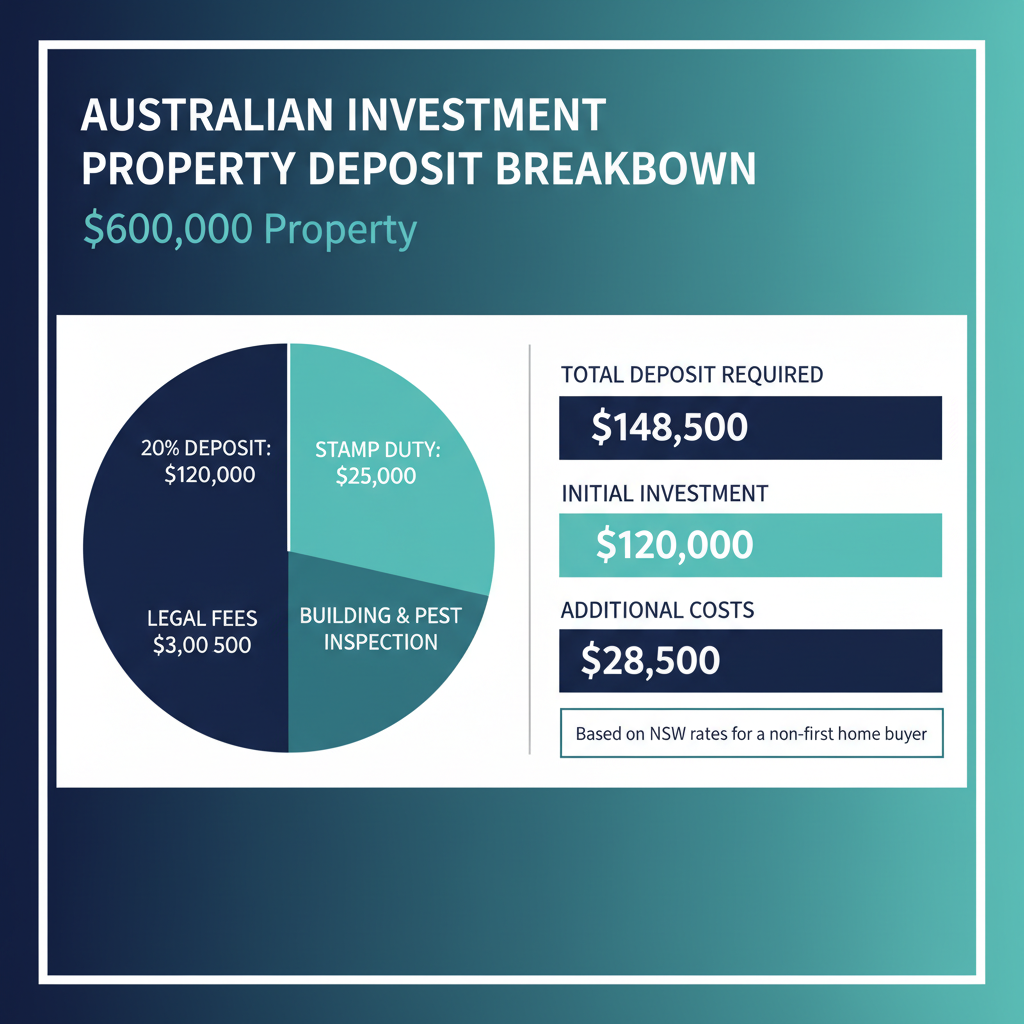
The deposit is often the biggest barrier to property ownership. Understanding exactly what you need can help you plan realistically.
Standard 20% Deposit Plus Purchase Costs
For most investors in 2026, the standard deposit requirement is 20% of the property's purchase price. This keeps your loan-to-value ratio (LVR) at 80%, avoiding Lenders Mortgage Insurance (LMI).
For a $600,000 investment property, you'd need $120,000 as a deposit, plus roughly $25,000 to $30,000 in additional costs like stamp duty, legal fees, and building inspections.
At Buyers Agency Australia, clients typically have approximately $100,000 in savings or usable equity to cover the deposit and all associated costs when purchasing their first investment property.
Lower Deposit Options and LMI Costs
Some lenders will approve investment property loans with deposits as low as 10%, though this requires exceptional serviceability and a strong credit profile. You'll also need to pay LMI, which can add $10,000 to $15,000 for a $600,000 property with a 10% deposit.
While the deposit is half that of the 20% option, the total capital required (deposit plus LMI) is still substantial. Many investors choose this path to enter the market faster and experience capital growth sooner, rather than waiting years to save a larger deposit.
Using Equity from Your Existing Home
If you already own property, you can use your available equity as a deposit for an investment property. Lenders typically allow you to access up to 80% of your property's value minus your remaining loan.
This strategy enables portfolio growth without needing to save additional cash. It's how many experienced investors scale from one property to five or more over time.
Choosing the Right Location Critical for Investment Success
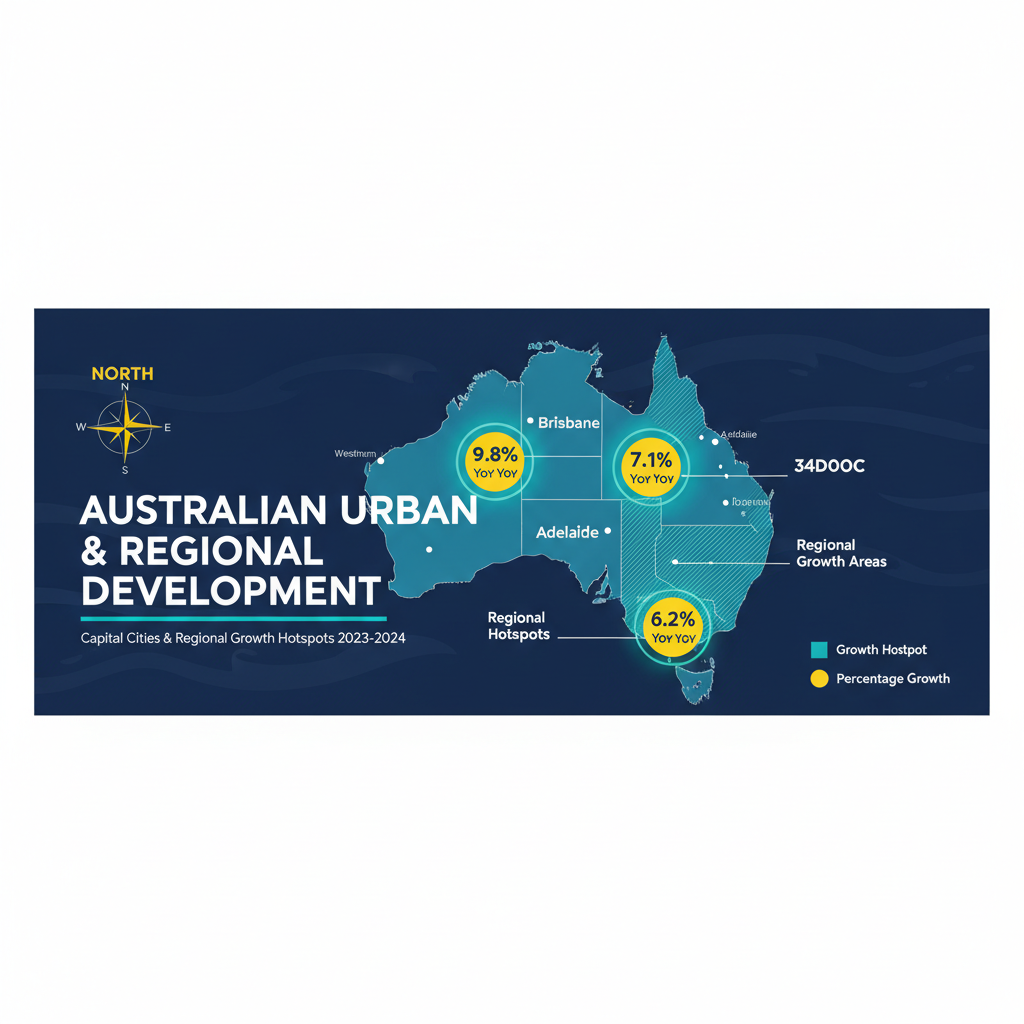
Location determines whether your investment thrives or struggles. In 2026, Australian property markets are fragmented, with some cities and suburbs far outperforming others.
Capital Cities vs Regional Markets in 2026
Perth, Adelaide, and Brisbane are expected to outperform Sydney and Melbourne in 2026. Regional dwelling values rose 9.7% in 2025, compared to 8.2% across combined capital cities, according to recent market data.
Western Australia stood out with a 16.1% annual increase, followed by regional Queensland at 12.6%. But not all regional markets are equal. Focus on larger hubs supported by health, education, logistics, and infrastructure investment.
Sydney and Melbourne are experiencing patchy performance. Poor affordability is biting in Sydney, while Victoria's economic challenges are impacting Melbourne's growth. Well-located properties in gentrifying inner and middle-ring suburbs are still outperforming, but the days of broad-based capital city growth are over.
What Makes a Suburb a Smart Investment
Smart investors look for suburbs where locals' income is growing faster than the national average. Higher disposable incomes mean residents can and will pay a premium to live in these locations.
Key indicators include strong infrastructure (new transport links, schools, retail centres), tight rental markets with low vacancy rates, and limited new housing supply relative to population growth. Suburbs like Williams Landing, Frankston, and Spalding are delivering strong yields and capital growth momentum in 2026.
Avoid suburbs with excessive new developments coming online. Oversupply can soften capital growth and compress rental yields, even in otherwise strong markets.
How to Research Property Markets Properly
Use data from authoritative sources like CoreLogic, SQM Research, and Domain. Look at median prices, rental yields, vacancy rates, and days on market.
But data alone isn't enough. You need boots on the ground. Drive through suburbs, talk to local agents, and understand the demographics. Are young families moving in? Are there new cafés and shops opening? These are real signs of gentrification and long-term growth.
Working with a buyers agent who specialises in investment property can save you months of research and help you avoid expensive mistakes.
Property Investment Strategies That Actually Work
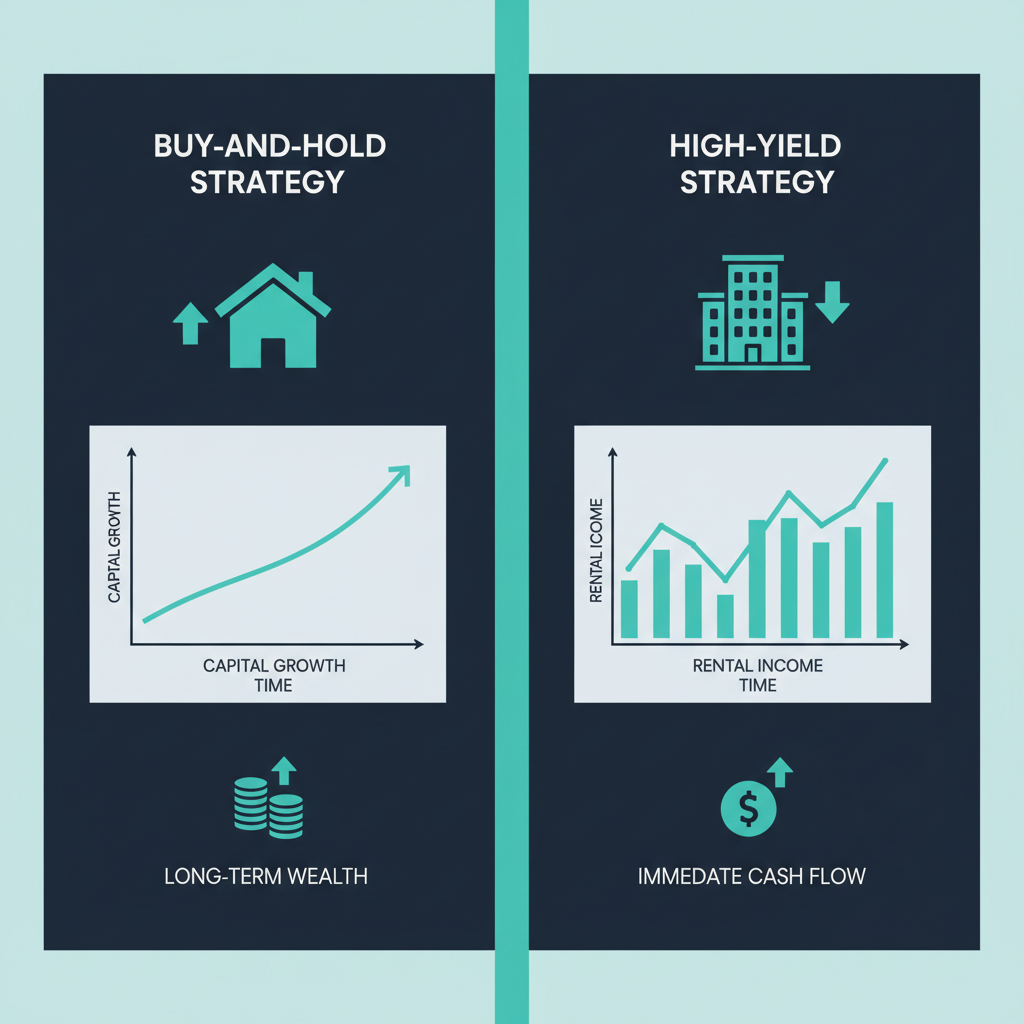
There's no single "correct" strategy. What works depends on your financial position, goals, and risk tolerance.
Buy and Hold for Long Term Capital Growth
Buy-and-hold is the most common and reliable strategy for Australian investors. You purchase a property in a high-growth location, rent it out, and hold it for 7 to 15 years while it appreciates.
This strategy relies on property values increasing faster than your holding costs. Over a full property cycle, capital growth drives most of your total return, even if yields are moderate.
The key is selecting properties in suburbs with strong fundamentals such as infrastructure, population growth, and limited supply. Buyers Agency Australia helps investors identify these high-growth locations using data-driven 10-year portfolio modelling.
High Yield Properties for Cash Flow
High-yield properties generate strong rental income relative to purchase price. Yields of 5% to 6% are common in regional markets like Geraldton, Port Lincoln, and Spalding.
Cash flow strategies work well for investors who need to cover mortgage repayments from rental income. But remember that high yields often come with lower capital growth. You're trading immediate income for long-term appreciation.
A balanced approach works best. Holding a mix of yield-driven and growth-driven properties allows you to cover short-term cash flow needs while building long-term equity.
Manufactured Growth Through Renovation and Development
Manufactured growth involves adding value through renovations, subdivisions, or small-scale development. This strategy can accelerate equity build-up but requires more time, skill, and risk management.
Successful renovators buy below market value, renovate strategically, and either hold or sell for a profit. But in 2026's competitive market, finding genuinely undervalued properties is harder than ever.
This strategy suits experienced investors who understand construction costs, council regulations, and local demand. Beginners should focus on buy-and-hold first.
The Power of Off Market Properties in 2026
Off-market properties are sold privately before they're listed publicly. They're one of the smartest ways to buy below market value and build equity faster.
Why Off Market Deals Offer Better Value
Sellers choose off-market sales for privacy, speed, or to avoid the stress of public marketing. This creates opportunities for buyers to negotiate without competing against dozens of other bidders.
You're often buying before the property is polished, styled, and marketed to its full potential. This means lower prices and less emotional competition.
How Buyers Agents Access Off Market Properties
Buyers agents have direct relationships with selling agents across multiple markets. They're notified of off-market opportunities before the general public and can move quickly to secure them.
Dragan Dimovski, founder of Buyers Agency Australia, has spent over 20 years building a network that gives his clients first access to off-market deals across Brisbane, Perth, Adelaide, and Sydney.
This isn't about secret listings. It's about relationships, timing, and having a trusted advocate who knows what you're looking for and can act decisively when the right property appears.
Building Equity Faster Through Strategic Purchases
Buying $50,000 below market value instantly creates $50,000 in equity. That equity can be used to fund your next purchase, accelerating portfolio growth without needing to save another deposit.
Off-market properties also tend to perform better over time because they're often in tightly held, high-demand suburbs where sellers don't need to advertise publicly.
If you're serious about building wealth through property, off-market access is a genuine competitive advantage.
Understanding Negative Gearing and Tax Benefits
Negative gearing is Australia's most widely used property tax strategy. It allows investors to claim rental losses as tax deductions, reducing their overall taxable income.
How Negative Gearing Works in Australia
Negative gearing occurs when your rental income is less than your deductible expenses, including loan interest, property management fees, insurance, and maintenance. This creates a net rental loss, which can be offset against your salary or business income.
For example, if you earn $120,000 per year and make a $20,000 loss through negative gearing, you'd be taxed on just $100,000. That reduces your tax payable by around $6,000.
The benefit is greater for higher-income earners. Someone on a 45% marginal tax rate receives a 45% refund on their losses, while someone on 30% receives a 30% refund.
Tax Deductions Available to Property Investors
Investors can claim deductions for loan interest, property management fees, council rates, insurance, repairs and maintenance, and building depreciation. Only expenses directly related to earning rental income are deductible.
Depreciation is particularly valuable. A $600,000 investment property might generate $5,000 to $8,000 in annual depreciation deductions, which don't require any out-of-pocket expense.
Work with a qualified tax advisor or quantity surveyor to maximise your deductions. The ATO scrutinises property investors closely, so accurate record-keeping is essential.
Will Negative Gearing Change in 2026
As of 2026, negative gearing remains unchanged. Both major parties have ruled out reforms, despite ongoing debate about its impact on housing affordability.
Labor proposed restricting negative gearing to new builds in 2016 and 2019 but lost both elections. Any future changes would require federal legislation and likely grandfather existing investments, making the current rules relatively secure for investors.
Common Mistakes Property Investors Make and How to Avoid Them
Most investment mistakes are avoidable. Here's what to watch out for.
Buying in the Wrong Location
Location is everything. Buying in a suburb with oversupply, declining employment, or poor infrastructure will cost you dearly. Don't rely on gut feel or tips from friends.
Use data, visit the area multiple times, and speak to local experts. A buyers agent who specialises in investment property can help you avoid expensive location mistakes.
Overpaying at Auction or Through Emotional Decisions
Auctions are designed to create competition and emotion. Buyers regularly overpay by $20,000 to $50,000 in hot markets.
Set a walk-away price before you bid and stick to it. Better still, work with a buyers agent who can negotiate privately or bid on your behalf without emotional attachment.
Ignoring Cash Flow and Holding Costs
Many investors underestimate holding costs. Loan interest, property management, insurance, maintenance, and vacancy periods all eat into your returns.
Run conservative cash flow projections before you buy. Assume higher interest rates, lower rents, and occasional vacancies. If the numbers don't work under conservative assumptions, walk away.
Failing to Plan for the Long Term
Property investment is a 10 to 20-year game, not a get-rich-quick scheme. Investors who panic and sell during downturns lock in losses and miss the next growth cycle.
Have a clear plan. Know how many properties you want to own, what your target portfolio value is, and how you'll fund each purchase. Review your plan annually and adjust as your circumstances change.
How Buyers Agency Australia Helps Investors Build Wealth Through Property
Investing in property is complex, and getting it wrong is expensive. That's where expert guidance makes all the difference.
Data Driven Investment Strategies and 10 Year Portfolio Modelling
Buyers Agency Australia uses data-driven investment strategies to identify high-growth locations and model long-term portfolio performance. Every recommendation is backed by analysis of infrastructure, demographics, supply constraints, and rental demand.
Dragan Dimovski personally oversees every client strategy, bringing 20+ years of investment experience and a $10 million+ personal portfolio to the table. His approach is grounded in real-world results, not theory.
Clients receive a tailored 10-year portfolio plan that shows exactly how to scale from one property to five or more, building equity and cash flow along the way.
Transparent Fixed Fee Model No Hidden Costs
Unlike commission-based agents who have an incentive to push you toward higher-priced properties, Buyers Agency Australia operates on a transparent, fixed-fee model.
You know exactly what you're paying upfront, and you know your buyers agent is working solely in your interest. No conflicts. No surprises.
Nationwide Coverage Across Brisbane Perth Adelaide and Sydney
While newer to the market compared to veteran agencies, Buyers Agency Australia has rapidly built a presence across all major Australian capital cities. Whether you're targeting high-yield properties in Perth or growth suburbs in Brisbane, the team provides end-to-end support.
From property search and due diligence to negotiation and settlement, Buyers Agency Australia handles the entire process, saving you time and stress while securing better results.
Book a free strategy session to discuss your investment goals and discover how Buyers Agency Australia can help you build long-term wealth through property.
Frequently Asked Questions
How much deposit do I need to invest in property in Australia?
Most investors need a 20% deposit plus $25,000 to $30,000 in purchase costs. Lower deposits (10%) are possible but require LMI.
What is the best property investment strategy for beginners in 2026?
Buy-and-hold in a high-growth suburb with strong rental demand. Focus on capital appreciation over 7 to 15 years.
Are buyers agent fees tax deductible in Australia?
No, buyers agent fees are generally added to the property's cost base and used to calculate capital gains tax when you sell.
Should I invest in capital cities or regional areas in 2026?
Both offer opportunities. Perth, Brisbane, and Adelaide are outperforming Sydney and Melbourne. Regional markets like Geraldton and Port Lincoln offer high yields and affordability.
How does negative gearing work for property investors?
Negative gearing allows you to claim rental losses as tax deductions, reducing your overall taxable income. It benefits higher-income earners most.
Ready to Start Your Property Investment Journey
Investing in property in Australia is one of the most proven paths to long-term wealth. But success requires careful planning, disciplined execution, and expert guidance.
Understand your borrowing capacity, save a realistic deposit, research locations thoroughly, and choose a strategy that matches your goals. Avoid common mistakes by working with professionals who have your best interests at heart.
Buyers Agency Australia specialises in helping investors build wealth through property. With over 20 years of experience, a transparent fixed-fee model, and access to off-market deals across Brisbane, Perth, Adelaide, and Sydney, Dragan Dimovski and his team are positioned to help you achieve your investment goals.
Don't wait for the "perfect" market conditions. The best time to start is now. Book a free strategy session with Buyers Agency Australia and take the first step toward financial freedom through property investment.
 General
Learn how to invest in property in Australia with this step-by-step guide. Covers borrowing capacity, deposits, location selection,...
How to Invest in Property in Australia A StepbyStep Guide for 2026
Investing in property in Australia requires a minimum 20% deposit for investment purchases, access to approximately $100,000 in savings or usable equity, and a clear strategy balancing capital growth potential with rental yield to build long-term wealth in the 2026 market.
If you're exploring how to invest in property in Australia, you're joining thousands of Australians who recognize real estate as one of the most reliable paths to wealth creation. Property values have historically tripled every 20 years across Australian markets, requiring just 6% average annual growth.
But the 2026 market is different from previous cycles. Interest rates are stabilizing between 2.8% and 4%, dwelling values rose 8.6% in 2025, and cities like Perth, Brisbane, and Adelaide are delivering compound growth approaching 90% over five years. Meanwhile, Buyers Agency Australia is helping investors cut through the complexity with transparent, fixed-fee advocacy and data-driven location strategies.
This guide walks you through every step needed to successfully invest in property in Australia in 2026, from determining your deposit and securing finance to selecting high-growth markets and structuring your purchase for maximum tax efficiency.
Understanding the 2026 Australian Property Market
National Market Trends Shaping Investment Decisions
The Australian property market entered 2026 with record-high national dwelling values following three RBA rate cuts in 2025. According to CoreLogic's January 2026 data, home values rose 0.8% nationally, accelerating from 0.6% growth in December.
But these headline numbers mask significant regional variation. Five out of eight capital cities achieved 6%+ annual growth in 2025, led by Darwin at 18%, Perth at 13%, and Brisbane at 12%. Meanwhile, Melbourne and Sydney are recovering from slower periods but showing renewed momentum as affordability constraints ease relative to other capitals.
For investors learning how to invest in property in Australia, 2026 offers a tale of two markets. Mid-sized capitals with strong employment fundamentals, infrastructure pipelines, and relative affordability are expected to continue outperforming. Sydney and Melbourne face affordability headwinds but benefit from deep liquidity, population scale, and diverse economic bases.
The supply-demand imbalance remains Australia's defining market characteristic. National vacancy rates sit at just 0.8%, and rental markets are extremely tight across all capitals. Housing completions lag population growth by an estimated 200,000 to 300,000 dwellings, creating structural support for both capital growth and rental demand through 2026 and beyond.
Interest Rate Environment and Borrowing Capacity
Interest rate stability is reshaping investor confidence in 2026. After three cuts in 2025 brought the cash rate to 3.6%, the RBA is expected to hold rates steady through most of 2026, with forecasts suggesting the cash rate will hover between 2.8% and 4%.
This creates a 'new normal' for borrowers. Rather than speculating on rate movements, investors can now focus on fundamental property selection, knowing repayment obligations will remain relatively predictable. However, APRA's tightening debt-to-income (DTI) limits mean borrowing capacity faces new constraints, particularly for investors using trust structures or seeking to build multi-property portfolios.
Lending serviceability assessments now stress-test borrowers at rates 3% above the actual loan rate. An investor borrowing at 6.5% will be assessed at 9.5%, significantly reducing maximum loan amounts compared to pre-2023 standards. This makes deposit size and income verification more critical than ever when learning how to invest in property in Australia.
Government Policy Impacts on Property Investors
Government policy continues to tilt toward first-home buyers rather than investors in 2026. The expanded 5% First Home Guarantee Scheme and the new Help to Buy shared equity program are bringing an estimated 40,000 additional first-home buyers into the market annually.
These policies create both opportunity and competition. On one hand, increased buyer activity lifts overall market liquidity and supports price growth. On the other, investors now compete directly with government-subsidized buyers at the sub-$750,000 price point where many entry-level investment properties sit.
Stamp duty relief for first-home buyers varies significantly by state. Queensland offers $30,000 grants plus stamp duty exemptions on homes under $700,000. South Australia abolished stamp duty entirely for first-home buyers purchasing new builds. Tasmania provides full stamp duty exemption on properties up to $750,000 through June 2026.
For investors, the key takeaway is clear: competitive advantage in 2026 comes from superior market knowledge, expert negotiation, and strategic property selection rather than government assistance. This is precisely where Buyers Agency Australia's investment approach delivers value.
Determining Your Investment Deposit and Finance Strategy
Minimum Deposit Requirements for Investment Property
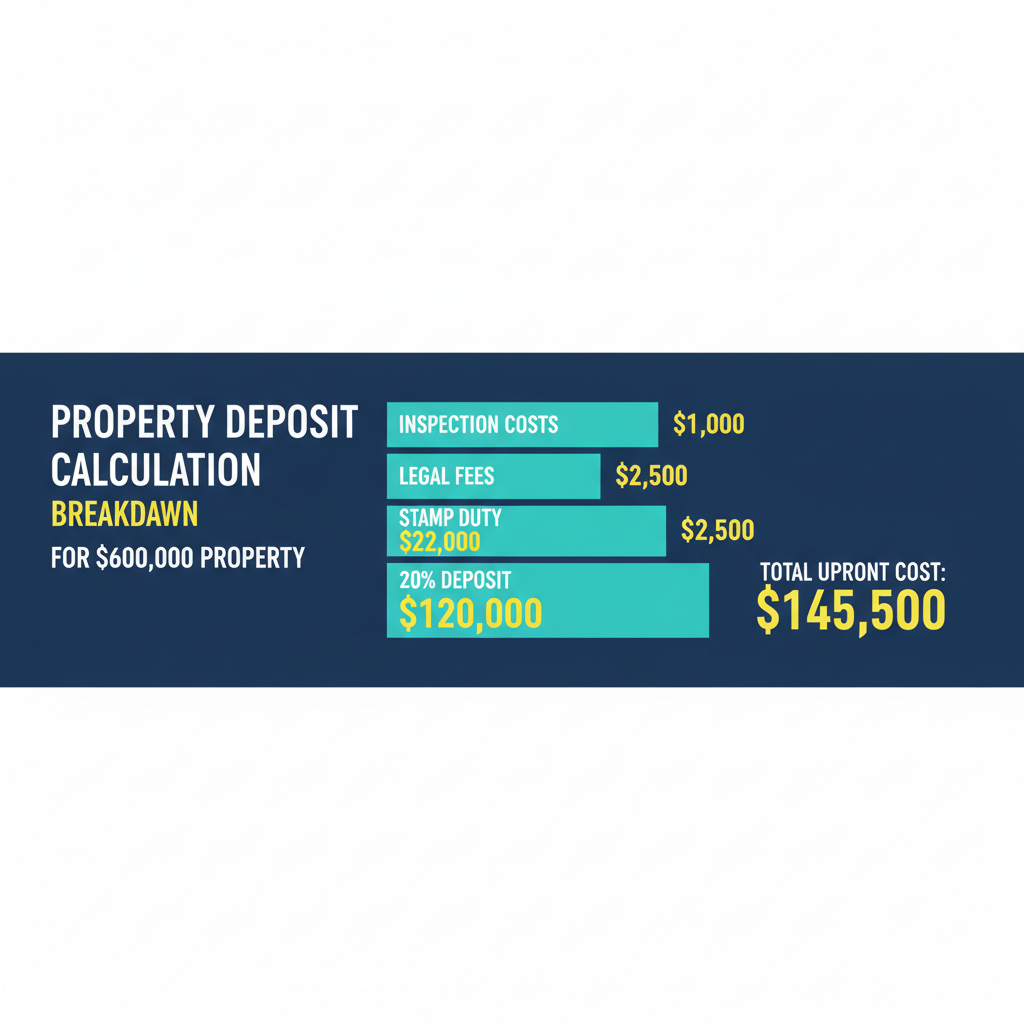
The benchmark deposit for buying investment property in Australia is 20% of the purchase price. This threshold allows you to avoid Lenders Mortgage Insurance (LMI) while securing standard interest rates from most lenders.
For a $600,000 investment property, you'll need $120,000 in deposit plus an additional $20,000 to $30,000 to cover stamp duty, legal fees, building and pest inspections, and other transaction costs. Total upfront capital required: approximately $140,000 to $150,000.
Some lenders will approve investment loans with deposits as low as 10%, but this triggers LMI premiums ranging from $10,000 to $20,000+ depending on loan size and LVR. While capitalizing LMI preserves your cash today, it adds $30,000 to $40,000 in interest costs over a 30-year loan term at 6%.
The strategic question isn't whether you can buy with a lower deposit but whether you should. In strong growth markets like Brisbane and Perth, paying LMI to enter 12 months earlier can deliver capital gains exceeding the LMI cost. In flat or uncertain markets, waiting to accumulate 20%+ may be prudent.
Using Equity from Existing Property
For investors who already own property, accessing existing equity is often the fastest path to investment property purchase without needing to save additional cash deposits.
Equity is the difference between your property's current value and your outstanding loan balance. Lenders typically allow you to borrow up to 80% of your property's value. Here's a worked example:
- Current home value: $800,000
- Existing loan balance: $400,000
- Maximum borrowing at 80% LVR: $640,000
- Less existing loan: $400,000
- Accessible equity: $240,000
This $240,000 can fund the deposit and purchase costs for a $600,000 investment property with no cash required. You'll establish a separate investment loan for the new property while increasing the loan against your home.
Equity access strategies require careful cash flow management. You're now servicing two loans, and lenders assess both when determining serviceability. This is where working with experienced mortgage brokers and property strategists like those at Buyers Agency Australia becomes invaluable.
Government Grants and Schemes for Property Investors
While most government assistance targets first-home buyers rather than investors, strategic investors can structure purchases to access grants in specific circumstances.
The First Home Owner Grant (FHOG) provides $10,000 to $30,000 depending on state, but requires you to occupy the property as your principal place of residence for 6 to 12 months. Some investors use an 'owner-occupier-first' strategy: purchase with the FHOG, live in the property for the required period, then convert it to an investment property while buying their next home.
This approach requires discipline and doesn't suit everyone. You must genuinely intend to occupy the property (FHOG fraud carries severe penalties), and you'll delay building your investment portfolio. But for first-time investors, capturing a $30,000 Queensland FHOG or $50,000 Northern Territory HomeGrown grant can provide a significant equity boost that accelerates future purchases.
State-by-state FHOG summary for 2026:
- Queensland: $30,000 for new homes under $750,000 (extended to June 30, 2026)
- New South Wales: No active FHOG (stamp duty concessions only)
- Victoria: $10,000 for new homes in regional areas
- South Australia: $15,000 for new homes (no price cap)
- Western Australia: $10,000 for new homes under $750,000 metro/$1M regional
- Northern Territory: $50,000 for new homes (no price cap, until September 2026)
For detailed FHOG eligibility and application processes, visit firsthome.gov.au.
Choosing the Right Investment Property Location
Capital City vs Regional Investment Opportunities
The capital city versus regional debate dominated property investment conversations in 2026. While regional markets delivered 9.7% growth in 2025 compared to 8.2% across combined capitals, long-term data consistently shows capital cities outpace regional areas over 20+ year periods.
Capital cities offer:
- Deeper buyer pools when you eventually sell
- Greater employment diversity supporting rental demand
- Superior infrastructure investment and amenity
- More robust markets during downturns
Regional markets counter with:
- Lower entry prices ($400,000–$550,000 vs $700,000–$1.2M)
- Higher gross rental yields (5%–7% vs 3%–4.5%)
- Lifestyle migration supporting population growth
- Targeted infrastructure creating pockets of genuine opportunity
The sophisticated approach isn't choosing one or the other but understanding which capital suburbs and which regional towns offer the best risk-adjusted returns for your specific strategy. Buying a $400,000 house in a mining-dependent regional town 300km from the nearest capital carries vastly different risk than buying in Geelong (Melbourne's fastest-growing corridor) or the Sunshine Coast (Queensland's infrastructure boom).
High-Growth Suburbs and Emerging Markets
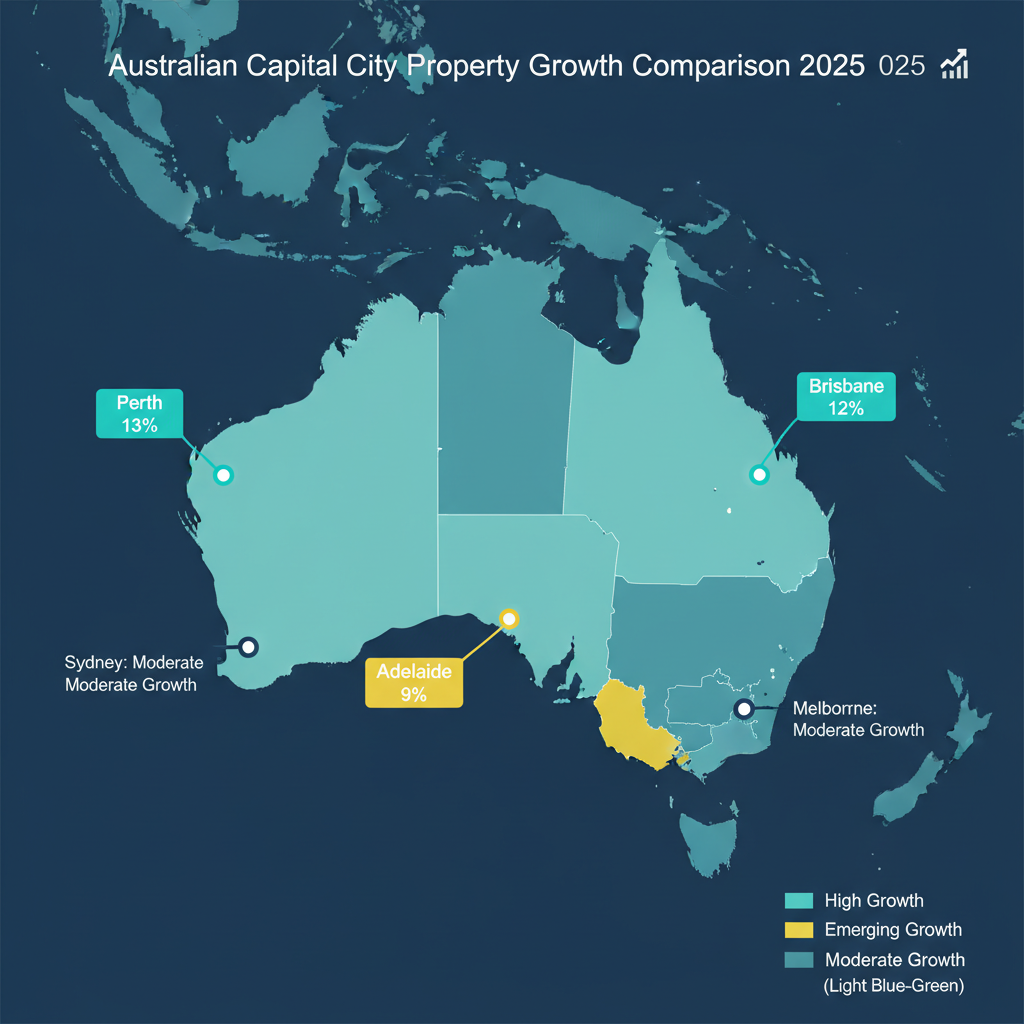
According to Propertyology's 2026 market outlook, Adelaide, Brisbane, and Perth will underpin 6%+ growth in house values through 2026, assuming stable interest rates. Sydney and Hobart may also achieve 6% growth, while Melbourne and Canberra face milder improvement.
Specific suburbs showing strong fundamentals in early 2026 include:
Brisbane Growth Corridors:
- Chermside: Major retail hub, hospital precinct expansion, and Olympic infrastructure investment
- Kedron: Proximity to airport and gateway upgrades
- Carindale: Established affluence with limited new supply
Perth Opportunity Zones:
- Maddington: Median house price $620,000, 8.96% annual growth, 5.2% yield
- Baldivis: Family market 45km south, infrastructure expansion
- Ellenbrook: Established community, improving connectivity
Adelaide Steady Performers:
- Prospect: Inner-north gentrification, sub-$750,000 entry
- Glenelg: Beachside lifestyle, permanent demand
- Morphett Vale: Southern growth corridor, affordability play
Remember that individual suburbs within cities can deliver dramatically different results. In Brisbane, inner-ring suburbs like Paddington and New Farm trade on different fundamentals than outer growth areas like Greater Flagstone or Ripley Valley.
Infrastructure Projects Driving Property Values
Infrastructure investment creates tangible property value uplift, but timing matters. The peak capital growth typically occurs before major infrastructure completes, as sophisticated buyers price in future amenity improvements.
Major projects shaping 2026 investment decisions:
Melbourne Metro Tunnel (Opened December 2025):
Full services commenced February 2026, creating winners in Sunshine, Pakenham, and Cranbourne East. Properties within 800m of new stations saw 4%–8% growth premiums in the 18 months preceding opening.
Brisbane Olympic Infrastructure (2032):
Brisbane City, South Bank, Hamilton, and Albion continue benefiting from pre-Olympic investment. However, investors should note that Olympic host cities often experience price softening 2–3 years post-event as speculative demand evaporates.
Sydney Western Sydney Airport (Opening 2026):
Badgerys Creek, Rossmore, and surrounding suburbs experienced 15%–25% growth 2022–2025. Future gains may moderate as the 'infrastructure premium' is now priced in.
Perth Metronet Expansion:
Forrestfield-Airport Link and Yanchep Rail Extension continue supporting northern and eastern corridor growth. Morley, Bayswater, and Ellenbrook benefit from improved connectivity.
The smartest infrastructure plays involve identifying the next major project 2–5 years before construction rather than buying after announcements make headlines.
Understanding Property Investment Tax Strategies
Negative Gearing and Its Benefits
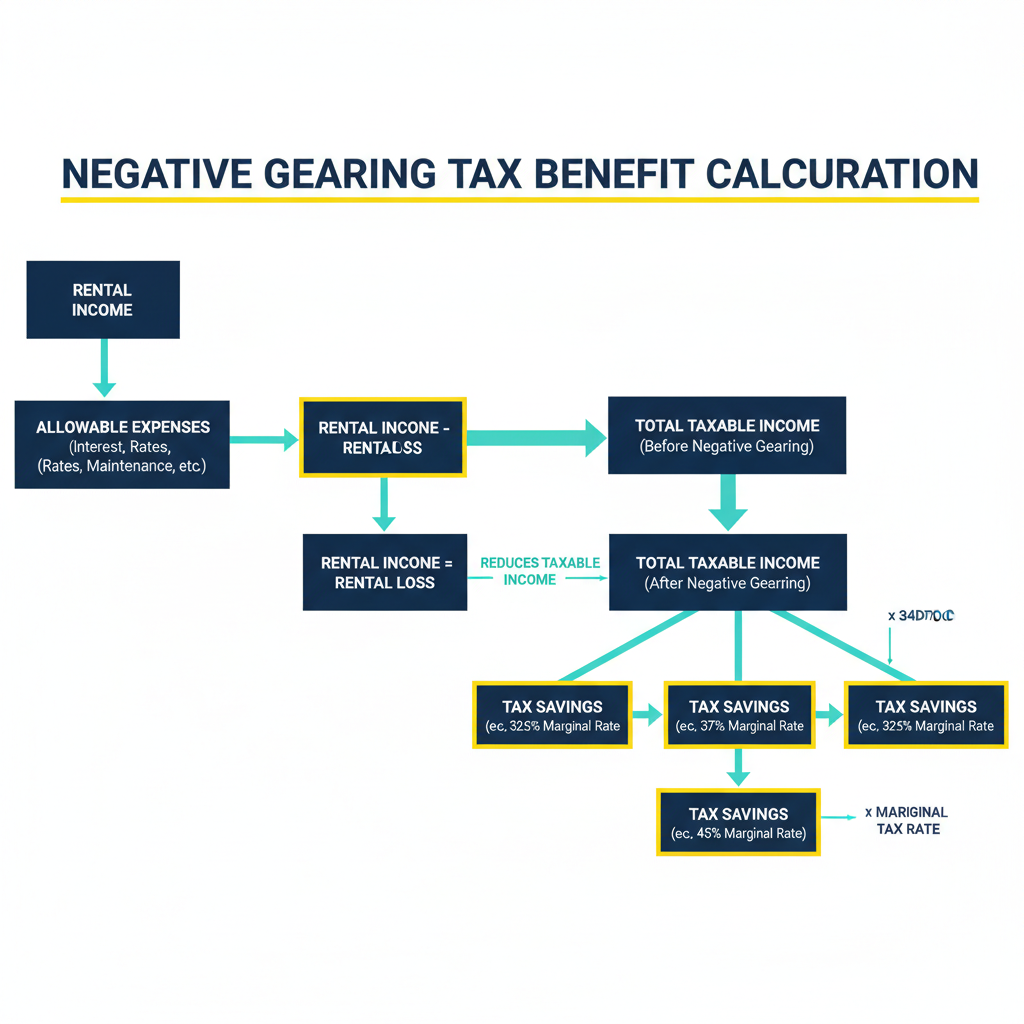
Negative gearing remains Australia's most widely used property tax strategy in 2026. Approximately 1 million Australians negatively gear roughly 2 million investment properties, claiming an average $8,700 annual deduction translating to roughly $2,700 in after-tax benefit.
Negative gearing occurs when your investment property costs more to own than it generates in rent, creating a loss you can claim as a tax deduction against your salary or other income.
Simple negative gearing example:
- Annual rental income: $26,000
- Annual interest (6% on $540,000): $32,400
- Other expenses (rates, insurance, management): $6,000
- Total rental loss: $12,400
If you earn $120,000 annually (37% tax bracket including Medicare levy), this $12,400 loss reduces your taxable income to $107,600, saving you $4,588 in tax. Your out-of-pocket holding cost is $7,812 per year rather than $12,400.
Negative gearing benefits high-income earners more than low-income earners due to progressive tax rates. Someone earning $200,000 (47% bracket) saves $5,828 on the same $12,400 loss, while someone earning $60,000 (21% bracket) saves only $2,604.
Despite recurring political debate, negative gearing remains unchanged as of 2026. The ACTU proposed limiting it to one investment property in August 2025, but both major parties ruled out changes. According to Property Investment Professionals' analysis, the probability of abolition through 2030 remains low.
Capital Gains Tax and the 50% Discount
When you eventually sell your investment property, you'll pay Capital Gains Tax (CGT) on the profit. However, Australia's 50% CGT discount for assets held 12+ months creates powerful wealth-building incentives.
CGT calculation example:
- Purchase price (2026): $600,000
- Purchase costs (stamp duty, legal): $30,000
- Cost base: $630,000
- Sale price (2036): $1,200,000
- Selling costs (agent, legal): $30,000
- Net proceeds: $1,170,000
- Capital gain: $540,000
With the 50% discount, only $270,000 is added to your taxable income in the sale year. At 37% marginal rate, your CGT bill is approximately $99,900. After 10 years of negative gearing tax benefits totaling $45,880 (illustrative), your after-tax gain is approximately $440,100.
The 50% CGT discount does not apply to properties held less than 12 months, so investors should plan hold periods carefully. Selling at 11 months costs you half your capital gain in additional tax—a $270,000 mistake on the example above.
CGT is calculated in the financial year you settle the sale, not the year you sign the contract. Strategic investors coordinate settlement timing with other income events (taking parental leave, sabbatical years, retirement) to minimize marginal tax rates in the CGT year.
Depreciation and Tax Deductions for Property Investors
Depreciation allows you to claim the declining value of your investment property's building structure and fixtures as annual tax deductions, even though you haven't spent any cash.
Australia's depreciation rules split deductions into two categories:
Division 43 (Capital Works): Building structure depreciation
- 2.5% annual deduction for buildings constructed post-September 1987
- 4% annual deduction for buildings constructed pre-September 1987
- Only available for the original owner of new builds constructed after May 2017
Division 40 (Plant and Equipment): Fixtures and fittings
- Hot water systems (typically 5–7 year effective life)
- Ovens, cooktops, dishwashers (6–8 years)
- Carpet, blinds, air conditioning (5–10 years)
- Availability depends on purchase date and building age
A quantity surveyor prepares a depreciation schedule detailing your property's claimable deductions. For a $600,000 property with $450,000 building value and $50,000 in plant and equipment, first-year depreciation might total $15,000–$18,000.
At 37% marginal rate, this creates $5,550–$6,660 in tax savings without spending a dollar. Depreciation schedules cost $600–$1,200 but typically pay for themselves within weeks through increased refunds.
For detailed depreciation rules, visit the ATO's rental property deductions guidance.
Working with a Buyers Agent for Investment Property
What a Buyers Agent Does for Property Investors
A buyers agent (also called a buyer's advocate) is a licensed professional who works exclusively for property buyers rather than sellers. Unlike selling agents who have a legal duty to maximize sale prices for vendors, buyers agents have a fiduciary duty to secure the best possible outcome for purchasers.
For investors learning how to invest in property in Australia, buyers agents provide:
- Market research and suburb analysis: Identifying high-growth locations matching your investment criteria
- Off-market property access: Connecting you to properties never publicly advertised
- Property shortlisting: Inspecting and evaluating properties on your behalf
- Due diligence coordination: Building and pest inspections, contract reviews, strata reports
- Negotiation and bidding: Securing properties at or below market value
- Settlement support: Managing the transaction through to completion
Dragan Dimovski and the team at Buyers Agency Australia bring over 20 years of investment property experience and a personal $10M+ portfolio to every client engagement. Rather than charging percentage-based fees that create conflicts of interest, the agency operates on a transparent fixed-fee model aligned with client outcomes.
Buyers Agent Fees and Fee Structures
Buyers agent fees in Australia typically range from $8,000 to $30,000+ depending on property price, location, and service scope. Two main fee models dominate the market:
Percentage-based fees: 1%–3% of purchase price
- $600,000 property = $6,000–$18,000
- $1,000,000 property = $10,000–$30,000
- Creates incentive misalignment (higher price = higher fee)
Fixed-fee model: Set fee regardless of purchase price
- Typical range: $12,000–$18,000 for full service
- Aligned with buyer outcomes (lower price = same fee)
- Preferred by sophisticated investors
Buyers Agency Australia operates exclusively on fixed fees, ensuring their economic incentive aligns with yours: securing the best property at the lowest defensible price. When you save $30,000 through expert negotiation, you keep the full $30,000 rather than paying a percentage back to your buyers agent.
Additional fee considerations:
- Retainer vs success-based: Some agents charge upfront retainers ($3,000–$5,000) credited against final fees
- Search-only vs full-service: Search-only services ($5,000–$8,000) provide research without bidding
- Buyer-paid vs vendor-paid: Buyers agents are always buyer-paid (avoiding conflict of interest)
For detailed fee breakdowns and service inclusions, visit Buyers Agency Australia's fee structure page.
How Dragan Dimovski and Buyers Agency Australia Support Investors
Dragan Dimovski's approach to property investment advocacy centers on three principles: data-driven selection, transparent pricing, and long-term portfolio modeling.
Unlike agencies that recommend properties based on vendor relationships or commission arrangements, Buyers Agency Australia's proprietary 10-year portfolio modeling projects cash flow, equity growth, and tax outcomes across entire investment lifecycles. This quantitative framework ensures every purchase aligns with your specific wealth-creation goals.
The agency's investment process:
Discovery and Strategy (Weeks 1–2):
Comprehensive financial assessment, goal setting, borrowing capacity analysis, and investment criteria development. Clients receive a documented investment strategy serving as their portfolio roadmap.
Market Research and Property Identification (Weeks 2–4):
Data analysis across target markets, off-market property sourcing, and shortlist creation. The team inspects properties personally, presenting only opportunities meeting strict investment criteria.
Due Diligence and Offer (Weeks 4–6):
Building and pest inspections, contract reviews, comparable sales analysis, and negotiation strategy development. Dragan's team presents offers and manages vendor negotiations through to exchange.
Settlement and Handover (Weeks 6–8):
Finance approval coordination, settlement management, and property handover. Clients receive comprehensive documentation supporting tax claims and depreciation schedules.
Buyers Agency Australia's national coverage spans all major Australian capital cities, with particular strength in Brisbane, Perth, and Sydney growth corridors where the team's boots-on-the-ground relationships deliver consistent off-market access.
For investors serious about building wealth through property, working with a buyers agent isn't an expense—it's an investment that typically pays for itself through superior property selection and negotiation outcomes.
Step-by-Step Property Investment Process for 2026
Step 1: Set Your Investment Goals and Strategy
Successful property investment starts with clarity about what you're trying to achieve. Are you building passive income to supplement your salary? Creating long-term wealth through capital growth? Generating equity to fund future purchases?
Your goal determines your strategy:
Capital Growth Focus:
- Target blue-chip suburbs in major capitals
- Accept lower rental yields (3%–4%)
- Plan 7–10 year hold periods
- Prioritize land value over building value
- Best for high-income earners able to fund negative gearing
Cash Flow Focus:
- Target regional markets and outer suburbs
- Seek rental yields 5.5%+
- Consider dual-income properties (duplexes, townhouses)
- Prioritize tenant demand over prestige
- Best for lower-income investors or approaching retirement
Hybrid Approach:
- Balance growth potential with reasonable yield
- Target growth corridors with infrastructure investment
- Seek properties $550,000–$750,000 range
- Most popular strategy for building scalable portfolios
Document your strategy in writing. When you're considering a property that doesn't fit your criteria, your written strategy provides discipline to walk away from emotional decisions.
Step 2: Get Pre-Approval and Confirm Borrowing Power
Securing pre-approval before property searching delivers three critical advantages:
- Budget certainty: Know exactly what you can afford
- Competitive edge: Vendors and agents take pre-approved buyers seriously
- Speed to settlement: Move quickly when the right property appears
Pre-approval (also called conditional approval) involves submitting full financial documentation to a lender who assesses your borrowing capacity and issues formal approval subject to property valuation.
Documents required:
- Payslips (2–3 months) or tax returns (2 years for self-employed)
- Bank statements (3–6 months all accounts)
- Current asset and liability statement
- Identification documents
- Employment verification
Borrowing capacity in 2026 faces tighter constraints than previous years due to APRA's debt-to-income limits and higher serviceability buffers. A household earning $150,000 might borrow $650,000–$750,000 for an investment property depending on existing debts and living expenses.
Pre-approval typically lasts 90 days, though some lenders offer 120-day approvals. Start your property search immediately after approval to maximize the validity period.
Working with an experienced mortgage broker saves time and improves approval rates. Brokers access 30–40 lenders compared to the 1–2 banks most borrowers approach directly, and they understand which lenders favor which borrower profiles.
Step 3: Research Markets and Shortlist Properties
Property research separates successful investors from those who buy on emotion and regret later. Effective research examines macro market trends, suburb fundamentals, and individual property characteristics.
Macro market analysis:
- Economic growth and employment trends
- Population growth and migration patterns
- Interest rate trajectory
- Government policy impacts
- Supply and demand balance
Suburb fundamentals:
- Median price trends (5-year history)
- Days on market and auction clearance rates
- Rental vacancy rates and yield
- Infrastructure projects and rezoning
- Demographic profile and socioeconomic indicators
Individual property evaluation:
- Land size and configuration
- Building quality and condition
- Street appeal and position
- Comparable sales analysis
- Rental demand indicators
Data sources for 2026 research include CoreLogic, Domain, SQM Research, and Australian Bureau of Statistics. Paid subscription services like Suburbtrends and Pricefinder provide deeper analytics.
For time-poor professionals, engaging a buyers agent eliminates hundreds of hours of research while ensuring you don't miss critical red flags that only experience identifies.
Step 4: Conduct Due Diligence and Make an Offer
Once you've identified a property meeting your investment criteria, thorough due diligence protects you from costly mistakes.
Essential due diligence:
- Building and pest inspection: Identifies structural issues, timber pests, and safety hazards ($400–$600)
- Contract review: Solicitor or conveyancer examines sales contract for unfavorable terms ($800–$1,500)
- Strata report (units/townhouses): Reviews body corporate financials, meeting minutes, and building condition ($150–$300)
- Title search: Confirms legal ownership and identifies easements or covenants ($30–$100)
- Comparable sales analysis: Validates asking price against recent market transactions (free via agents or paid services)
Red flags requiring caution or renegotiation:
- Structural cracks, subsidence, or water damage
- Asbestos (particularly pre-1990 buildings)
- Unapproved modifications or building code violations
- Strata deficits or special levies upcoming
- Flood zones or bushfire-prone land
- Properties with tenant-in-place below market rent
Negotiation in 2026's market requires sophisticated strategy. In high-demand markets, offers must be competitive yet defensible. In softening markets, patience and multiple offers often secure 5%–10% discounts.
Dragan Dimovski's negotiation approach combines comprehensive comparable sales analysis with vendor motivation research, auction psychology expertise, and boots-on-the-ground agent relationships cultivated over 20+ years. The result: consistent buyer savings averaging $25,000–$50,000 below asking prices across 2024–2025 transactions.
Step 5: Exchange Contracts and Complete Settlement
After offer acceptance, the formal purchase process involves exchanging contracts and progressing to settlement.
Exchange of contracts:
- Buyer and seller sign identical contracts
- Buyer pays 10% deposit (held in trust)
- 'Cooling off' period begins (0–5 days depending on state)
- Building and pest, finance, and other conditions commence
Condition satisfaction period (typically 14–21 days):
- Complete all due diligence
- Obtain formal finance approval
- Property valuation by lender
- Address any issues identified
- Proceed unconditional or terminate contract
Settlement (typically 30–90 days from exchange):
- Final loan approval and documents signed
- Solicitor/conveyancer coordinates settlement
- Balance of purchase price paid to vendor
- Ownership transfers to buyer
- Keys and property handover
Post-settlement actions for investors:
- Establish landlord insurance ($300–$600 annually)
- Engage property manager (7%–8% of weekly rent)
- Commission depreciation schedule ($600–$1,200)
- Set up record-keeping for tax purposes
- Notify ATO of rental property commencement
Many new investors underestimate post-purchase costs. Budget $5,000–$10,000 for immediate repairs, cleaning, minor upgrades, and first-tenant marketing. Even 'investment-ready' properties typically need minor work.
Common Property Investment Mistakes to Avoid
Buying in the Wrong Location
Location determines 80% of your investment's long-term performance. No amount of cosmetic renovation or property management can overcome a fundamentally poor location choice.
Common location mistakes:
- Chasing high yields in remote regional towns: 8% yield means nothing if capital values fall 10%
- Buying in single-industry towns: Mining and tourism-dependent markets face boom-bust volatility
- Ignoring infrastructure timelines: Buying 'near' future infrastructure 10 years before construction delivers no value
- Falling for developer marketing: Master-planned estates on city fringe offer lifestyle, not investment performance
- Buying sight-unseen: Never purchase investment property without personal inspection or trusted representative
Location research requires looking beyond current prices to understand future value drivers. Is the suburb attracting families or losing population? Are employers expanding or contracting? Is the government investing or neglecting infrastructure?
Buyers Agency Australia's suburb scoring methodology analyzes 40+ data points across economic, demographic, infrastructure, and supply categories to objectively rank investment potential across Australia's 400+ township markets.
Underestimating Holding Costs
Negative gearing sounds attractive until you realize you're funding $500–$1,000 monthly shortfalls from your salary. Many investors underestimate true holding costs and face financial stress when interest rates rise or tenants vacate.
Realistic holding cost budget for $600,000 property:
- Loan interest (6% on $480,000): $28,800 annually
- Council rates: $1,800
- Water charges: $1,200
- Building insurance: $1,000
- Landlord insurance: $500
- Property management (8% of $26,000 rent): $2,080
- Repairs and maintenance: $2,000
- Strata fees (if applicable): $2,000–$8,000
- Total annual costs: $39,380–$45,380
- Less rental income: $26,000
- Annual shortfall: $13,380–$19,380
- Less tax benefit (37% bracket): $4,950–$7,170
- After-tax holding cost: $8,430–$12,210
Can you comfortably fund $700–$1,000 monthly from your salary for 5–10 years? If interest rates rise 1% (adding $4,800 annually), can you still afford the property?
Successful investors maintain 6–12 month emergency buffers covering tenant vacancies, unexpected repairs, and rate increases. Don't extend yourself so far that a single financial setback forces property sale at an inopportune time.
Ignoring Tax Obligations and Structuring
Property ownership structure (individual, joint, trust, company) creates dramatically different tax outcomes. Many investors purchase in their personal name by default without considering whether alternative structures better suit their circumstances.
Individual ownership:
- Simplest structure
- Full access to 50% CGT discount
- Losses offset personal income
- No asset protection from lawsuits
Joint ownership (tenants in common):
- Can split ownership unequally (e.g., 99% high-income, 1% low-income spouse)
- Losses flow to respective owners
- Requires careful documentation
Trust ownership:
- Provides asset protection
- Flexible income distribution
- More complex administration ($1,500–$3,000 annually)
- Limited bank lending in 2026 due to APRA restrictions
Company ownership:
- CGT discount unavailable
- Losses trapped in company
- Generally unsuitable for residential property
The 'right' structure depends on your income, asset protection needs, estate planning goals, and future investment intentions. Restructuring after purchase is expensive or impossible, so obtain accounting and legal advice before exchange.
For comprehensive structuring guidance, consult Buyers Agency Australia's recommended accounting partners who specialize in property investment tax strategy.
Frequently Asked Questions
How much deposit do I need to invest in property in Australia?
The standard deposit for investment property is 20% of the purchase price plus transaction costs. For a $600,000 property, you need $120,000 deposit plus $20,000–$30,000 for stamp duty, legal fees, and inspections—approximately $140,000–$150,000 total.
Can I use my superannuation to invest in property?
Yes, through a Self-Managed Super Fund (SMSF), but strict rules apply. The property must be held solely for retirement benefit provision, cannot be lived in by you or related parties, and requires specialist SMSF administration.
What are the best cities for property investment in 2026?
Brisbane, Perth, and Adelaide show strongest fundamentals with 6%+ forecast growth supported by local economic strength and relative affordability. Sydney and Melbourne offer long-term stability but face near-term affordability constraints.
Is negative gearing still available in 2026?
Yes, negative gearing remains unchanged despite recurring political debate. Approximately 1 million Australians negatively gear investment properties, claiming rental losses against salary income to reduce taxable income and annual tax bills.
How do I find high-growth investment properties?
High-growth properties combine strong location fundamentals (employment diversity, population growth, infrastructure investment) with individual property characteristics (land size, scarcity, owner-occupier appeal). Working with experienced buyers agents provides access to off-market opportunities and expert market analysis.
Start Building Your Property Portfolio with Expert Support
Learning how to invest in property in Australia in 2026 requires more than reading guides—it demands expert execution, market-specific knowledge, and disciplined strategy.
Dragan Dimovski and the Buyers Agency Australia team have helped hundreds of investors build multi-million dollar portfolios through data-driven property selection, transparent fixed-fee advocacy, and comprehensive 10-year portfolio modeling.
Whether you're purchasing your first investment property or scaling from one to five+ properties, the agency's national coverage, off-market access, and 20+ years of investment experience deliver results that consistently exceed the modest engagement fee.
Ready to move from research to action? Book a free strategy session to discuss your investment goals, review your borrowing capacity, and receive personalized market recommendations tailored to your wealth-creation objectives.
For time-poor professionals who recognize that expert guidance accelerates results while minimizing costly mistakes, working with Buyers Agency Australia isn't an expense—it's the smartest investment you'll make in your property journey.
 General
Your complete 2026 roadmap to Australian property investment, from deposit strategies and government grants to market selection and...
How to Build a Million Dollar Property Portfolio: The Proven Framework Successful Investors Use
Building a million-dollar property portfolio isn’t about luck or perfect timing. It’s about following a proven framework that combines strategic property selection, compounding growth, equity release, and the right professional team to accelerate wealth creation over 10-20 years.
Most Australians dream of financial freedom through property, but very few understand the exact steps needed to get there. While 71% of Australian property investors never get past their first property, a small group quietly builds portfolios worth millions by following a systematic approach.
The difference isn’t capital, connections, or market timing. It’s having a repeatable framework that turns one property into two, two into four, and eventually creates genuine wealth through strategic compounding.
Why Most Property Investors Never Scale Beyond One Property
Here’s the uncomfortable truth about property investing in Australia.
According to Australian Tax Office data, around 71% of property investors own just one property. Another 19% own two properties, and only 6% ever build a portfolio of three or more investment properties.
Why do so few investors scale successfully?
The answer comes down to three fundamental mistakes. First, they buy emotionally instead of strategically, choosing properties based on personal preference rather than investment fundamentals. Second, they fail to understand how equity works as the fuel for portfolio growth. Third, they operate without a clear 10-20 year framework.
Buyers Agency Australia has spent over 20 years helping investors avoid these pitfalls through data-driven property selection and portfolio modeling.
Property investing is measured in decades, not quarters. The investors who build million-dollar portfolios understand that success comes from patient, strategic execution.
The Real Cost of Waiting
Every year you delay costs thousands in lost compounding.
Consider two investors: Sarah starts at 30 with one $600,000 property growing at 6% annually. Michael waits until 35 to start with the same property and growth rate. By age 60, Sarah’s property is worth $2.44 million. Michael’s property? Just $1.82 million.
That five-year delay costs Michael over $620,000 in wealth. Time in the market always beats timing the market.
The Borrowing Capacity Trap
Most investors hit a wall after their first or second property because they don’t structure their loans correctly from day one.
Banks assess your borrowing capacity based on income, expenses, and existing debt. If your first property generates negative cash flow of $400 per month, that reduces your borrowing power by approximately $100,000 for your next purchase.
Successful portfolio builders focus on properties that move toward positive cash flow within 3-5 years through rental growth. This keeps their borrowing capacity intact for the next acquisition.
The Power of Compounding Growth in Property Investment
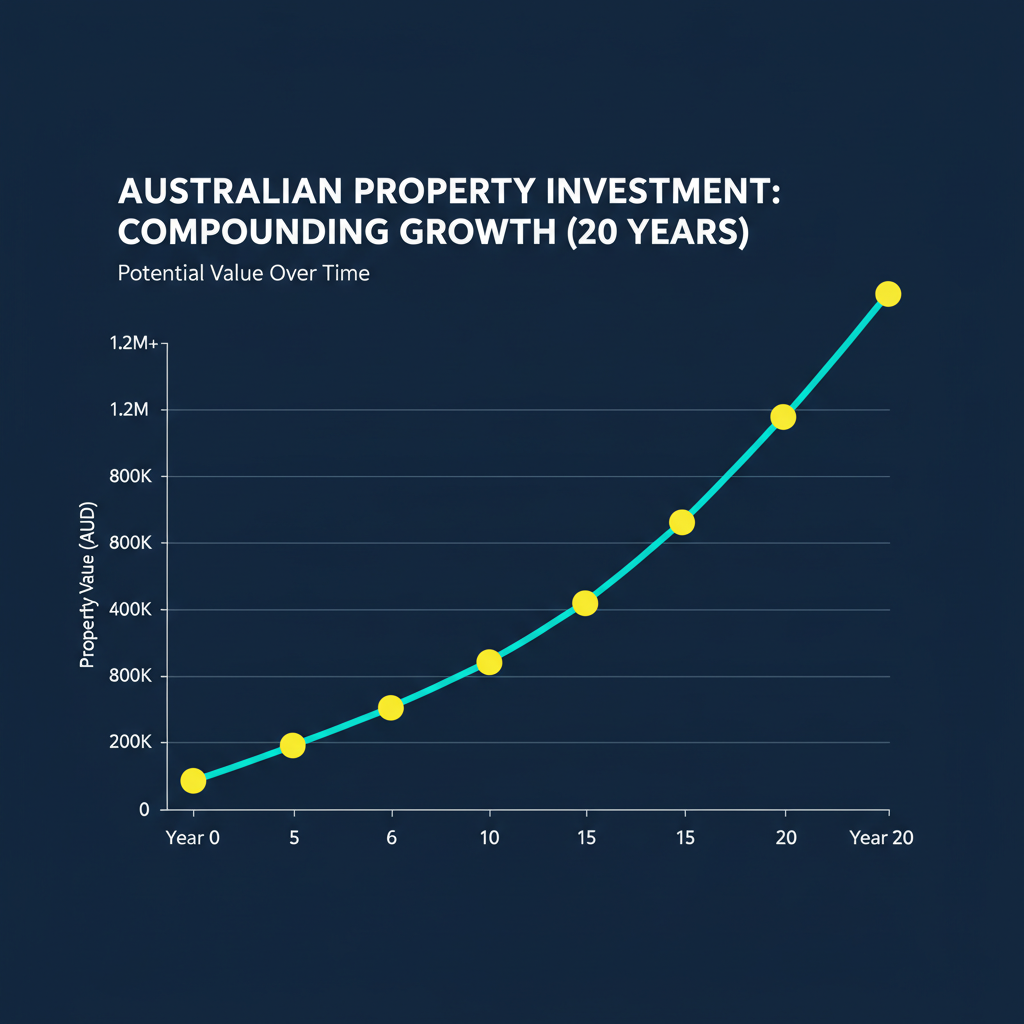
Compounding is the single most powerful wealth-building force available to property investors.
Albert Einstein reportedly called compounding the eighth wonder of the world, and for good reason. When applied to property investment, compounding means earning returns on both your original investment and the returns you’ve already earned.
Over the last 40 years, well-located properties in Australian capital cities have delivered more than 7% annual capital growth. At this rate, property values double approximately every 10 years.
Here’s where compounding becomes truly powerful. If you own a $1 million property that grows at 7% annually, it will be worth $2 million after 10 years, generating $1 million in equity growth. But in the second decade, that same 7% growth produces $1.9 million in additional equity, nearly double the first decade’s gains.
The equity created in the later years dwarfs the early years because you’re earning growth on a much larger base.
How Property Compounding Differs From Other Investments
Property investment offers unique advantages that amplify compounding effects.
First, property allows you to use leverage. You can control a $600,000 asset with just $120,000 down (20% deposit). If that property grows 6% annually, you’re earning returns on the full $600,000, not just your $120,000 contribution.
Second, rental income typically grows 3-4% annually, which improves your cash flow over time and supports additional borrowing capacity.
Third, property markets are less volatile than share markets. Over rolling 20-year periods, Australian property has almost always outperformed cash and bonds with lower year-to-year volatility.
The Snowball Effect: Real Numbers
Let’s examine a real-world scenario using conservative growth assumptions.
You purchase a $650,000 property with a $130,000 deposit. Assuming 6% annual growth (below the 7% long-term average), your property will be worth approximately $1.16 million after 10 years.
That’s $510,000 in equity growth from a $130,000 initial investment, representing a 392% return on your deposit over the decade.
Now here’s where compounding accelerates wealth. In years 11-20, that same 6% growth generates an additional $868,000 in equity, bringing the total property value to $2.03 million.
Notice the pattern? The second decade generated 70% more equity growth than the first decade, despite identical growth rates. That’s compounding in action.
Understanding Equity Release as Your Growth Engine
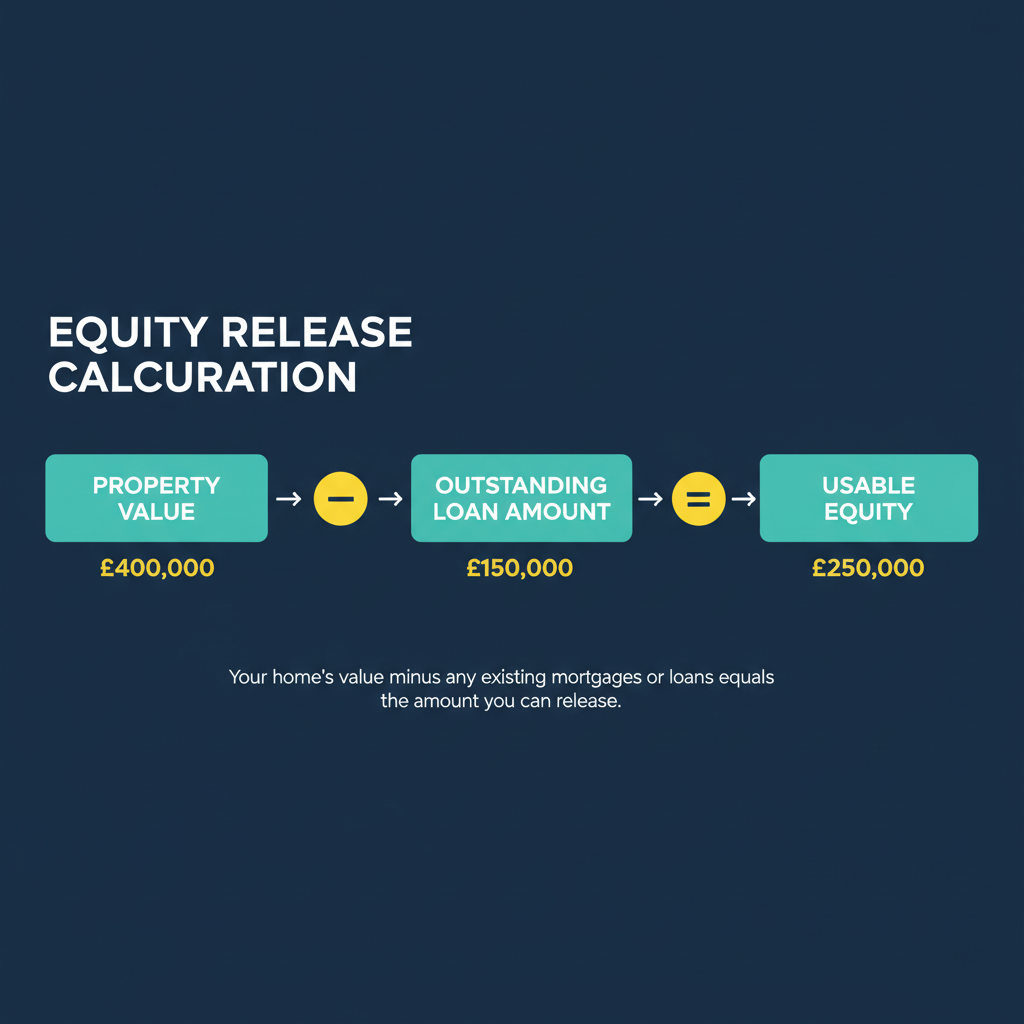
Equity is the difference between your property’s market value and your outstanding mortgage balance.
If your property is worth $800,000 and you owe $500,000, you have $300,000 in equity. But only a portion of that equity can be accessed without selling the property.
Most Australian lenders will allow you to borrow up to 80% of your property’s value. This means if your property is worth $800,000, you can potentially have total lending of $640,000 (80% LVR). If you currently owe $500,000, you could access $140,000 in usable equity.
This usable equity becomes the deposit for your next property purchase, allowing you to scale without needing to save another large deposit from your salary.
The Mechanics of Equity Release
Releasing equity typically involves refinancing your existing property to access the increased value.
Here’s the step-by-step process. First, your lender conducts a property valuation to determine the current market value. Second, they calculate your maximum borrowing capacity at 80% of that value. Third, you refinance to increase your loan to this new level. Fourth, the difference between your old loan and new loan becomes cash you can use as a deposit.
Buyers Agency Australia works with investors to structure equity release strategies that maximize borrowing capacity while maintaining sustainable cash flow across the portfolio.
One critical consideration is serviceability. Banks still assess whether you can service the increased debt based on your income and expenses. This is why choosing properties with strong rental yields and rental growth is essential.
When to Release Equity
Timing matters when accessing equity for your next purchase.
Most successful investors release equity every 3-5 years, giving their properties time to appreciate meaningfully. Releasing equity too frequently can result in high loan-to-value ratios that leave little buffer if markets soften.
The ideal time to release equity is when your property has grown 15-25% in value, your rental income has increased to improve cash flow, and you’ve identified your next strategic purchase.
Patience here separates successful portfolio builders from those who overextend and face financial stress.
The Strategic Framework for Portfolio Building
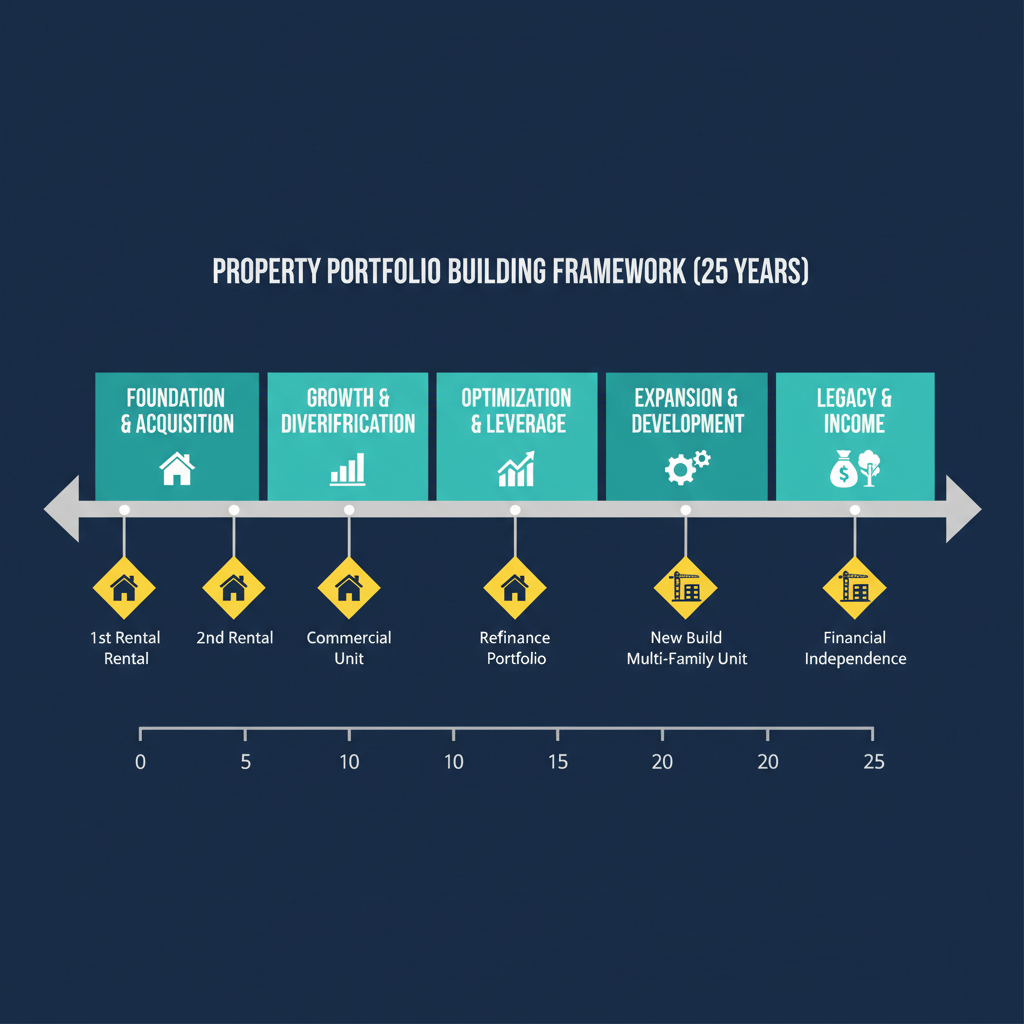
Building a million-dollar portfolio requires a systematic approach, not random property purchases.
The framework used by successful investors follows five clear phases. Phase one focuses on education and goal-setting. Phase two involves acquiring your first strategic property. Phase three centers on equity growth and portfolio expansion. Phase four emphasizes optimization and cash flow management. Phase five is about wealth consolidation and debt reduction.
Each phase has specific timeframes, decision points, and success metrics.
Phase One: Foundation and First Property (Years 1-3)
Your first property sets the trajectory for your entire portfolio.
During this phase, you need to define clear investment goals, understand your borrowing capacity, and identify high-growth locations. Your first purchase should be in an area with strong employment growth, population increase, and infrastructure investment.
Buyers Agency Australia uses proprietary research to identify suburbs showing early signs of gentrification and capital growth acceleration. These areas typically sit 5-10 kilometers from the CBD in major capital cities.
Your first property should target both capital growth and reasonable rental yields of 4-5%. Avoid areas with yields above 7% as these often lack capital growth potential.
The goal in this phase is to establish your foundation property and begin building equity through both capital growth and loan repayment.
Phase Two: Equity Extraction and Second Property (Years 4-6)
By year four or five, your first property should have appreciated 20-30% if you bought strategically.
This equity growth enables your second purchase without requiring another large savings deposit. You refinance your first property to release usable equity, which becomes the deposit for property number two.
Your second property should be in a different location to the first, providing geographic diversification. If your first property was in Brisbane, consider Sydney, Melbourne, or Perth for the second.
Diversification across markets reduces risk and ensures at least one property is likely performing strongly at any given time.
Phase Three: Portfolio Acceleration (Years 7-12)
Years 7-12 represent your portfolio’s growth phase.
During this period, both properties are appreciating, creating compounding equity across two assets. The combined equity from properties one and two can fund the deposit for property three by year 8-10.
By year 12, investors following this framework typically own 3-4 properties with a combined value of $2.5-3.5 million and outstanding debt of $1.8-2.5 million.
Cash flow management becomes critical during this phase. Many investors experience slight negative cash flow across their portfolio during these years. This is acceptable if the shortfall is manageable and you have a clear path to positive cash flow through rental growth.
Phase Four: Optimization and Cash Flow Focus (Years 13-18)
By the mid-point of your portfolio journey, you shift focus from acquisition to optimization.
Rental income has increased significantly across all properties through annual rent increases of 3-4%. Meanwhile, your loan payments remain relatively static if you have fixed-rate or interest-only loans.
This is when many portfolios transition from slight negative cash flow to neutral or positive cash flow. Once you achieve positive cash flow, your portfolio becomes self-sustaining and no longer requires you to contribute from your salary.
Some investors choose to acquire a fourth or fifth property during this phase if borrowing capacity allows. Others pause acquisitions and focus on paying down debt to improve equity positions.
Phase Five: Consolidation and Wealth Realization (Years 18-25)
The final phase involves debt reduction and wealth realization.
By year 20, properties purchased in year one have likely doubled in value at least once, possibly twice. Your total portfolio value may exceed $5 million with debt of $2-2.5 million, leaving $2.5-3 million in equity.
At this stage, many investors begin transitioning from accumulation to income generation. You might sell one property to pay down debt on the others, or convert all properties to principal-and-interest loans to steadily pay off debt.
The goal is to enter retirement with 2-3 fully owned properties providing $100,000+ in annual rental income, plus the option to sell one property to fund a comfortable lifestyle.
Building the Right Team: Your Professional Advisory Board
No investor builds a million-dollar portfolio alone. Success requires a carefully selected team of professionals.
Your core team should include five key professionals. First, an experienced buyers agency who understands investment fundamentals and can identify high-growth properties. Second, a mortgage broker specializing in investment lending who can maximize your borrowing capacity. Third, an accountant experienced in property investment tax strategies. Fourth, a property manager who maintains your properties and secures quality tenants. Fifth, a financial planner who integrates property into your broader wealth strategy.
Each team member plays a specific role in your success.
The Role of a Strategic Buyers Agency
A buyers agency is your most important team member because property selection determines 80% of your investment outcomes.
Dragan Dimovski and the team at Buyers Agency Australia bring over 20 years of investment experience and a $10 million+ personal portfolio to every client engagement. This isn’t theoretical knowledge. It’s boots-on-the-ground experience building wealth through property.
A strategic buyers agency provides market research identifying suburbs entering growth phases, off-market property access before listings hit the internet, negotiation expertise that saves $20,000-50,000 per purchase, due diligence that eliminates problematic properties, and 10-year portfolio modeling that maps your path from one property to 3-5 properties.
Book a free strategy session to discuss your specific situation and receive a custom portfolio roadmap.
Mortgage Broker Selection Criteria
Your mortgage broker needs specific expertise in investment lending, not just residential home loans.
Look for brokers who understand debt structuring strategies, have relationships with lenders who offer higher loan-to-value ratios for investors, can model multiple borrowing scenarios, and explain how to maximize tax deductions through loan structuring.
The right broker can increase your borrowing capacity by $100,000-200,000 through strategic structuring, which could mean the difference between owning two properties or four properties over your investment timeline.
Accountant and Tax Strategy
Property investment offers significant tax advantages, but only if you structure correctly from the beginning.
Your accountant should advise on negative gearing benefits, depreciation schedules that create additional tax deductions, capital gains tax minimization strategies, and optimal ownership structures like discretionary trusts or self-managed super funds.
These tax strategies can save $5,000-15,000 annually once you own 2-3 properties, accelerating your wealth accumulation.
Common Portfolio Building Mistakes and How to Avoid Them
Even experienced investors make critical mistakes that stall portfolio growth.
Understanding these pitfalls helps you avoid years of lost progress.
Mistake One: Buying for Yield Instead of Growth
High rental yields often signal areas with limited capital growth potential.
Properties advertised with 7-9% rental yields are typically in regional or remote areas where employment is limited and population is declining or stagnant. While the immediate cash flow looks attractive, these properties often appreciate slowly or decline in value.
Successful portfolio builders target properties with 4-5% yields in high-growth areas. The capital appreciation over 10-20 years far outweighs the extra $50-100 per week in rent from high-yield properties.
Mistake Two: Emotional Property Selection
Your investment property isn’t your home, and it shouldn’t be selected using the same criteria.
Many investors buy properties they personally would want to live in, focusing on features like views, finishes, or proximity to beaches. But these features often don’t drive investment returns.
Investment properties should be selected based on employment growth, infrastructure investment, population trends, scarcity of land, and rental demand. These fundamental drivers determine capital growth, not whether the kitchen has stone benchtops.
Mistake Three: Overextending on Cash Flow
Aggressive investors sometimes accumulate multiple properties while maintaining significant negative cash flow.
If you’re contributing $2,000 per month from your salary to cover shortfalls across multiple properties, you’re one job loss or interest rate increase away from financial disaster.
Conservative cash flow management is essential. Your total portfolio should require no more than $500-800 per month in contributions during the accumulation phase, and you should maintain 6-12 months of emergency reserves.
Mistake Four: Failing to Diversify Geographically
Some investors buy all their properties in a single market because they’re familiar with the area.
This concentration creates unnecessary risk. If that market experiences an economic downturn, your entire portfolio suffers simultaneously.
Diversification across 2-3 capital cities ensures at least one market is performing well at any given time, smoothing your portfolio’s overall performance.
Advanced Strategies for Accelerated Growth
Once you master the fundamentals, advanced strategies can accelerate portfolio growth.
These techniques require careful execution and professional guidance.
Manufacturing Equity Through Renovations
Some investors accelerate equity growth by purchasing undervalued properties and completing strategic renovations.
This “manufacture equity” strategy involves buying a property $50,000-100,000 below market value, investing $30,000-60,000 in cosmetic renovations, and immediately creating $80,000-140,000 in equity through forced appreciation.
This manufactured equity can be accessed within 6-12 months through refinancing, providing the deposit for your next purchase years earlier than waiting for natural capital growth.
However, this strategy requires construction knowledge, strong cash flow to fund renovations, and the ability to accurately estimate renovation costs and post-renovation values.
Granny Flats and Dual Income Properties
Properties with development potential offer multiple income streams from a single asset.
Adding a granny flat to a property with sufficient land increases the rental income by $250-400 per week while adding $120,000-180,000 to the property’s value. The construction cost of $140,000-180,000 is often exceeded by the value increase, creating instant equity.
Buyers Agency Australia identifies properties with subdivision or granny flat potential in areas where council regulations support these developments.
These dual-income properties significantly improve cash flow, making it easier to service debt and acquire additional properties.
House Hacking to Reduce Living Costs
House hacking involves living in one unit of a multi-unit property while renting out the others.
This strategy is particularly effective for first-time investors. You might purchase a duplex, live in one side, and rent the other side. The rental income covers a significant portion of your mortgage, dramatically reducing your living expenses.
The money saved on housing costs can be redirected toward saving deposits for additional investment properties, accelerating your portfolio timeline.
How Dragan Dimovski and Buyers Agency Australia Accelerate Portfolio Building
Building a million-dollar portfolio is possible through self-education and DIY investing, but partnering with experienced professionals compresses your timeline.
Buyers Agency Australia specializes in helping investors move from one property to 3-5 properties within 10-15 years through proven frameworks and data-driven property selection.
Dragan Dimovski brings over 20 years of personal investment experience, having built a $10M+ portfolio while helping hundreds of clients achieve similar outcomes. This isn’t theoretical advice. It’s battle-tested strategy refined over two decades.
The agency’s approach starts with comprehensive portfolio modeling. You receive a custom 10-year roadmap showing exactly when to buy each property, how much equity you’ll need, and projected portfolio values at each milestone.
Next comes property selection using proprietary research that identifies suburbs entering growth phases 12-18 months before the broader market catches on. This early identification ensures you buy before prices accelerate.
Buyers Agency Australia also provides off-market property access through extensive agent networks in Sydney, Melbourne, Brisbane, Perth, and Adelaide. Off-market purchases eliminate competition and often result in below-market pricing.
Negotiation expertise typically saves clients $20,000-50,000 per purchase. These savings compound across multiple properties over your investment journey.
The agency maintains relationships with property managers, mortgage brokers, and accountants specializing in investment property, ensuring you have access to the full team needed for success.
Connect with Dragan and his team to learn more about their portfolio building strategies, or attend their upcoming FastTrack event where they share the complete framework in detail.
Taking Your First Step Toward Your Million Dollar Portfolio
Every million-dollar portfolio starts with a single property and a clear framework.
The difference between investors who build substantial wealth and those who own a single property for decades isn’t luck, capital, or market timing. It’s having a proven system and the discipline to execute it patiently over 15-20 years.
The framework shared in this guide has helped hundreds of Australian investors build life-changing wealth through property. It combines compounding growth, strategic equity release, geographic diversification, and the right professional team to systematically scale from one property to 3-5 properties.
Your first step is defining your specific goals. Do you want $100,000 in annual passive income by age 60? Are you targeting a $3 million portfolio? How many properties do you need to achieve your lifestyle goals?
Once your goals are clear, your next step is understanding your current borrowing capacity and identifying your first strategic property. This is where most investors benefit from professional guidance to ensure they start on the right foundation.
Buyers Agency Australia offers free strategy sessions where Dragan and his team assess your current situation, discuss your goals, and provide a preliminary portfolio roadmap showing your path forward.
Book your free strategy session today to start building your million-dollar property portfolio with a proven framework and expert guidance.
The best time to start building your portfolio was ten years ago. The second-best time is today.
Frequently Asked Questions
How long does it take to build a million-dollar property portfolio in Australia?
Most investors build a million-dollar portfolio in 10-15 years by purchasing one property every 3-4 years and allowing compounding growth to accelerate equity across multiple properties.
What is the minimum deposit needed to start building a property portfolio?
You typically need $80,000-120,000 for your first property (20% deposit plus costs), but subsequent properties are purchased using equity from previous properties rather than cash savings.
Should I focus on capital growth or rental yield?
Successful portfolio builders prioritize capital growth in high-demand areas with 4-5% yields. Capital appreciation over 10-20 years creates far more wealth than high rental yields in low-growth areas.
How do I access equity without selling my property?
You access equity by refinancing your existing property to borrow up to 80% of its current value, with the difference between your old and new loan becoming usable cash for your next deposit.
Do I need a buyers agency to build a property portfolio?
While not mandatory, experienced buyers agencies significantly reduce research time, provide access to off-market properties, negotiate better prices, and help avoid costly mistakes that can delay your portfolio growth by years.
 General
Discover the proven framework successful Aussie investors use to systematically build multi-million dollar property portfolios through compounding growth...
Property equity is the difference between your property's current market value and what you still owe on your mortgage. Understanding this number is critical because it determines how quickly you can expand your portfolio, access better investment opportunities, and move from one property to multiple.
Yet many investors still ask: How much equity do I actually have, and how can I use it to build long-term wealth?
The answer isn't as simple as plugging numbers into a calculator. Property equity plays a major role in how you scale your portfolio without needing to save for another deposit each time. For investors in 2026, equity has become the bridge between owning one property and building a multi-asset strategy that generates passive income and capital growth. But accessing that equity requires understanding usable equity, loan-to-value ratios, and how lenders assess your borrowing capacity.
This guide breaks down everything you need to know about property equity in Australia, from basic calculations to advanced strategies that experienced investors use to scale faster. Whether you're a first-time investor or looking to add your next property, understanding equity is one of the most important steps you can take.
Let's start with the fundamentals before moving into the strategic applications that separate average investors from those building genuine wealth.
What Is Property Equity and Why Does It Matter
Understanding the Basic Equity Formula
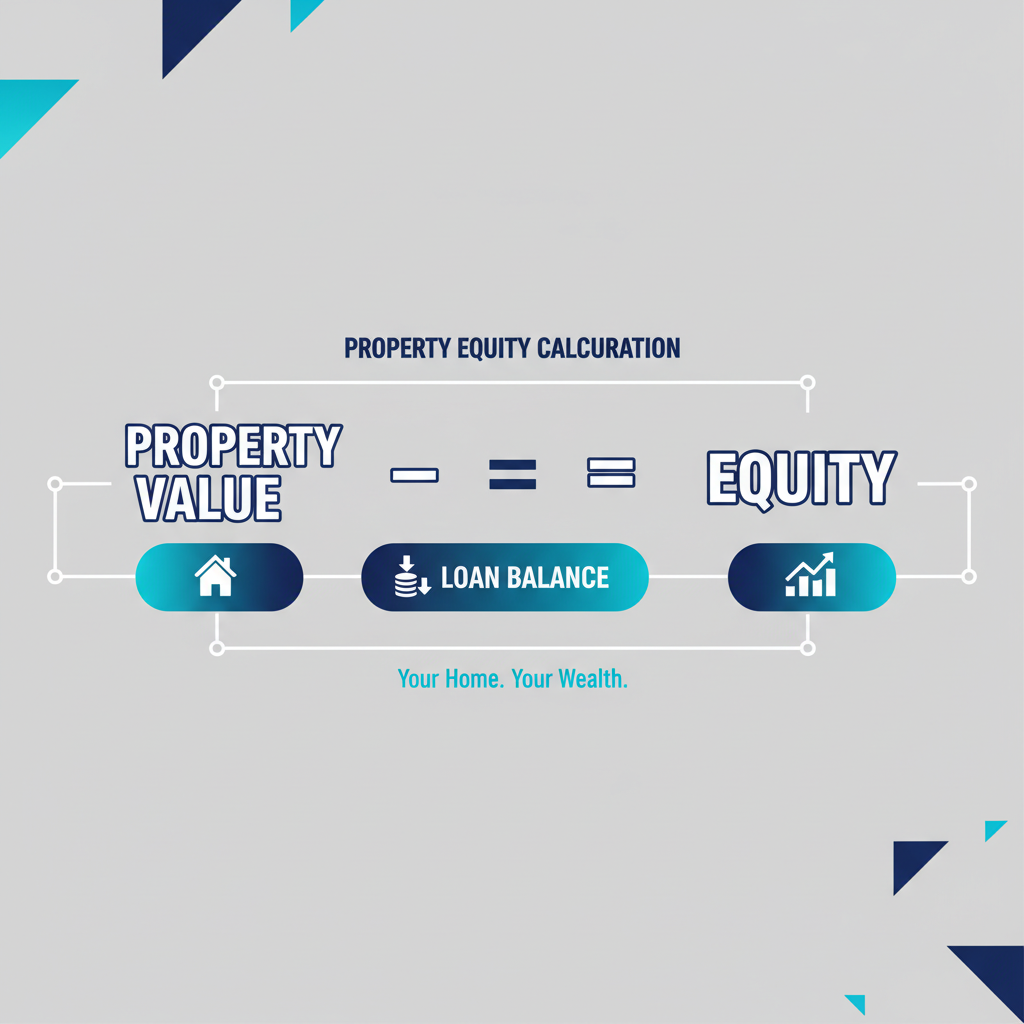
Property equity represents the portion of your property that you own outright. It's calculated by subtracting your outstanding mortgage balance from your property's current market value.
The formula is straightforward. If your property is valued at $700,000 and you owe $300,000 on your mortgage, your equity is $400,000. This number changes constantly as you pay down your loan and as property values fluctuate in the market.
What matters most is that this equity can be accessed and used to fund your next investment without needing to sell your existing property.
How Equity Grows Over Time
Equity builds through two primary mechanisms. The first is paying down your mortgage principal with each repayment. The second is capital growth, which occurs when your property increases in value over time.
In markets like Brisbane, Perth, and Adelaide, property values increased by 9-13% in 2025 according to Propertyology's 2026 market outlook. This means investors who purchased years ago have seen substantial equity growth without lifting a finger.
The longer you hold investment-grade property in strong locations, the more your equity compounds. This is why time in the market beats timing the market for long-term wealth creation.
The Difference Between Total Equity and Usable Equity
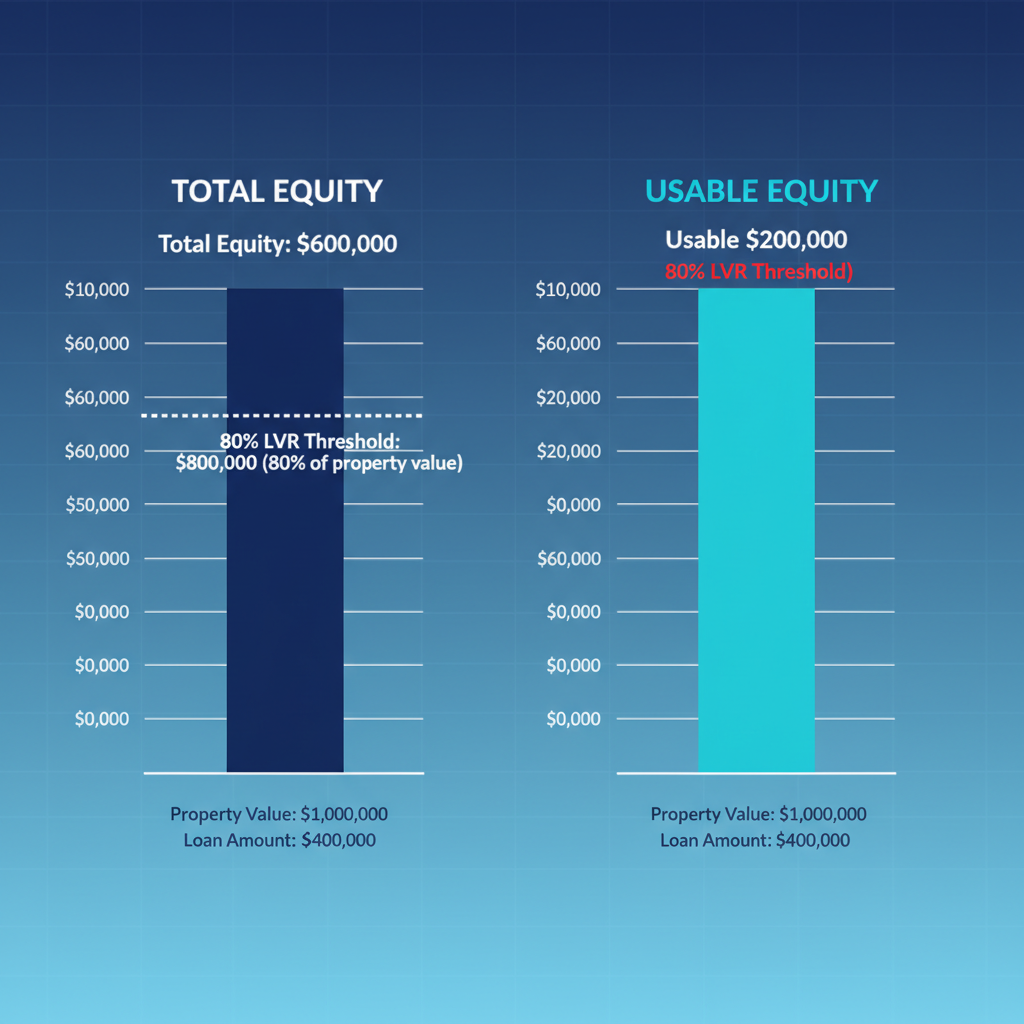
Many investors make a critical mistake by assuming all their equity is accessible. Lenders distinguish between total equity and usable equity, and the difference matters when you're ready to buy your next property.
Usable equity is the amount lenders will actually allow you to borrow against your property while maintaining a buffer. Most banks lend up to 80% of your property's value, meaning they require you to maintain at least 20% equity as a safety margin.
Using the previous example, if your property is worth $700,000, 80% of that value is $560,000. Subtract your $300,000 mortgage, and your usable equity is $260,000. This is the amount you can potentially access without paying Lenders Mortgage Insurance (LMI).
Understanding this distinction is crucial before you approach lenders or start searching for your next investment property. Buyers Agency Australia helps investors map out their usable equity and borrowing capacity before they begin property searches, ensuring every dollar is strategically deployed.
How to Calculate Your Property Equity Step by Step
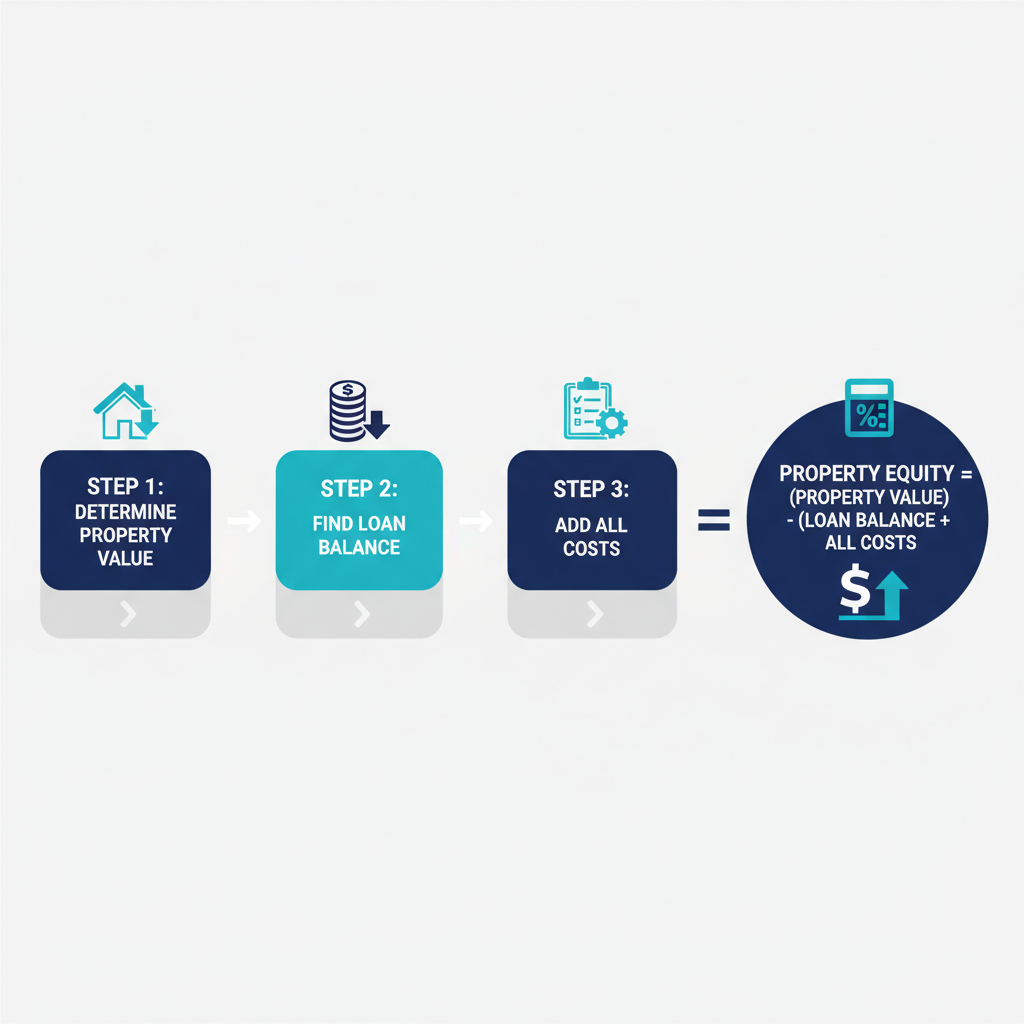
Step One: Determine Your Property's Current Market Value
The first step in calculating equity is knowing what your property is worth today. Purchase price is irrelevant unless you bought recently. What matters is current market value.
You have several options for determining this. Online property estimators like CoreLogic or Domain provide free estimates based on recent sales data. Real estate agents can provide a market appraisal, though these may be optimistic if they're hoping to list your property.
The most accurate method is a formal bank valuation, which lenders require when you apply to access equity. These valuations are conservative and based on comparable sales in your area, ensuring the figure reflects what the property would sell for quickly if needed.
Step Two: Calculate Your Outstanding Loan Balance
Next, you need to know exactly how much you owe. This includes your primary mortgage and any other debts secured against the property, such as home equity loans or lines of credit.
Your current mortgage statement shows your outstanding balance. If you have multiple loans against the property, add them all together. Don't forget to include any liens or legal judgments registered against the title, as these reduce your accessible equity.
This number decreases every time you make a repayment, though most of your early payments go toward interest rather than principal. As your loan matures, a larger portion of each payment reduces the principal, accelerating your equity growth.
Step Three: Apply the Equity Formula
Once you have both numbers, the calculation is simple. Subtract your total debt from your property's current market value.
If your property is valued at $800,000 and you owe $450,000, your total equity is $350,000. This represents your ownership stake in the property.
But remember, this is total equity, not usable equity. To calculate what you can actually access, multiply your property value by 80% (or whatever LVR your lender allows), then subtract your loan balance.
In this example, 80% of $800,000 is $640,000. Subtract your $450,000 loan and you have $190,000 in usable equity. This is what you can potentially borrow to fund your next investment.
Step Four: Account for Costs and Buffers
Accessible equity isn't just about the numbers. Lenders also assess your borrowing capacity based on income, expenses, and existing debts.
Even if you have $190,000 in usable equity, you still need to service the new loan. Lenders apply a serviceability buffer, typically adding 2-3% to current interest rates when assessing whether you can afford repayments.
You should also factor in purchase costs for your next property. Stamp duty, conveyancing fees, building inspections, and loan establishment fees can add 5-7% to the purchase price. If you're buying a $400,000 investment property, budget an additional $20,000-$28,000 for these costs.
This is where working with specialists like Buyers Agency Australia becomes valuable. Their team helps investors calculate true borrowing capacity and ensure equity is deployed efficiently across the right investment opportunities. You can explore your options through their free strategy session.
Understanding Loan-to-Value Ratio and Lending Limits
What Is LVR and Why Lenders Use It
Loan-to-Value Ratio (LVR) measures how much you're borrowing relative to your property's value. It's expressed as a percentage and is one of the key metrics lenders use to assess risk.
An LVR of 80% means you're borrowing 80% of the property's value and have 20% equity. The lower your LVR, the less risk you pose to lenders, which often translates to better interest rates and loan terms.
In 2026, the average Australian borrower has an LVR of 60.6%, according to analysis from Money.com.au. This suggests most homeowners have built substantial equity positions over recent years of strong capital growth.
The 80% LVR Threshold and LMI
Most lenders will lend up to 80% of a property's value without requiring Lenders Mortgage Insurance. This insurance protects the lender if you default, and it can cost thousands to tens of thousands of dollars depending on your loan size.
If you want to borrow more than 80% of your property's value, you'll typically need to pay LMI. Some lenders extend to 90% or even 95% LVR, but higher ratios mean higher costs and more restrictive lending criteria.
For investors, staying at or below 80% LVR is generally the sweet spot. It maximizes borrowing capacity without incurring unnecessary costs, and it preserves equity buffers that protect you if property values dip temporarily.
How LVR Affects Your Borrowing Capacity
Your LVR directly impacts how much equity you can access. Using our earlier example, a property worth $800,000 with a $450,000 loan has an LVR of 56.25%.
This means you're well below the 80% threshold and have significant borrowing capacity. You could increase your loan to $640,000 (80% of $800,000) and release $190,000 in usable equity.
But if your LVR was already 75%, your borrowing capacity would be much more limited. You'd only be able to access an additional $40,000 before hitting the 80% threshold.
This is why investors who start early and buy in growth markets have such a significant advantage. Their properties appreciate faster, reducing their LVR and creating more accessible equity for future purchases.
Recent Changes to Lending Standards in 2026
Australian lending standards have tightened in early 2026. From February 1, APRA introduced new debt-to-income ratio limits, capping high-risk loans at 20% of new lending for each bank.
Loans with a debt-to-income ratio above six times annual income are now considered high-risk. For an investor earning $75,000 annually, this means loans above $450,000 face additional scrutiny, according to The Conversation.
These changes won't affect most investors with strong equity positions and diversified income sources. But they do make it harder for borrowers who are already heavily leveraged or have limited serviceability.
This is another reason why understanding your equity position early and structuring loans correctly matters. The lending environment continues to evolve, and investors who stay informed and work with experienced advisors like Buyers Agency Australia maintain their competitive advantage.
Strategic Ways to Use Property Equity for Portfolio Growth
Using Equity as a Deposit for Your Next Investment
The most common and powerful way investors use equity is as a deposit for their next property. Instead of saving for years to accumulate another 20% deposit, you can access equity from your existing property immediately.
This strategy allows you to enter the market sooner, which is crucial in appreciating markets. According to Search Property's 2026 guide, with around $100,000 in usable equity, many quality investment properties become achievable.
The process works like this. You refinance your existing loan or take out an equity release loan for $100,000. You use this as the deposit on a $400,000-$500,000 investment property. You now own two properties with separate loan structures, both contributing to your long-term wealth.
One critical factor is ensuring the new property generates positive or neutral cash flow. Rental income should cover most or all of the loan repayments, meaning you're not funding the investment from your salary. This makes the strategy sustainable as you scale beyond two properties.
Renovations to Manufacture Additional Equity
Smart investors don't just wait for capital growth. They actively manufacture equity through strategic renovations that increase property values.
Spending $50,000 on a kitchen and bathroom renovation might increase your property's value by $80,000-$100,000 in the right market. This creates instant equity that can be accessed for your next investment.
The key is choosing renovations with high return on investment. Cosmetic updates like painting, flooring, and modern fixtures typically deliver 80-120% returns. Major structural changes or luxury finishes often deliver lower returns unless you're in prestige markets.
According to Property Update's analysis, savvy investors in 2026 are manufacturing equity through value-adding strategies rather than relying solely on market appreciation. This gives you control over your portfolio growth rather than hoping for market conditions to align.
Debt Recycling to Convert Non-Deductible Debt
Debt recycling is an advanced strategy that converts non-tax-deductible home loan debt into tax-deductible investment debt. It's particularly powerful for high-income investors looking to build wealth while reducing their tax liability.
Here's how it works. As you pay down your home loan, you redraw equivalent amounts and invest them in income-producing assets like shares or investment properties. The interest on the redrawn funds becomes tax-deductible because it's used for investment purposes.
Over time, your non-deductible home loan decreases while your tax-deductible investment loan increases. Your portfolio grows and you benefit from tax deductions on interest payments, as explained by Fox Mortgages.
This strategy requires careful structuring and professional advice to ensure compliance with ATO requirements. When executed correctly, it can significantly accelerate wealth creation for investors in higher tax brackets.
Building a Multi-Property Portfolio Through Strategic Equity Release
The most successful investors use equity systematically to build diversified portfolios across multiple markets. Rather than putting all their eggs in one basket, they spread risk and opportunity across different property types and locations.
A typical strategy might look like this. You buy your first investment property in a growth corridor like Brisbane. After three years, the property has appreciated 30% and you've paid down the principal. You now have $150,000 in usable equity.
You use that equity as a deposit on a second property in a different market, perhaps Perth or regional Queensland. Three years later, both properties have grown and you've paid down more principal. Now you have equity in two properties that can fund your third purchase.
This compounding effect is how investors build substantial wealth over 10-20 years. Each property contributes to the next, creating a snowball effect that accelerates over time.
Buyers Agency Australia specializes in helping investors identify the right properties and markets for each stage of this journey. Their 20+ years of experience and data-driven approach ensures every purchase adds genuine value to your portfolio. Learn more about their methodology through their contact page.
How Buyers Agency Australia Helps Investors Maximize Equity Strategy
Data-Driven Property Selection for Maximum Growth
Not all properties are created equal when it comes to equity growth. Buyers Agency Australia uses comprehensive market analysis to identify properties with the highest probability of long-term capital appreciation.
Their team analyzes infrastructure projects, employment trends, population growth, and supply constraints to pinpoint markets entering growth phases. This removes the guesswork and emotional decision-making that costs many investors thousands in missed opportunities.
With over 20 years of experience and a personal portfolio exceeding $10 million, founder Dragan Dimovski understands what separates investment-grade property from poor performers. This expertise is applied to every client's portfolio strategy, ensuring equity is deployed into assets that genuinely build wealth.
Transparent Fixed-Fee Model That Protects Your Equity
Unlike traditional agents who work on commission, Buyers Agency Australia operates on a transparent fixed-fee model. This means their advice isn't influenced by the sale price of the property, protecting your interests at every stage.
When you're using precious equity to fund your next purchase, every dollar matters. Commission-based models create conflicts of interest where agents benefit from you paying more. Fixed fees eliminate this problem entirely.
This structure is particularly valuable when accessing equity through refinancing or equity release loans. You want advisors who prioritize your long-term portfolio performance over short-term transaction volume.
End-to-End Support from Equity Calculation to Settlement
Building wealth through property equity isn't just about buying properties. It's about structuring loans correctly, understanding tax implications, and coordinating with mortgage brokers, accountants, and conveyancers.
Buyers Agency Australia provides comprehensive support throughout the entire process. They help you calculate usable equity, connect you with preferred mortgage brokers who understand investment lending, and ensure every transaction is structured to maximize tax efficiency.
This holistic approach is what separates strategic investors from those who stumble through the process. Having experienced professionals coordinate every element means nothing falls through the cracks and your equity is deployed efficiently.
For investors ready to take the next step, the FastTrack event provides in-depth education on property investment strategy and portfolio structuring. It's an opportunity to learn directly from the team and connect with other serious investors building long-term wealth.
Access to Off-Market Opportunities That Accelerate Equity Growth
Some of the best investment opportunities never hit public listing sites. Buyers Agency Australia's extensive network provides access to off-market properties that aren't available to the general public.
These properties often come with less competition, allowing you to negotiate better prices and terms. Paying $30,000-$50,000 less for an investment property means you start with instant equity before the market even recognizes the asset's true value.
Off-market access also means you can move quickly when opportunities arise. In competitive markets, properties sell within days of listing. Having a buyer's agent who knows about opportunities before they're advertised gives you a significant advantage.
This is particularly valuable when you're using equity from multiple properties to scale your portfolio. Speed and access matter, and Buyers Agency Australia's relationships across major Australian markets provide both.
Common Equity Mistakes That Cost Investors Thousands
Overextending and Compromising Cash Flow
The biggest mistake investors make with equity is accessing too much too quickly without considering serviceability. Just because you have $200,000 in usable equity doesn't mean you should borrow it all at once.
Every dollar you borrow increases your loan repayments. If rental income doesn't cover these repayments, you're funding the shortfall from your salary. This might be sustainable for one property, but it becomes dangerous as you scale.
Conservative investors maintain cash flow buffers and ensure each property is neutral or positive. This protects you during vacancy periods, interest rate increases, or unexpected maintenance costs.
Buying the Wrong Property in the Wrong Market
Accessing equity is only valuable if you deploy it into quality assets. Too many investors waste their equity on properties in declining markets, poorly located assets, or oversupplied apartment buildings.
These properties deliver low capital growth, poor rental yields, and limited future equity. Instead of building wealth, you've locked up capital in an underperforming asset that limits your ability to grow further.
This is why independent, data-driven advice matters. Buyers Agency Australia's research identifies markets with strong fundamentals and properties with genuine scarcity value. This ensures your equity works hard from day one.
Ignoring Tax Implications and Structuring
How you structure loans when accessing equity has significant tax consequences. Interest on investment property loans is tax-deductible, but only if the loan is properly structured for investment purposes.
Mixing personal and investment debt, or refinancing incorrectly, can compromise your tax deductions and cost you thousands annually. This is why working with accountants who understand property investment is essential.
Buyers Agency Australia coordinates with your existing advisors or can refer trusted professionals who specialize in investment property tax strategy. This integrated approach ensures your equity release is structured correctly from the start.
Failing to Reassess Equity Positions Regularly
Property values change constantly, as do interest rates and lending criteria. Investors who calculated their equity three years ago and haven't reassessed since are likely sitting on more accessible equity than they realize.
Regular equity reviews allow you to capitalize on market movements and adjust your strategy as opportunities emerge. This might mean accelerating your next purchase, refinancing to better rates, or restructuring loans to improve cash flow.
Making equity review part of your annual financial planning ensures you're always optimized and ready to move when the right opportunities appear.
Frequently Asked Questions About Property Equity
How much equity do I need to buy my next investment property?
Most investors need around $100,000 in usable equity to purchase a property in the $400,000-$500,000 range. This covers the 20% deposit plus associated purchase costs without requiring Lenders Mortgage Insurance.
Can I access equity without refinancing my entire loan?
Yes, you can take out a separate equity loan or line of credit secured against your property. This keeps your original loan intact while providing access to funds. Speak with a mortgage broker about the best structure for your situation.
How long does it take to build enough equity for another property?
This depends on market conditions and how quickly you pay down your loan. In strong growth markets like Brisbane or Perth, investors might build $100,000-$150,000 in equity within 3-5 years through appreciation alone.
What happens to my equity if property prices drop?
Your equity decreases if your property's value declines. This is why buying investment-grade property in strong markets with long-term fundamentals matters. Short-term fluctuations are normal, but quality assets recover and continue appreciating over time.
Do I need to pay capital gains tax when I access equity?
No, accessing equity through refinancing or loans is not a taxable event. You only pay capital gains tax when you sell the property. The interest on investment loans is typically tax-deductible, reducing your overall tax liability.
Conclusion: Taking Control of Your Property Equity Strategy in 2026
Understanding property equity is one thing. Using it strategically to build long-term wealth is another.
The investors who succeed in 2026 and beyond are those who view equity as their most powerful portfolio growth tool. They calculate it accurately, access it strategically, and deploy it into investment-grade properties that compound wealth over time.
This isn't about speculation or taking unnecessary risks. It's about understanding the numbers, working with experienced professionals, and making informed decisions that align with your long-term financial goals.
If you're ready to take control of your equity strategy and start building a portfolio that generates genuine wealth, the next step is clear. Book a free strategy session with Buyers Agency Australia to map out your equity position, identify your next opportunity, and create a roadmap for the coming years. Visit their free strategy session page to get started today.
 General
Learn exactly how much equity you have in your property and how to use it strategically to grow...
Buyers Agent for Property Investment Complete Guide Australia 2026
A buyers agent for property investment is a licensed professional who exclusively represents investors in property acquisition, offering market analysis, off-market access, due diligence, and negotiation services to help build wealth-generating portfolios while minimizing risk and maximizing returns.
If you're searching for your next investment property, you've probably realized that scrolling through Domain listings and attending weekend open homes isn't getting you ahead.
The reality is that most high-performing investment properties are snapped up before they hit the public market. That's where a specialist buyers agent for property investment can make the difference between building a seven-figure portfolio and getting stuck with your first property for years.
In this guide, we'll show you exactly how working with an investment property buyers agent can fast-track your wealth-building goals, what to expect in terms of fees and services, and why investors across Sydney, Melbourne, Brisbane, and Perth are choosing professional representation over DIY property hunting.
What Is a Buyers Agent for Property Investment
A buyers agent for property investment is a licensed real estate professional who works exclusively on behalf of property investors.
Unlike selling agents who represent vendors and earn commission by maximizing sale prices, buyers agents are paid by you to secure properties that align with your investment goals at the best possible price.
They specialize in identifying high-growth locations, analyzing rental yields, conducting comprehensive due diligence, and negotiating purchase terms that put you ahead from day one.
How Buyers Agents Differ from Real Estate Agents
Real estate agents work for sellers. Their goal is to achieve the highest sale price and fastest transaction for the vendor.
Buyers agents work for you. Their success is measured by how much value they secure below market price, how well the property fits your strategy, and how quickly they can help you build equity.
This fundamental difference means buyers agents operate with zero conflict of interest. They don't get paid more if you spend more, especially when working with a fixed-fee model like Buyers Agency Australia.
Three Core Services Investment Buyers Agents Provide
Most professional buyers agents offer tiered service levels to match different investor needs and budgets.
Full-Service Property Search includes everything from initial strategy consultation and suburb research through to settlement coordination. Expect market analysis, property inspections, contract review, building and pest reports, negotiation, and auction bidding.
Negotiation or Auction Bidding Only is ideal if you've already identified a property but want expert representation at the negotiation table or auction floor. This service typically costs between $1,000 and $3,000.
Strategic Advisory involves portfolio planning, market cycle analysis, and buyer education without active property search. This is popular with investors who want to build knowledge before committing capital.
According to REBAA, professional buyers agents must hold the appropriate state license and adhere to strict ethical standards to qualify for membership.
Why Property Investors Choose Buyers Agents in 2026
The Australian property market in 2026 presents unique challenges and opportunities for investors.
According to Propertyology, markets like Brisbane, Perth, and Adelaide delivered compound growth above 80% over the past five years. Melbourne, meanwhile, is positioned as a counter-cyclical opportunity with prices still below previous peaks.
Navigating these divergent conditions without professional guidance can cost investors both time and capital.
Access to Off-Market Properties Before the Public
Roughly 20% of Australian properties are sold off-market, according to industry data.
These deals happen through agent networks, private referrals, and direct seller approaches. Buyers agents have established relationships with selling agents across multiple markets, giving them early access to listings before they're advertised publicly.
This head start reduces competition, eliminates bidding wars, and often results in better purchase prices.
For interstate investors or time-poor professionals, off-market access is a game-changer. You're not competing with 30 other bidders at a Saturday auction. You're negotiating one-on-one with a motivated seller.
Market Insights That Outperform Public Data
Public property portals show you asking prices and recent sales. Buyers agents give you context.
They track suburb-level trends, days on market, vendor motivation, comparable sales, infrastructure pipelines, zoning changes, and rental demand shifts.
This intelligence helps you avoid overheated markets, identify emerging growth corridors, and time your entry for maximum equity gain.
REBAA's 2026 market outlook confirms that
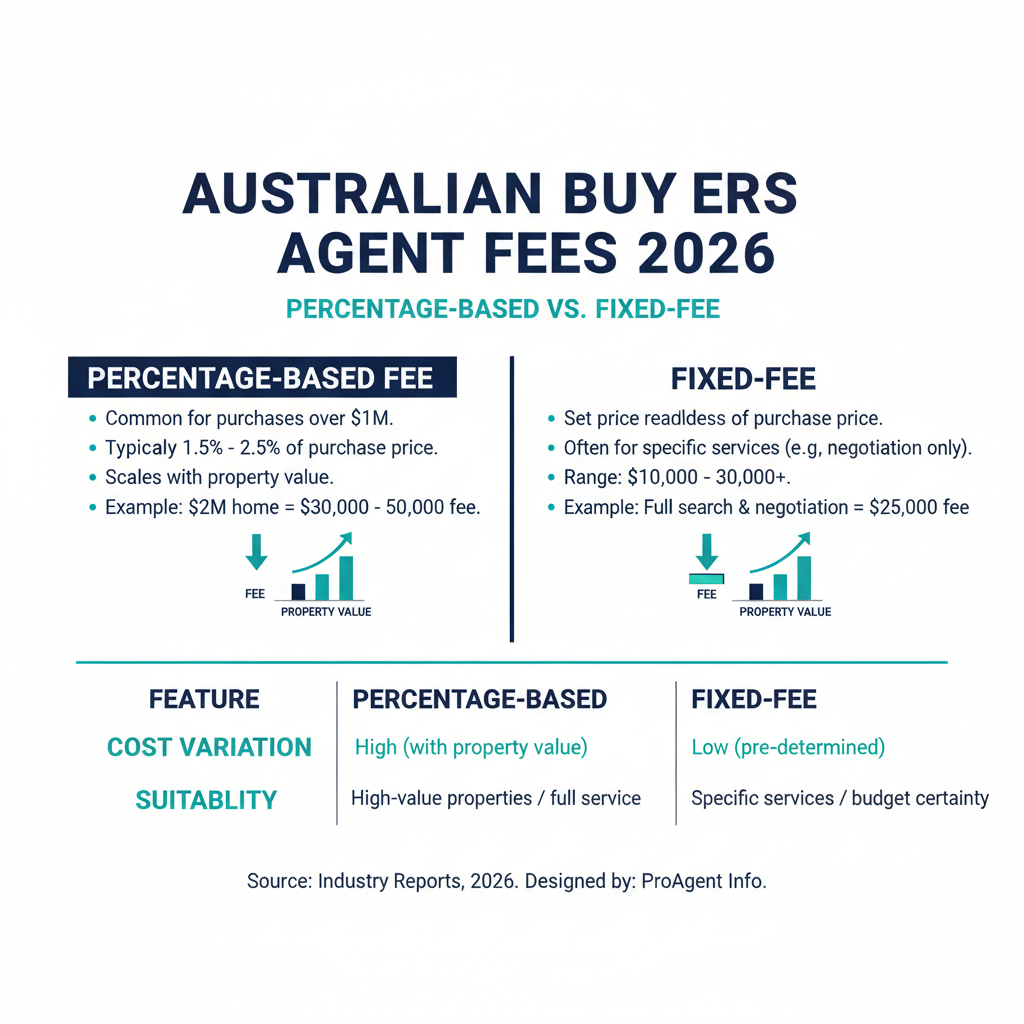
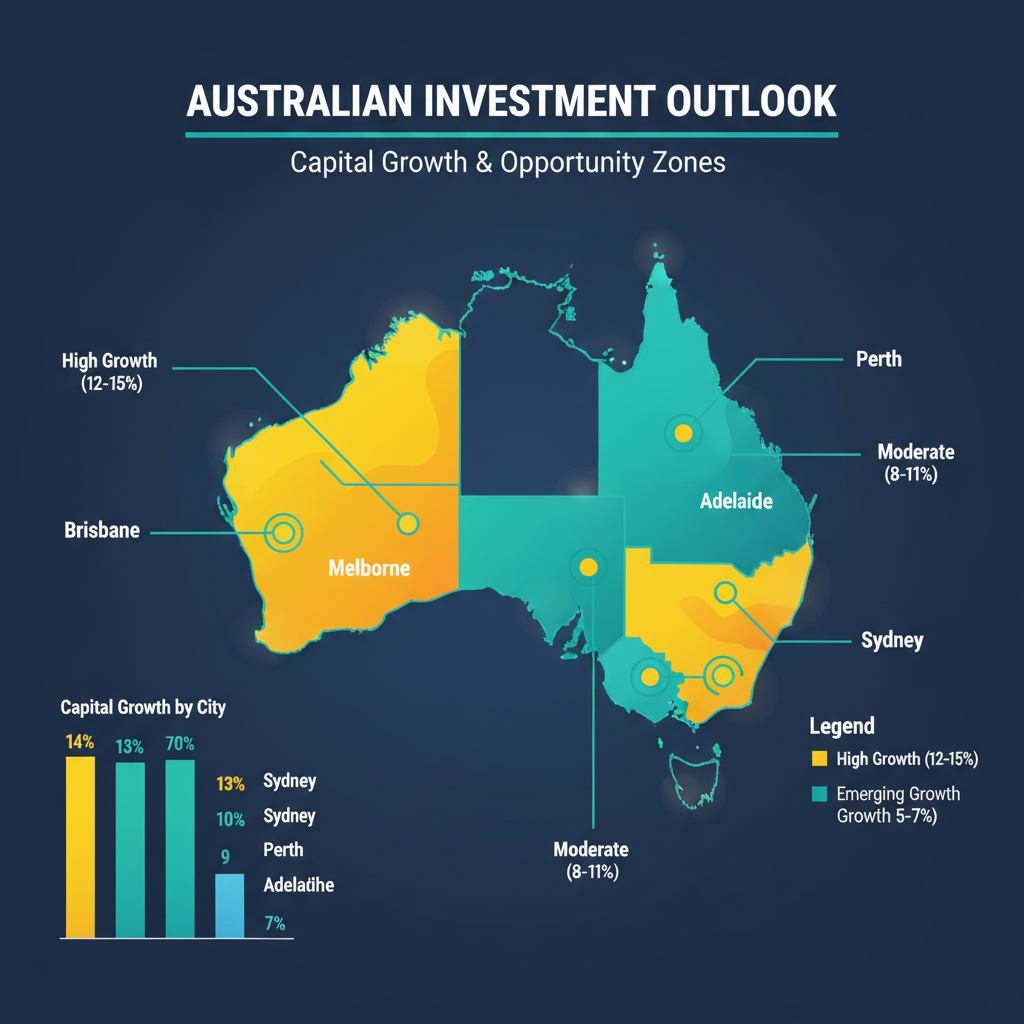
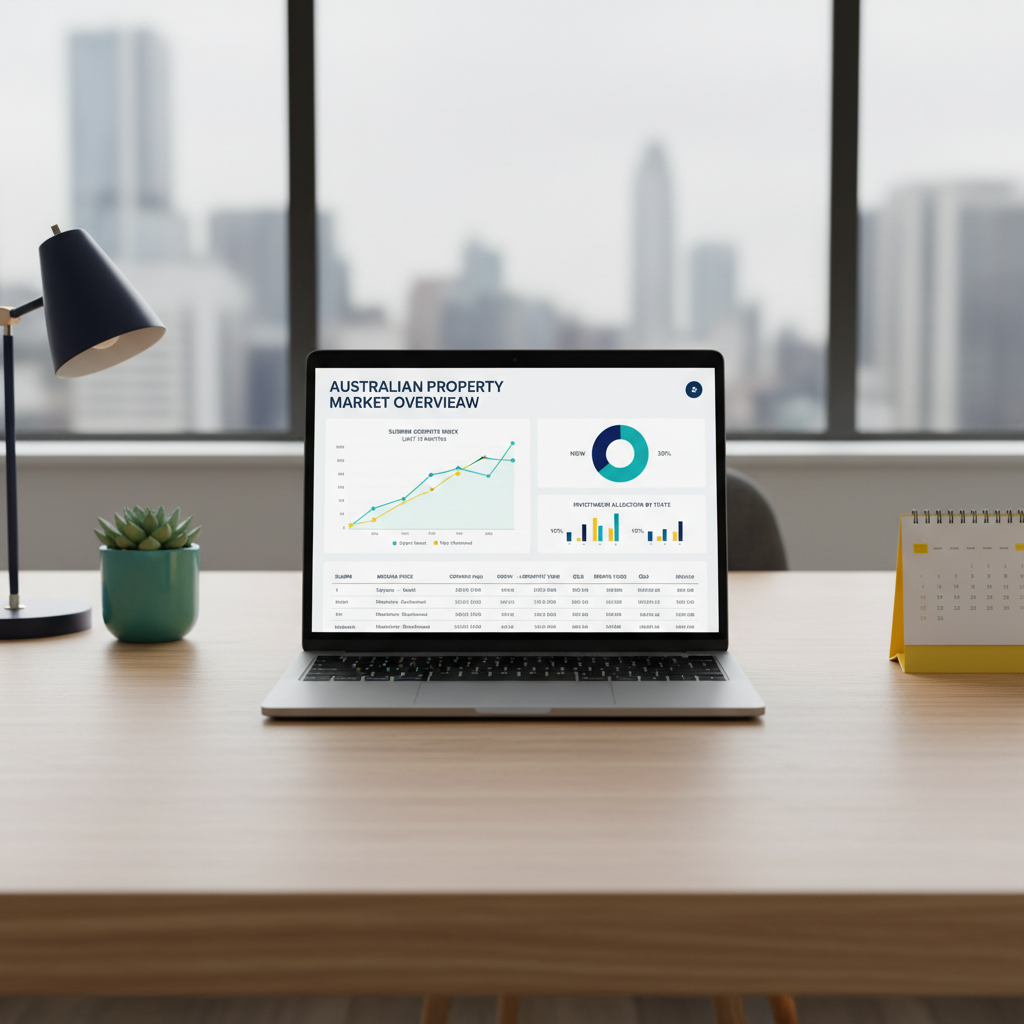 General
A buyers agent for property investment delivers market insights, off-market access, and negotiation expertise to help investors build...
Why We Do Not Recommend Off the Plan or House and Land Packages as an Investment
Off-the-plan apartments and house & land packages promise stamp duty savings and brand-new finishes, but they carry developer profit margins of 15-25%, settlement delays averaging 18-36 months, oversupply risks in fringe locations, and capital growth rates 30-50% below established property benchmarks.
If you're searching for an investment property in Australia, chances are you've been pitched an off-the-plan apartment or a house and land package. The glossy brochures, rental guarantees, and tax benefits sound attractive on paper. But here's the thing: these products are designed to maximize developer profits, not investor returns.
After 20+ years of property analysis, Buyers Agency Australia has seen too many clients lose equity, face valuation shortfalls, and struggle with stagnant capital growth from these purchases. This guide breaks down exactly why we don't recommend off-the-plan or house and land packages for investment, backed by real market data and case studies.
The Hidden Costs Developers Won't Tell You About
When you sign a contract for an off-the-plan apartment or house and land package, you're not just buying a property. You're paying for a developer's profit margin, marketing campaigns, sales commissions, and project financing costs.
Developer Profit Margins Inflate Purchase Prices
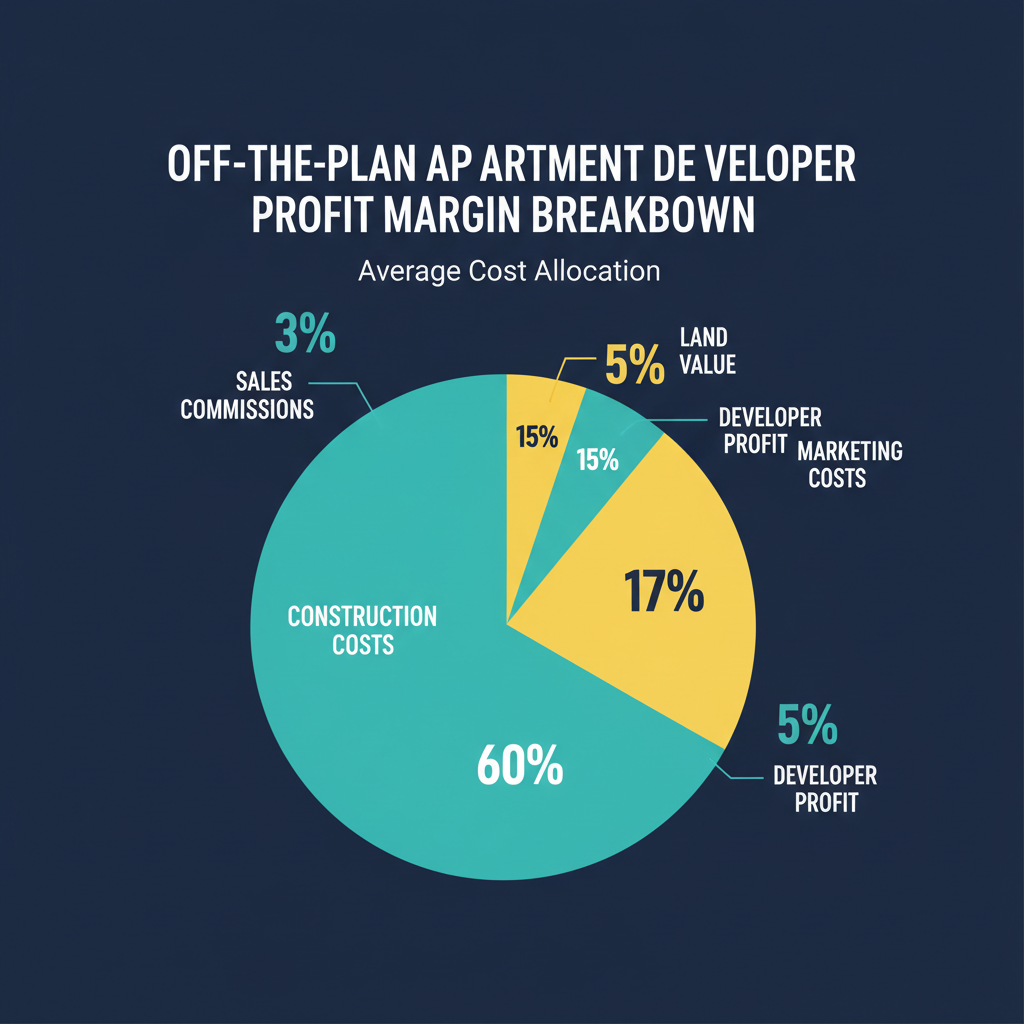
New property developments include a 15-25% profit margin baked into the purchase price. According to industry analysis, the developer's markup is equivalent to 2-3 years of capital growth that you'll never see.
Here's what you're actually paying for:
- Developer profits: 10-15% of the total price
- Marketing costs: 3-5% (display suites, advertising, sales teams)
- Sales commissions: 2-3% to project marketers
- Project financing: Interest costs passed to buyers
A 2020 NSW case study revealed that a buyer purchased an off-the-plan apartment for $850,000 that was valued at only $720,000 at settlement. The buyer lost $130,000 in equity before even taking possession.
You Pay Today's Inflated Prices for Tomorrow's Uncertain Market
Off-the-plan purchases lock you into today's price for a property you won't settle for 18-36 months. If the market softens or oversupply hits your area, you're stuck with an overpriced asset.
Property values can shift dramatically during construction periods. Data from Smart Property Investment shows that "high-rise and off-the-plan apartments continued to struggle due to oversupply."
Settlement Delays Create Financial and Emotional Stress
Construction delays are not the exception; they're the norm. Recent data shows approximately 30% of off-the-plan developments in NSW face delays exceeding six months.
Construction Timeline Blowouts Are Common
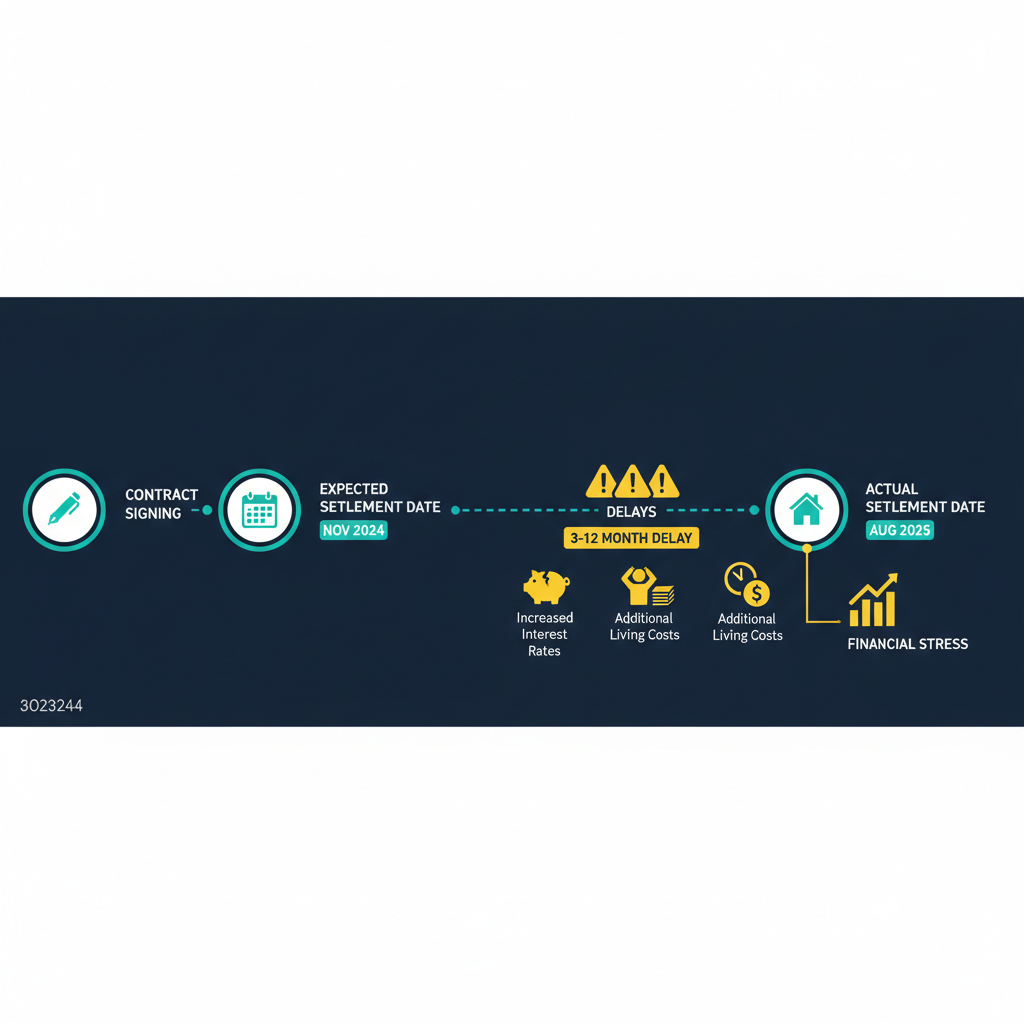
Australian building data reveals construction times have increased significantly:
| Property Type |
2015/16 Average |
2023 Average |
Increase |
| Houses |
12 months |
16 months |
34% |
| Townhouses |
14 months |
16.4 months |
17% |
| Apartments |
24+ months |
30+ months |
25% |
One Sydney CBD apartment project commenced sales in 2013 with an expected 2017/18 completion. Actual completion occurred in 2021, three years after the initial sunset date. Buyers had their lives on hold for up to eight years.
Financial Consequences of Delays
Extended settlement periods create multiple financial risks:
- Lost rental income: No cash flow while paying interest on deposits
- Finance approval lapses: Pre-approvals expire, forcing buyers to reapply at different rates
- Penalty interest: Late settlement can trigger 8-10% annual interest charges
- Missed market opportunities: Capital tied up while better investments pass by
Approximately 15% of off-the-plan purchases in NSW experience significant settlement delays, and 40% result in financial losses for buyers according to legal case data.
The Sunset Clause Trap
Sunset clauses were meant to protect buyers, but developers have learned to exploit them. Some developers deliberately delay projects to benefit from market price increases, then rescind contracts and resell at higher prices.
In 2019, several developers invoked sunset clauses after property values rose, leaving buyers without properties and fighting to recover deposits.
Valuation Shortfalls at Settlement Can Be Devastating
One of the most common disasters we see with off-the-plan purchases is valuation shortfall at settlement.
The Valuation Gap Problem
When you purchase off-the-plan, the bank won't provide a final valuation until the property is complete. If the completed property values below your purchase price, you'll need to cover the difference in cash.
A Sydney case study from 2016-2020 found that 84% of off-the-plan apartment buyers faced valuation shortfalls at settlement. Many buyers who couldn't make up the difference lost their deposits entirely.
Real-World Valuation Shortfall Example
Purchase scenario:
- Off-the-plan purchase price: $750,000
- Deposit paid: $75,000 (10%)
- Bank valuation at settlement: $680,000
- Approved loan (80% LVR): $544,000
- Cash required to settle: $206,000
- Original cash required: $150,000
- Additional cash shortfall: $56,000
Many buyers simply don't have an extra $56,000 lying around and are forced to forfeit their deposit.
Why Valuations Come in Low
Bank valuers assess completed properties based on actual market conditions, not developer projections. Common reasons for valuation shortfalls include:
- Market softening during construction period
- Oversupply of similar properties in the area
- Quality issues or defects in the completed building
- Smaller-than-advertised square footage or inferior finishes
- Poor building reputation or cladding issues
According to Buyers Agency Australia's free strategy session data, we've seen valuation shortfalls range from $40,000 to $180,000 on individual purchases.
Capital Growth Is Fundamentally Weaker in New Developments
The primary goal of investment property is capital growth. Off-the-plan and house and land packages consistently underperform established properties on this metric.
Land-to-Asset Ratio Matters Most
Property experts universally agree: land drives capital growth, buildings depreciate.
Off-the-plan apartments have minimal land value. You own a fraction of the land beneath a 20-storey tower shared with 200+ other owners. House and land packages in fringe locations have low-value land with limited scarcity.
Established homes in established suburbs offer higher land-to-asset ratios and proven scarcity value.
Location Is Everything
Most house and land packages are located on city outskirts in areas with:
- Abundant land supply (limiting scarcity premium)
- Weaker economic drivers (fewer jobs, lower incomes)
- Lack of established infrastructure (schools, transport, amenities)
- Limited established capital benchmarks
According to Momentum Wealth, the majority of home and land packages are "located on the outskirts of the city, in areas often with abundant supply of land, weaker economic drivers and a lack of infrastructure."
Capital growth is harder to achieve in these locations. Over 30 years, Australian property has averaged 6.4% annual growth, but fringe locations significantly underperform this average.
Established Homes Outperform Over Time
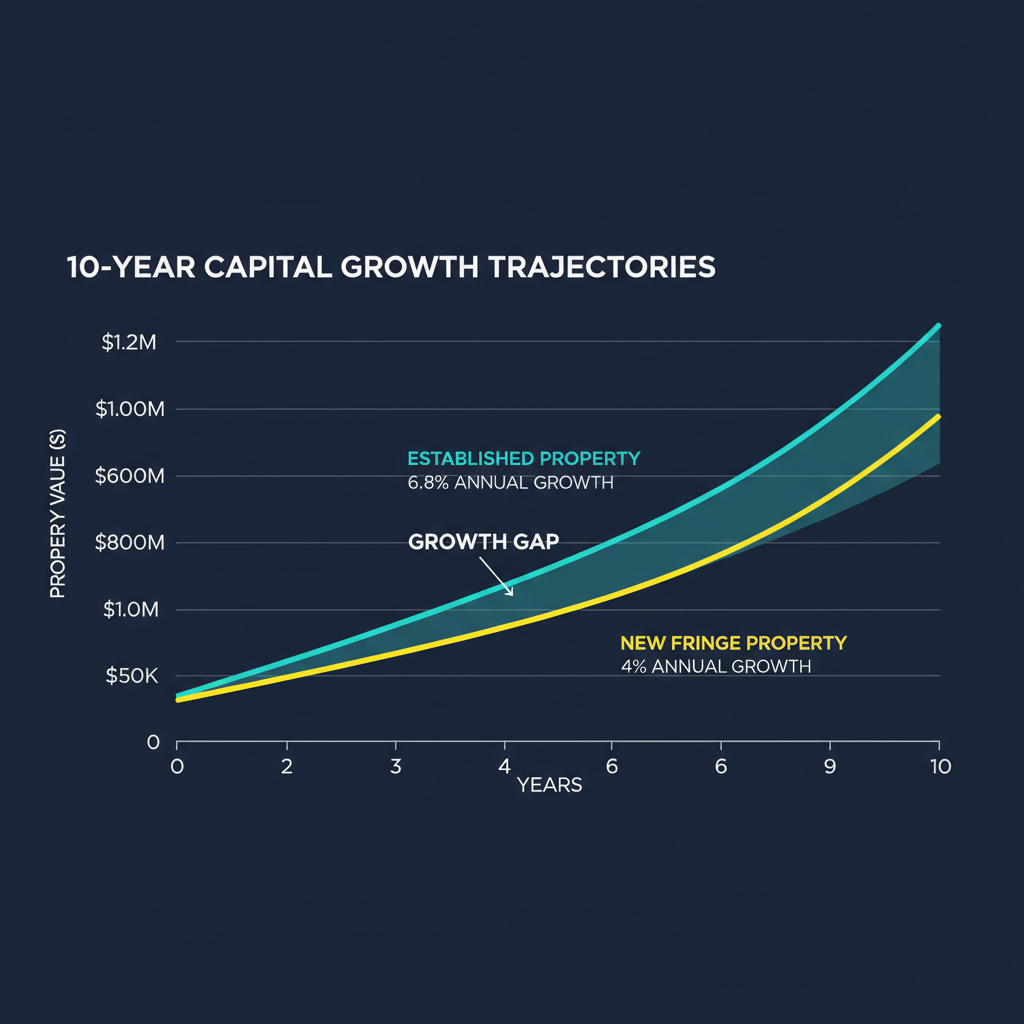
Historical data shows established homes in middle-ring suburbs deliver 30-50% stronger capital growth than new developments in fringe locations.
30-year growth comparison (CoreLogic data):
- Established homes in established suburbs: 6.8% annual average
- New developments in fringe locations: 3-4% annual average
- Difference: 50-80% higher total returns
A $500,000 property growing at 6.8% annually reaches $1.38 million in 15 years. The same property growing at 4% reaches only $900,000. That's a $480,000 difference.
Oversupply Risks Crater Rental Yields and Future Values
When you buy off-the-plan or in a new estate, you're part of a mass delivery of identical properties hitting the market simultaneously.
The Apartment Oversupply Problem
Multiple apartment towers completing at once flood the rental market with hundreds of identical units. This creates:
- Rental competition: 50-100+ similar properties chasing the same tenants
- Downward rent pressure: Landlords forced to drop rents to secure tenants
- Extended vacancy periods: Properties sitting empty for months
- Weak resale values: Too many sellers, not enough buyers
Smart Property Investment reported that "high-rise and off-the-plan apartments continued to struggle due to oversupply and weaker tenant demand" in 2025.
Over 60% of off-the-plan buyers in NSW expressed regret, citing inflated prices as a key factor.
House and Land Estate Saturation
New housing estates release hundreds of lots simultaneously, creating the same oversupply dynamic:
- Every property looks identical
- No scarcity value
- Rental yields drop as supply exceeds demand
- Resale competition is fierce
When every street has 3-5 properties for rent, landlords compete on price, not quality.
Building Quality and Defects Add Risk and Expense
When you buy established, what you see is what you get. With off-the-plan, you're buying based on plans and marketing images, not reality.
The Quality Uncertainty Problem
You won't know the actual quality of finishes, materials, or workmanship until completion. Common issues include:
- Inferior appliances or fittings substituted
- Smaller-than-advertised room sizes
- Poor natural light or aspect
- Cladding or fire safety issues
- Structural defects requiring expensive remediation
Nearly 25% of off-the-plan buyers report defects or quality issues upon completion.
Limited Recourse for Defects
Most off-the-plan contracts stipulate buyers cannot delay settlement due to minor defects. You must settle and then chase repairs, which can take months or years.
High-profile cases of defects like cladding issues, water ingress, and structural problems have made headlines. These issues devastate property values and create ongoing costs for owners.
Builder and Developer Insolvency Risk
Approximately 10% of off-the-plan projects in NSW experience developer insolvency or financial difficulties. If your builder goes bust mid-construction, your deposit is at risk and completion can be delayed indefinitely.
Depreciation Benefits Are Overrated and Temporary
One of the most commonly cited benefits of buying new is depreciation tax benefits. Let's look at the reality.
Depreciation Math Doesn't Justify Poor Capital Growth
Yes, you can claim higher depreciation deductions on new properties. But this benefit is temporary and doesn't offset poor capital growth.
Depreciation example:
- New property depreciable value: $450,000
- Annual depreciation claim: ~$15,000-$20,000
- Tax benefit at 37% rate: ~$5,500-$7,400 per year
- Total 10-year tax benefit: ~$55,000-$74,000
Now compare to capital growth:
Capital growth comparison (10 years):
- Established property ($600,000 at 6.8% growth): Gains $512,000
- New property ($650,000 at 4% growth): Gains $312,000
- Capital growth difference: $200,000
The depreciation tax benefit of $55,000-$74,000 doesn't come close to offsetting the $200,000 capital growth difference.
According to established property investment principles, established homes in inner and middle-ring suburbs deliver superior long-term wealth creation even without depreciation benefits.
Depreciation Recapture Reduces Net Benefit
When you sell, the ATO may recapture depreciation at up to 25%, further reducing the net benefit. Strategic investors using Buyers Agency Australia's expertise focus on properties that deliver 10-year portfolio growth, not short-term tax tricks.
The Rental Guarantee Illusion
Many off-the-plan developments offer rental guarantees to attract investors. These guarantees are marketing tools, not genuine benefits.
How Rental Guarantees Work
The developer offers to guarantee rental income for 1-2 years. Sounds great, right?
Here's the catch: the cost of the guarantee is built into your purchase price. You're essentially paying yourself with your own borrowed money.
What Happens When the Guarantee Ends
Once the guarantee expires:
- Rental rates drop to true market levels (often 15-30% lower)
- Vacancy periods emerge as oversupply hits
- Cash flow turns negative
- Investors realize they overpaid
Industry experts warn that rental guarantees are "tricks such promotions" used to promote house and land packages as investment products when they are not.
How Buyers Agency Australia Identifies Investment-Grade Property
After 20+ years of property analysis and having built a $10M+ personal portfolio, Dragan Dimovski and the Buyers Agency Australia team have developed a proven framework for identifying properties that deliver long-term wealth.
Our Investment Property Selection Framework
We focus on properties with:
1. High land-to-asset ratio
Established homes on valuable, scarce land
2. Proven capital growth suburbs
Middle-ring locations with 10+ years of consistent 6-8% annual growth
3. Strong economic fundamentals
- Above-average household incomes
- Employment diversity
- Infrastructure investment
- Owner-occupier demand
4. Scarcity and limited supply
Areas where new supply is constrained by geography, zoning, or development costs
5. Established benchmarks
Suburbs with precedent for higher values nearby
6. Off-market opportunities
We access properties before public listing, reducing competition and securing better value
The 10-Year Portfolio Modeling Approach
Unlike project marketers selling whatever inventory developers need to move, we model each property's likely performance over 10 years based on:
- Historical growth patterns
- Demographic trends
- Infrastructure pipelines
- Supply and demand dynamics
- Economic forecasts
This approach has helped clients build multi-property portfolios that consistently outperform market averages.
Our transparent, fixed-fee model means we're never incentivized to sell you the wrong property. We only succeed when you succeed.
Case Study: Established vs Off-the-Plan Investment
Client A: Off-the-Plan Apartment
- Purchase price: $550,000 (2018)
- Settlement: 2020 (2-year delay)
- Bank valuation: $490,000
- Cash shortfall required: $38,000
- 2025 value: $520,000
- Total gain: -$30,000 (loss)
Client B: Established Home (Buyers Agency Australia sourced)
- Purchase price: $580,000 (2018)
- Settlement: 4 weeks
- Immediate rental income: $520/week
- 2025 value: $920,000
- Total gain: $340,000 (58% increase)
The difference speaks for itself.
When House and Land Packages Might Work (Rarely)
We're not saying house and land packages are never appropriate. There are rare scenarios where they make sense.
The Exception: Infill Locations with Limited Supply
If a house and land package is located in an established, tightly held suburb with genuine scarcity and strong demand fundamentals, it might be worth considering.
Key criteria:
- Located in established middle-ring suburb
- Limited alternative supply
- High owner-occupier demand
- Strong economic drivers
- Proven capital growth history
These opportunities are rare. Most house and land packages are in fringe locations with abundant supply.
For Owner-Occupiers, Not Investors
House and land packages can work for owner-occupiers who:
- Want to design their own home
- Don't mind living in fringe locations
- Are not concerned about capital growth
- Value new home warranties and low maintenance
For investors seeking long-term wealth creation, established property in established suburbs remains the superior strategy.
What to Do If You've Already Purchased Off-the-Plan
If you've already signed an off-the-plan contract, you have options.
Review Your Contract Immediately
Engage a property lawyer to review:
- Sunset clauses and your rights
- Conditions precedent
- Developer obligations
- Exit clauses
Some contracts include cooling-off periods (10 business days in NSW for off-the-plan) or sunset clause protections.
Monitor Your Finance Approval
Stay in touch with your lender and ensure your finance approval remains current. If your financial circumstances change or lending policies tighten, address this early.
Arrange Independent Valuation Pre-Settlement
Before settlement, arrange an independent valuation to identify any potential shortfall early. This gives you time to negotiate with the developer or explore alternatives.
Consider Assignment if Permitted
Some contracts allow you to assign (on-sell) the contract before settlement. If property values have risen, this might allow you to exit with minimal loss.
Seek Expert Advice
Contact Buyers Agency Australia for a confidential review of your situation. We've helped clients navigate off-the-plan challenges and develop strategies to minimize losses.
The Smarter Investment Strategy: Established Property in Proven Locations
The evidence is overwhelming: established homes in established suburbs deliver superior long-term investment returns.
Why Established Property Wins
Immediate certainty:
You see exactly what you're buying. No surprises at settlement.
Immediate rental income:
Cash flow starts immediately, not in 2-3 years.
Proven capital growth:
Historical data demonstrates consistent appreciation.
Higher land value:
Scarcity drives long-term wealth creation.
No developer margin:
You pay market value, not inflated new property prices.
No construction risk:
No delays, no valuation shortfalls, no builder insolvency.
Renovation opportunity:
Add value through strategic improvements.
Focus on Inner and Middle-Ring Suburbs
The best long-term investment properties are located in:
- Inner suburbs: 5-10km from CBD, high amenity, scarce supply
- Middle-ring suburbs: 10-20km from CBD, established infrastructure, owner-occupier demand
These locations consistently outperform fringe areas by 30-50% over 10-20 year periods.
Off-Market Property Access
Many of the best investment properties never hit the public market. Buyers Agency Australia has developed relationships with agents, developers, and private sellers to access off-market opportunities before competition drives up prices.
Off-market properties often offer:
- Better value (no public auction competition)
- Less emotional bidding
- More time for due diligence
- Stronger negotiating position
Our FastTrack Event provides insights into how we source and evaluate these opportunities.
Frequently Asked Questions
Q: Are off-the-plan apartments ever a good investment?
Rarely. They carry developer margins, oversupply risks, and weak capital growth. Established property consistently outperforms.
Q: What if I get a rental guarantee with my house and land package?
Rental guarantees are marketing tactics with costs built into your purchase price. They expire after 1-2 years.
Q: Can I get a buyers agent to review an off-the-plan contract?
Yes. Buyers Agency Australia offers contract review services to identify risks and help you make informed decisions.
Q: What's the biggest risk with off-the-plan purchases?
Valuation shortfall at settlement. If the bank values the property below your purchase price, you must cover the gap in cash.
Q: How much do developers mark up off-the-plan prices?
Developer profit margins typically range from 15-25%, plus 3-5% marketing costs, resulting in 20-30% total markup over true market value.
Key Takeaways: Why We Don't Recommend Off the Plan or House and Land Packages
- Developer margins inflate prices by 20-30%, eliminating your first 2-3 years of capital growth
- Settlement delays averaging 18-36 months create financial stress and lost opportunities
- 84% of off-the-plan buyers in one study faced valuation shortfalls, requiring tens of thousands in extra cash
- Capital growth is 30-50% weaker in fringe locations compared to established middle-ring suburbs
- Oversupply craters rental yields when hundreds of identical properties hit the market simultaneously
- Building quality uncertainties and defects affect 25% of off-the-plan completions
- Depreciation tax benefits don't offset poor capital growth; the math doesn't work
- Established homes in proven locations deliver superior long-term wealth creation
Property investment is a long-term wealth strategy, not a short-term tax minimization game. Focus on what drives wealth: scarce land in locations with proven demand and consistent capital growth.
If you're serious about building a property portfolio that delivers genuine wealth, book a free strategy session with Buyers Agency Australia. We'll show you exactly how to identify investment-grade properties that outperform the market over 10-20 year horizons.
Don't fall for glossy brochures and developer sales tactics. Get expert guidance from Australia's leading buyer's advocates and start building real wealth through property.
 General
Off-the-plan and house & land packages carry inflated developer margins, settlement delays, oversupply risks, and poor capital growth...
Is a Buyers Agent Worth It in Australia 2026 Cost vs Return Breakdown
A buyers agent in Australia typically costs between 1.5-3% of the purchase price or $10,000-$33,000 as a fixed fee, but expert negotiation delivers average savings of $44,000, plus access to 20-38% of properties never listed publicly, making the investment financially worthwhile for most property buyers.
Let's be honest. You're staring at property listings every weekend, losing bids at auctions, and wondering if hiring a buyers agent is just another cost eating into your deposit.
With Sydney median house prices pushing past $1.3 million and Brisbane growing 15% year-on-year, the stakes have never been higher. One wrong purchase can cost you decades of wealth creation. That's where the buyers agent question becomes critical.
In this comprehensive breakdown, we'll show you exactly what buyers agents charge across Australia in 2026, the measurable return they deliver, and when the investment makes sense for your situation.
What Does a Buyers Agent Actually Cost in Australia
Understanding Fee Structures Across Australia
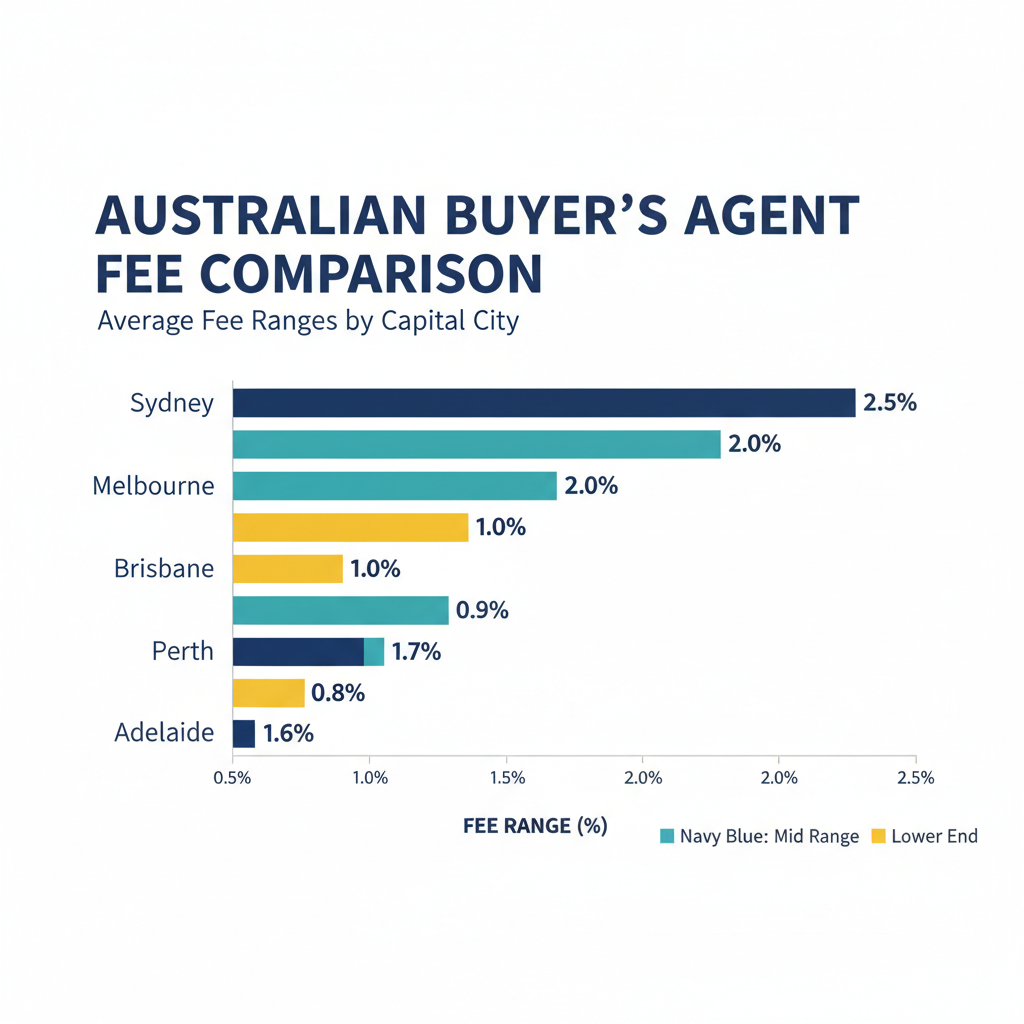
Buyers agent fees vary significantly by city, property type, and service level. Here's what you'll actually pay in 2026.
Sydney: $8,000-$21,000 fixed fee or 1.5-3% of purchase price (average $14,500)
Melbourne: $10,000-$18,000 fixed fee or 1.5-3% of purchase price
Brisbane: $6,000-$18,000 fixed fee or 1-2.7% of purchase price
Perth: $11,000 fixed fee or 1.8-2.5% of purchase price
Adelaide: $10,000 fixed fee or 1.5-2.4% of purchase price (lowest fees nationally)
According to industry data from 2026, most full-service buyers agents charge between 1.5-3% of the property purchase price or a fixed fee ranging from $10,000 to $33,000.
Percentage vs Fixed Fee Which Costs Less
The fee structure you choose dramatically impacts your total cost.
Percentage-Based Fees: Your agent charges 1.5-3% of the final purchase price. On an $800,000 property at 2%, that's $16,000. The problem? Your agent earns more when you pay more, creating a potential conflict of interest.
Fixed Fee Model: You pay a set amount ($10,000-$33,000) regardless of final price. Your agent has zero incentive to push you toward higher-priced properties. Buyers Agency Australia operates on this transparent model, ensuring your advocate negotiates hard on price, not padding their commission.
The Hidden Cost: Most agents require a 20-50% upfront retainer ($3,000-$10,000), deducted from the final fee. The balance is paid at settlement.
Service Levels That Impact Pricing
Not all buyers agent services are created equal. Here's what you get at each price point.
Full Search & Acquisition ($10,000-$33,000):
- Property search across on-market and off-market listings
- Suburb analysis and investment strategy
- Property inspections with detailed reports
- Contract review and due diligence
- Negotiation and auction bidding
- Settlement coordination
Negotiation Only ($3,000-$8,000):
- Property appraisal and market valuation
- Contract negotiation for a property you've already found
- No search or inspection services
Auction Bidding Only ($500-$1,500):
- Attend and bid at auction on your behalf
- Pre-auction price guidance
- No search, inspection, or negotiation services
Most investors and first-home buyers opt for full-service because they lack local market knowledge and can't attend inspections interstate. Time-poor professionals earning $100+/hour find the opportunity cost of DIY property search exceeds the buyers agent fee.
The Real ROI Buyers Agents Deliver in 2026
Average Purchase Price Savings Documented
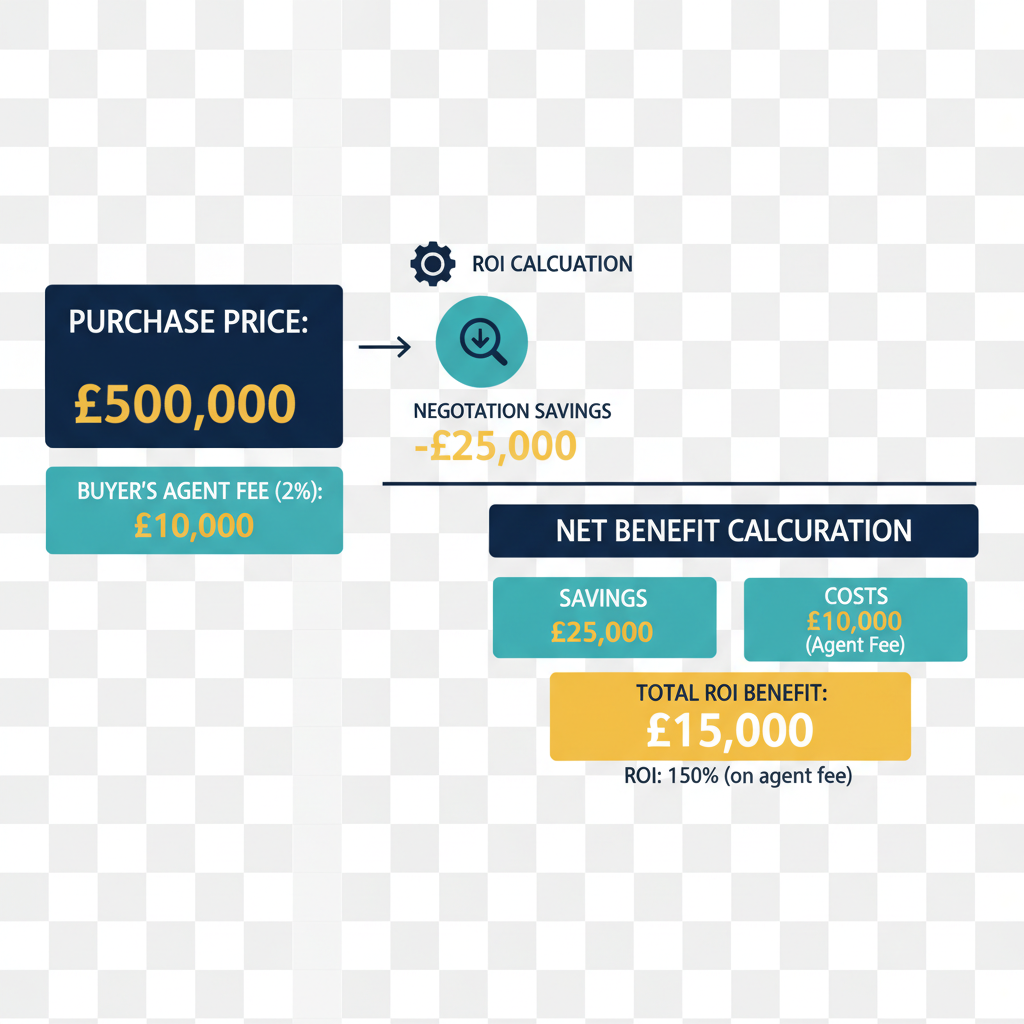
The question isn't whether buyers agents save you money. It's how much.
Recent data from Australian buyers agents shows expert negotiation delivers average savings of $44,000 compared to unrepresented buyers.
Here's how the math works on an $800,000 property:
- Listing price: $850,000
- Independent valuation: $800,000
- Your buyers agent negotiates: $785,000
- Purchase price saving: $65,000
- Buyers agent fee (fixed): $15,000
- Net financial benefit: $50,000
A 2024 case study from Brisbane shows these savings in action. A Paddington property listed at $1.15 million had a fair market value of $1.05 million. Through strategic negotiation, the buyers agent secured it for $985,000 – a $165,000 reduction. After the $17,000 agent fee, the client saved $148,000.
Off-Market Property Access Value
Here's what most buyers miss. In 2024, 20% of Australian properties sold off-market nationally. In Brisbane, that number reached 38% for buyers agent clients.
Off-market properties offer:
- 5-12% lower purchase prices (no auction competition)
- First look before public listing
- Motivated sellers willing to negotiate
- No weekend open-home bidding wars
Dragan Dimovski from Buyers Agency Australia has built relationships with selling agents across all capital cities over 20+ years. These connections deliver early notification of properties before they hit realestate.com.au or Domain.
Can you access off-market deals yourself? Technically yes. But it requires daily calls to dozens of selling agents, building trust over months, and being first in line when opportunities arise. Most buyers don't have that bandwidth.
Time Savings for Busy Professionals
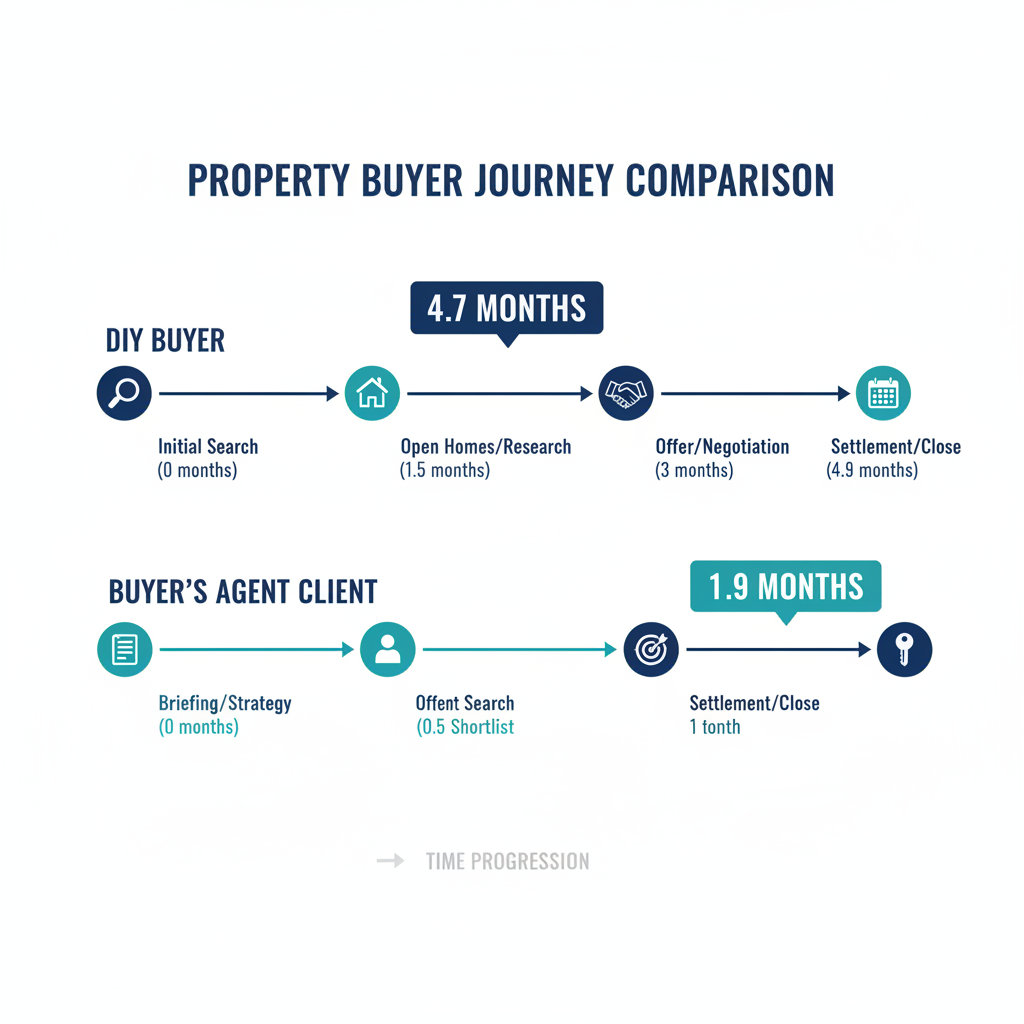
Let's quantify what most people overlook: your time has value.
The average DIY property buyer spends:
- 40 hours researching suburbs and market data
- 60 hours attending inspections (10 properties x 6 hours per weekend)
- 30 hours on due diligence (contract reviews, building reports, strata checks)
- 20 hours negotiating and managing the purchase process
- Total: 150 hours over 4.7 months
For professionals earning $100+/hour, that's $15,000 in opportunity cost before you even factor in expertise gaps.
Buyers agency clients secure properties in an average 1.9 months from engagement to settlement. The timeline advantage provides earlier access to rental income and capital growth – significant financial benefits in rising markets.
Capital Growth Quality Matters Long-Term
The biggest ROI factor gets the least attention: buying the right property in the first place.
A buyers agent's property selection methodology prioritizes long-term fundamentals:
- Infrastructure investment and transport upgrades
- Employment growth and demographic trends
- Supply constraints and zoning changes
- School catchments and lifestyle amenities
- Historical growth cycles and market timing
Data from property research firms shows properties in the top-performing quartile deliver 8-12% annual capital growth versus 4-6% for bottom quartile assets. Over a 10-year hold period, that's the difference between a property doubling in value versus growing 50%.
On an $800,000 purchase, the variance is $400,000 versus $200,000 in equity gain. No buyers agent fee comes close to that impact.
Are Buyers Agent Fees Tax Deductible in Australia
Investment Property Tax Treatment
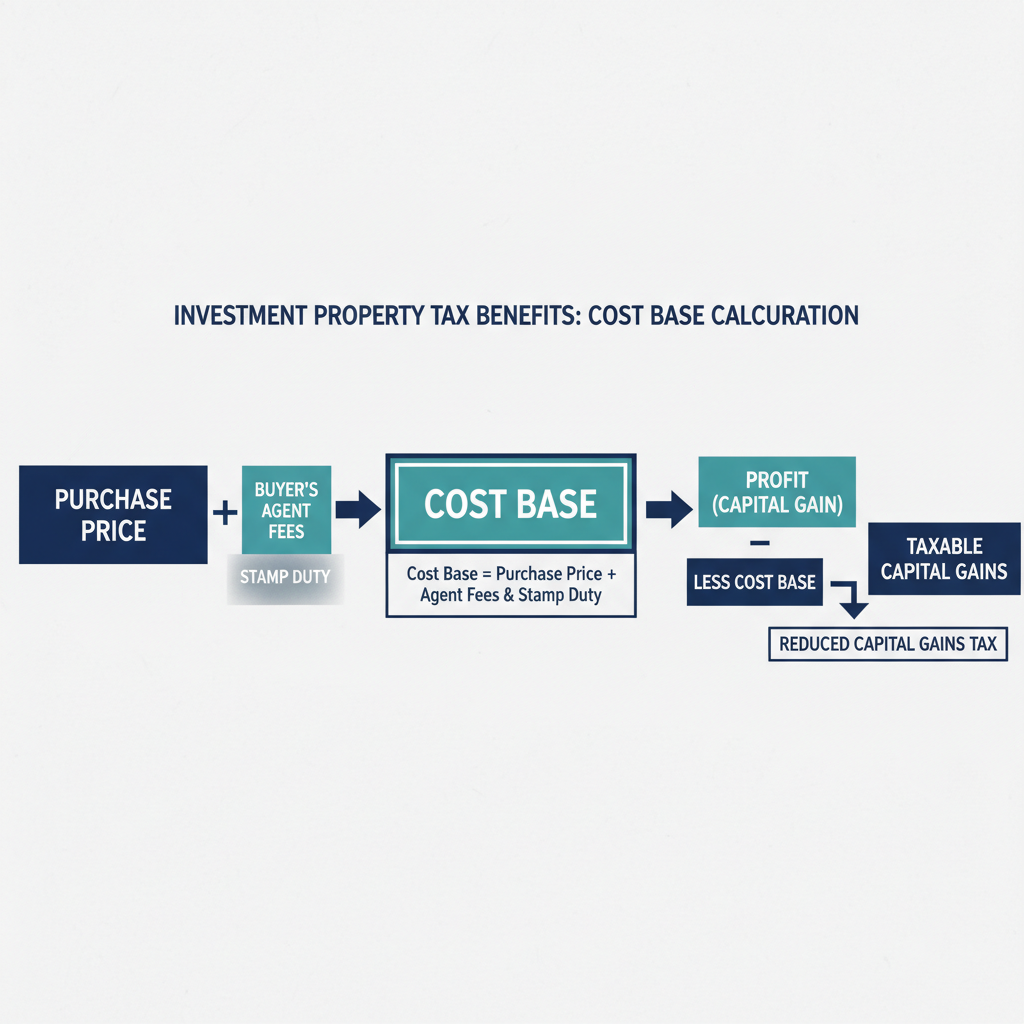
Here's where investors get a significant advantage.
For investment properties, buyers agent fees are not immediately tax-deductible against your income in the year you pay them. However, they form part of your property's cost base for capital gains tax (CGT) purposes.
According to the Australian Taxation Office, your cost base includes:
- Property purchase price
- Buyers agent fees
- Stamp duty
- Legal fees
- Borrowing costs
- Building and pest inspection fees
When you eventually sell the property, your capital gain is calculated as:
Capital Gain = Sale Price – Cost Base
A higher cost base (including your buyers agent fee) reduces your taxable capital gain, saving you 23.5-47% in CGT depending on your marginal tax rate.
Example: You buy an investment property for $800,000, pay a $15,000 buyers agent fee, and $35,000 in stamp duty. Your cost base is $850,000. Ten years later, you sell for $1.4 million.
- Capital gain without buyers agent fee: $565,000
- Capital gain with buyers agent fee: $550,000
- CGT savings (at 39% rate): $5,850
That's a 39% rebate on your buyers agent fee through reduced CGT.
Owner-Occupied Property Rules
For properties you'll live in, buyers agent fees are not tax-deductible. The ATO views these as personal expenses because the property doesn't generate assessable income.
However, a quality buyers agent still saves you money by:
- Preventing overpayment (average $44,000 saving)
- Avoiding problem properties that require expensive repairs
- Securing properties in high-growth suburbs for better long-term equity
First-home buyers often question the fee because they can't claim it back. But purchasing the wrong property in a low-growth area costs far more over 7-10 years than any agent fee.
What About Property Management Fees
Some buyers agents offer complimentary property manager selection as part of their service. The ATO views this as an included service, so no portion of the buyers agent fee becomes immediately deductible.
However, ongoing property management fees (typically 5-8% of rental income) are fully tax-deductible each year as they relate to earning assessable income.
When Is a Buyers Agent Worth It for Your Situation
First Home Buyers Navigating Auctions
You're competing against experienced investors who've bought 5-10 properties. They know market values, negotiation tactics, and how to spot overpriced listings.
First-home buyers face specific challenges:
- Emotional attachment leading to overpayment
- Lack of comparable sales data for accurate valuations
- Intimidation in auction environments
- Difficulty spotting building defects or problem properties
- No relationships with selling agents for early property access
A buyers agent levels the playing field. You get professional representation with the same market knowledge as experienced investors.
Buyers Agency Australia works with first-home buyers to set realistic budgets, identify suburbs with strong growth potential, and avoid the costly mistakes that plague 40% of first purchases (buying in low-growth areas, overpaying by 10-15%, or purchasing properties with expensive defects).
Interstate Investors Buying Remotely
Buying interstate without boots-on-the-ground representation is high-risk.
You're relying on:
- Online photos that hide property flaws
- Selling agents who represent the vendor, not you
- Limited knowledge of local suburbs, schools, and amenities
- No ability to attend multiple inspections or auctions
- Difficulty coordinating building inspections and contract reviews
For interstate buyers, a local buyers agent is essential. They provide:
- In-person property inspections with video walkthroughs
- Detailed suburb analysis and local market insights
- Coordination of building, pest, and strata inspections
- Attendance at auctions or private sale negotiations on your behalf
- On-ground project management through settlement
The alternative? Flying interstate 3-4 times for inspections and auctions, costing $2,000-$3,000 in flights and accommodation, plus taking time off work.
Time-Poor Professionals Scaling Portfolios
If you're building a property portfolio (scaling from 1 to 5+ properties), time is your scarcest resource.
Buyers agents handle:
- Continuous market monitoring for emerging opportunities
- Property shortlisting against your investment criteria
- All inspections, due diligence, and contract reviews
- Negotiation and purchase coordination
- Liaison with your mortgage broker, solicitor, and property manager
This allows you to focus on your career (earning $150k-$300k+) while your buyers agent executes your property strategy.
Dragan Dimovski specializes in portfolio planning for investors, ensuring each purchase complements your existing assets and moves you toward your 10-year wealth goals.
Markets Where DIY Makes Sense
There are situations where hiring a buyers agent might not be necessary:
- You have deep local market knowledge from living in the area 10+ years
- You're buying in a slow market with low competition and high stock levels
- You have time to attend 15-20 inspections and conduct thorough due diligence
- You're purchasing a unique property where standard valuation methods don't apply
- You have existing relationships with selling agents who'll give you early access
Be honest about your capabilities. Overconfidence in property selection costs more than any buyers agent fee.
How Buyers Agency Australia Delivers Transparent Value
Fixed Fee Model Aligned With Your Goals
Buyers Agency Australia operates exclusively on a transparent fixed-fee structure. You know exactly what you're paying before you start.
Why does this matter? Because percentage-based fees create conflicts of interest. If your agent earns 2% of the purchase price, they make $2,000 more by convincing you to pay $900,000 instead of $800,000.
A fixed fee removes that conflict entirely. Your agent is incentivized to negotiate the absolute best price, not to push you toward more expensive properties.
Typical fixed fees range from $10,000 to $33,000 depending on your location (Sydney vs Adelaide), property type (residential vs commercial), and service scope (full search vs auction bidding only).
20 Years Market Experience Across All Capitals
Dragan Dimovski brings over 20 years of experience in the Australian property market and a personal portfolio exceeding tens of millions in value.
This experience translates to:
- Relationships with selling agents across Sydney, Melbourne, Brisbane, Perth, and Adelaide
- Deep understanding of suburb growth cycles and market timing
- Pattern recognition for identifying undervalued properties
- Negotiation strategies refined over hundreds of transactions
- Access to off-market deals through trusted agent networks
You're not hiring a generalist. You're hiring a specialist who's built wealth through the exact process you're attempting.
Process From Strategy Session to Settlement
Here's how the engagement works:
Step 1: Free strategy session to understand your goals, budget, and timeline. No obligation.
Step 2: You receive a fixed-fee quote based on your specific search criteria. All costs disclosed upfront.
Step 3: Review and sign the engagement agreement outlining services, fees, and process.
Step 4: Dragan begins shortlisting properties within 48 hours. Most clients secure a property within 4-8 weeks.
Step 5: You receive detailed property reports, inspection videos, and market analysis for each shortlisted option.
Step 6: Buyers Agency Australia handles all negotiation, contract review, and due diligence coordination.
Step 7: They attend auctions or manage private sale negotiations on your behalf.
Step 8: Settlement coordination with your solicitor, mortgage broker, and property manager.
Want to see how this process works for your situation? Book a free strategy session today to discuss your property goals with Dragan.
Making the Final Decision Is It Worth It for You
Calculate Your Personal ROI Scenario
Let's work through your specific numbers.
Scenario 1: $800,000 Investment Property
- Buyers agent fee (fixed): $15,000
- Average negotiation saving: $44,000
- Time saved (150 hours at $100/hour): $15,000
- Off-market property discount (8%): $64,000
- Total value delivered: $123,000
- Net ROI: $108,000 (720% return on fee)
Scenario 2: $600,000 First Home Purchase
- Buyers agent fee (fixed): $12,000
- Negotiation saving (conservative 5%): $30,000
- Avoided problem property repairs: $15,000 (common issues: structural, pest, water damage)
- Purchase in higher-growth suburb (2% extra growth annually): $12,000/year
- Year 1 value: $57,000
- 10-year growth advantage: $120,000+
The math is clear. Unless you have equivalent expertise, time, and agent relationships, a buyers agent delivers measurable ROI.
Common Objections Addressed
"I can't afford the upfront cost."
Most buyers agents require only a 20-30% retainer ($3,000-$10,000) upfront, with the balance paid at settlement from your loan proceeds. That's less than stamp duty and far less than the cost of overpaying.
Some buyers finance the fee through their mortgage. On a $15,000 fee at 6% interest over 30 years, that's an extra $30/month. The negotiation savings cover that 100x over.
"I enjoy the property search process."
Great! But enjoying the search doesn't mean you're qualified to value properties accurately, negotiate effectively, or avoid expensive mistakes.
Think of it like doing your own legal work. You might enjoy reading contracts, but a conveyancer adds value through expertise, not just effort.
"My mortgage broker will help me for free."
Mortgage brokers are financing specialists, not property selection experts. They can tell you how much you can borrow, not which property will deliver the best 10-year growth or how to negotiate $40,000 off the asking price.
Different expertise, different value.
Questions to Ask Before Hiring Any Buyers Agent
Not all buyers agents deliver equal value. Here's what to verify:
- Fee structure: Fixed or percentage? Any hidden costs?
- Experience: How many years in your target market? Personal investment portfolio?
- Service scope: What's included? What costs extra?
- Success metrics: Average purchase price vs listing price? Off-market access rate?
- Client references: Can you speak with recent clients in your situation?
- Market coverage: Do they operate in your target suburbs?
- Licensing: Are they members of REBAA (Real Estate Buyers Agent Association)?
- Property management: Do they offer complimentary property manager selection?
Buyers Agency Australia checks all these boxes and backs it with transparent case studies showing real client outcomes.
Take Action on Your Property Purchase Today
The property market doesn't wait. Every week you delay, prices climb and opportunities disappear.
If you're serious about purchasing property in 2026, you need to answer the buyers agent question now – not after you've already overpaid for the wrong property.
Here's what to do next:
Step 1: Book a free strategy session with Buyers Agency Australia. No obligation, no sales pressure. Just a frank conversation about your goals and whether their service makes sense for your situation.
Step 2: Attend the FastTrack property event to learn Dragan's proven property selection methodology and see real case studies of client outcomes.
Step 3: If you prefer to go it alone, download our due diligence checklist and suburb analysis framework to reduce your risk of costly mistakes.
The worst decision is indecision. Don't let analysis paralysis cost you tens of thousands in overpayment or, worse, lock you into a low-growth property for the next decade.
Your next property purchase will be one of the biggest financial decisions of your life. Treat it that way.
Contact Buyers Agency Australia today to discuss your specific situation and get a transparent fixed-fee quote based on your criteria.
Frequently Asked Questions
How much do buyers agents charge in Sydney 2026?
Sydney buyers agents typically charge $8,000-$21,000 fixed fee or 1.5-3% of the purchase price, with an average of $14,500 for full-service representation.
Can I claim buyers agent fees on my tax return?
For investment properties, fees form part of your capital gains cost base and reduce CGT when you sell. For owner-occupied properties, fees are not tax-deductible.
What's the difference between fixed fee and percentage buyers agents?
Fixed fee agents charge a set amount regardless of purchase price, aligning their incentive with yours to negotiate the lowest price. Percentage agents earn more when you pay more.
Do buyers agents have access to off-market properties?
Experienced buyers agents with strong selling agent relationships access 20-38% of properties before public listing, reducing competition and securing lower prices.
Is a buyers agent worth it for first home buyers?
Yes. First-home buyers lack market knowledge and negotiation experience, leading to overpayment and poor property selection. Buyers agents deliver average savings of $44,000, far exceeding their fee.
 General
Buyers agents in Australia charge 1.5-3% or $10,000-$33,000 fixed fees. Expert negotiation delivers average savings of $44,000, plus...