Australia has not abolished negative gearing outright. From 1 July 2027, losses from affected established residential properties acquired after 7:30pm AEST on 12 May 2026 will generally be quarantined to residential property income and residential property capital gains, while pre-cut-off holdings and qualifying new residential dwellings are treated differently. The practical change is cash-flow and tax timing. Investors should test whether a property still works without relying on a wage-income tax offset and obtain tailored tax, lending, and legal advice before acting.
If you have been following headlines about the "end of negative gearing," the reality is more precise than the phrase suggests. The key questions are not whether property investing ends, but which properties are affected, from when, and what that means for your cash flow, borrowing, and portfolio strategy.
The legal question turns on acquisition timing and property classification. The investment question is whether a property still meets your minimum return criteria when the annual tax offset against wages is delayed or quarantined rather than immediately available.
This guide separates enacted rules, tax principles, illustrative scenarios, and uncertain market forecasts. It draws on the Treasury Laws Amendment (Tax Reform No. 1) Act 2026, Australian Taxation Office guidance, and official Treasury material. It is general educational information and not personal tax, financial, legal, or lending advice. Buyers Agency Australia investment guidance can help translate policy changes into a property acquisition strategy, but the firm does not replace a registered tax adviser, solicitor, mortgage broker, or financial adviser.
What is negative gearing in Australia?
Negative gearing occurs when the deductible expenses of owning a rental property exceed the rental income it produces. The shortfall, known as a net rental loss, can currently be offset against other taxable income such as wages, which reduces the investor's overall tax bill for that year.
The Australian Taxation Office defines negative gearing as the position where rental income is less than the deductible expenses, including interest on borrowings. Where other income is insufficient to absorb the loss in full, the remaining amount is carried forward to the next income year.
Simple formula:
Rental income minus deductible expenses = net rental result. If negative, the property is negatively geared.
| Position |
Rental income |
Deductible expenses |
Net result |
| Negatively geared |
$28,000 |
$36,000 |
-$8,000 loss (offsets other income) |
| Positively geared |
$36,000 |
$28,000 |
+$8,000 profit (added to taxable income) |

Table 1: Hypothetical illustration only. Figures are not financial advice.
How rental income and deductible expenses interact
Deductible rental expenses generally include loan interest, property management fees, council rates, insurance premiums, repairs and maintenance, and depreciation on eligible depreciating assets. Capital works deductions under Division 43 are spread over time rather than claimed immediately.
Capital improvements, principal loan repayments, and private expenses are not deductible in the year they are incurred, and the Australian Taxation Office distinguishes clearly between immediate repairs and capital expenditure. Keeping accurate records from settlement onwards is essential, because the ATO scrutinises expense categories during reviews.
Why a tax deduction does not remove the cash shortfall
The tax benefit of negative gearing reduces the investor's tax liability, but it does not eliminate the underlying cash shortfall. The investor must still fund the gap between rent received and holding costs paid.
For example (hypothetical, assumptions stated): an investor receives $28,000 in annual rent but pays $36,000 in combined holding costs including loan interest. The $8,000 net loss may reduce taxable income, but the investor has still paid $8,000 more in cash than the property returned. The tax refund partially offsets that gap rather than removing it entirely.
What do the 2026 negative gearing changes mean for Australian investors?
Negative gearing has not been abolished. The enacted reform restricts, or quarantines, the use of net rental losses from certain affected properties. The Treasury Laws Amendment (Tax Reform No. 1) Act 2026 received Royal Assent on 26 June 2026 and applies from the 2027-28 income year.

According to Australian Treasury, the reform limits negative gearing on established residential properties purchased after Budget night to new builds and key government housing priorities.
What changes from 1 July 2027
From 1 July 2027, net rental losses from affected established residential properties acquired after 7:30pm AEST on 12 May 2026 will generally be quarantined. That means those losses can only be applied against assessable income from residential properties, including residential property capital gains. Excess losses are carried forward to future income years rather than being lost entirely. They simply cannot reduce wages or non-residential income in the year they arise.

The quarantine applies to individuals, partnerships, companies, and most trusts. Widely held trusts and complying superannuation entities are excluded from the quarantine rule under the enacted legislation.
Which properties and owners are excluded from the quarantine rule
Four categories are treated differently:
- Properties acquired before the cut-off: Ownership interests in residential properties held at 7:30pm AEST on 12 May 2026 are broadly grandfathered from the quarantine rule, as confirmed by the ATO's new legislation guidance.
- Qualifying new residential dwellings: Net rental losses from properties that satisfy the statutory new residential dwelling definition are exempt from quarantining. The precise eligibility criteria depend on the enacted legislation and any current Ministerial legislative instrument. Do not assume a property qualifies as a new residential dwelling based on developer marketing alone.
- Widely held trusts: Excluded from the loss quarantine requirements.
- Complying superannuation funds: Also excluded, though the Act separately restricts future limited recourse borrowing arrangements by SMSFs for residential property.
Ownership changes, refinancing, and later acquisitions may affect the treatment of a grandfathered property. Obtain legal and tax advice before altering any ownership structure.
What the reform does not mean
The reform does not automatically make every established property unviable. Existing deductions available under the tax law remain claimable; the quarantine affects how and when the net rental loss may be applied to other income. The reform also does not guarantee any particular effect on property prices, rents, or supply. Those are market outcomes that depend on many variables beyond this single policy change.
How could negative gearing changes affect property investors?
The effects flow through a dependency chain: tax treatment influences after-tax cash flow, cash flow influences serviceability, and serviceability shapes property selection and portfolio construction.
The likely first-order effect is cash-flow pressure
For an affected established property, an investor who previously offset a $10,000 net rental loss against wages would instead carry that loss forward to offset future residential property income. The investor still holds a valid deduction, but the timing benefit disappears for that income year. The result is a higher personal cash-flow commitment during the holding period, because the annual tax refund that previously helped service the shortfall is delayed.
For investors operating on tight margins, this timing shift can be significant. Stress-testing the property against a scenario with no wage-income deduction benefit in the first several years is a useful planning exercise, regardless of the eventual tax outcome.
Borrowing capacity and serviceability need separate modelling
Borrowing capacity depends on lender policy, gross income, existing liabilities, interest rates, rental-income shading factors, and how a lender treats quarantined losses. The practical effect on any individual investor's serviceability will vary. Confirm current assumptions with a licensed mortgage broker before making borrowing decisions, rather than applying a generalised reduction.
Market effects are scenarios, not guaranteed outcomes
Scenario analysis from the Parliamentary Library and official modelling presents possible but not certain outcomes. Some researchers suggest the reform may shift investor demand toward qualifying new residential dwellings and reduce competition for established properties in some price brackets. Others note that broader interest-rate settings, supply constraints, and population growth have historically been larger price drivers than tax policy alone. Neither a property-price fall nor a rental-price rise should be treated as a guaranteed outcome.
How do negative gearing and capital gains tax work together?
Annual rental losses and future capital gains are separate tax events, but they interact across the full investment holding period. A property that produces consistent annual tax losses while appreciating in value generates a total return that includes both the tax timing effect and the eventual capital gain. Treating one year's tax position as the complete investment picture misses the bigger calculation.
Understanding gross yield and net return side by side is essential before assessing any property's viability under the new rules.
The current CGT framework for individuals
Under current rules, the ATO confirms there is a capital gains tax discount of 50% for Australian resident individuals who own an asset for at least 12 months before the CGT event. The capital gain is added to assessable income and taxed at the investor's marginal rate, with only half the gain included when the 50% discount applies. Eligibility depends on residency, ownership structure, the nature of the asset, and whether any exemptions or rollovers apply.
What changes to CGT from 1 July 2027
The Treasury Laws Amendment (Tax Reform No. 1) Act 2026 replaces the 50% CGT discount for individuals, trusts, and partnerships with cost-base indexation and a 30% minimum tax on capital gains accruing from 1 July 2027. The CGT reforms apply only to gains that accrue after 1 July 2027, not to growth already banked before that date. Investors in qualifying new residential dwellings may retain access to the 50% CGT discount, as confirmed by the Australian Government Budget factsheet.

Cost-base indexation means investors index the cost base of their assets in line with inflation, so tax applies only on the above-inflation portion of the gain. The interaction between the indexed cost base, the 30% minimum tax, and the investor's other income requires careful modelling specific to each property and ownership structure.
Why annual tax benefits should not be confused with total investment returns
A property's annual tax position is one variable inside a broader total-return model that also includes gross rental income, vacancy, property management costs, capital works, insurance, council rates, financing costs, transaction costs, and the eventual capital gain net of CGT. Investors who focus only on the annual deduction may overlook a poorly performing asset; those who focus only on expected capital growth may underestimate the real cash-flow commitment during the holding period.
Who could be most affected by the changes?
Exposure to the new rules depends on when a property was acquired, how it is classified under the legislation, the investor's income profile, debt level, and portfolio stage. Labels such as beginner or experienced investor matter less than the specific property, timing, and tax facts.
| Investor profile |
Possible exposure |
What to check |
What not to assume |
| First-time investors |
High if buying established property after 12 May 2026 |
Cash-flow buffer, borrowing assumptions, tax timing |
That the property is automatically unviable |
| Established owners (pre-cut-off) |
Broadly grandfathered from quarantine |
Exact acquisition date and ownership record |
That refinancing or structure changes are automatically grandfathered |
| High-income investors |
Annual wage deduction may be more material in dollar terms |
Total-return modelling, concentration risk |
That quarantining eliminates all future benefit |
| Portfolio builders |
Depends on classification of each acquisition |
Classification of each new property |
That all holdings are treated identically |
| Positively geared owners |
Lower reliance on annual wage deduction |
CGT changes on future gains post-1 July 2027 |
That positive gearing is unaffected by CGT reform |
| New residential dwelling buyers |
Exempt from quarantine (verify eligibility) |
Statutory definition of new residential dwelling |
That any new or recently completed property qualifies automatically |
Table 2: General scenarios only. Individual outcomes depend on personal tax, lending, and legal circumstances.
First-time investors
First-time property investors buying an affected established property after 12 May 2026 will need a realistic cash-flow buffer that does not rely on an immediate wage-income tax refund. Borrowing assumptions should be tested against a scenario where the rental loss is quarantined for several years rather than returned as a refund. Professional tax advice before settlement is not optional in this context.
Investors with established properties bought before the cut-off
Properties held at 7:30pm AEST on 12 May 2026 are broadly grandfathered from the negative gearing quarantine. That protection relates to the ownership interest as it existed at the cut-off. Changes to ownership structure, refinancing, or later acquisitions may require separate legal and tax analysis before assuming identical treatment continues.
High-income investors and portfolio builders
For investors with higher marginal tax rates, the dollar value of an annual wage-income deduction is more material than for investors at lower marginal rates. The quarantining of that deduction extends the cash-flow commitment during the holding period. Portfolio builders adding new established properties after the cut-off need to model each acquisition separately, taking into account leverage, concentration risk, and the liquidity implications of holding multiple negatively geared assets simultaneously.
Investors with positively geared or new-build properties
Positively geared properties produce net rental income and do not generate rental losses, so the quarantine rule has a more limited direct impact on annual tax. However, all investors selling affected assets after 1 July 2027 face the CGT changes described above. Qualifying new residential dwellings are exempt from the negative gearing quarantine, but eligibility must be verified against the enacted legislation and any current Ministerial instrument before assuming a property qualifies. The comparison between established properties versus new builds has become more complex under the new rules and warrants careful analysis.
For a detailed look at how positive cash flow property investing fits within a reformed tax environment, that linked article provides supporting context.
Illustrative scenarios: current treatment versus the new rules
Important: Every figure below is hypothetical. Stated assumptions are simplified. These examples omit personal tax rates, ownership structure, depreciation, land tax, stamp duty, capital gains, finance structure, and individual circumstances. They demonstrate the mechanism only and are not financial or tax advice.
Assumptions for all scenarios: Rental income $30,000 per year. Deductible holding costs $36,000 per year (including loan interest, management, rates, insurance, and eligible repairs). Net rental loss: $6,000.
Scenario 1: an affected established property
An established residential property is purchased after 7:30pm AEST on 12 May 2026.
| Item |
Current treatment (pre-reform) |
After 1 July 2027 (affected property) |
| Rental income |
$30,000 |
$30,000 |
| Deductible expenses |
$36,000 |
$36,000 |
| Net rental loss |
$6,000 |
$6,000 |
| Deductible against wages? |
Yes, in the same income year |
No. Quarantined to residential property income. |
| Carried forward? |
Only if wages insufficient |
Yes, to future residential property income years |
| Cash shortfall |
Still exists regardless |
Still exists; tax timing benefit is delayed |
Hypothetical example. Result depends on personal circumstances, income, and property classification.
Scenario 2: a qualifying new residential dwelling
If a property satisfies the statutory definition of a new residential dwelling under the enacted legislation and any current Ministerial instrument, the net rental loss from that property is generally exempt from the quarantine rule. The investor may be able to apply the $6,000 loss against wages in the same way as under current treatment, and may retain access to the 50% CGT discount on sale.
Do not assume a property qualifies based on developer descriptions or marketing materials. Eligibility depends on the statutory criteria, and a tax adviser should confirm classification before and after settlement.
Scenario 3: a grandfathered investment
An established residential property acquired with a settled ownership interest before 7:30pm AEST on 12 May 2026 is broadly excluded from the quarantine under the enacted rules. The investor may continue to offset the $6,000 net rental loss against wages in the current manner, subject to the actual ownership and tax facts.
This grandfathering covers the specific property and the ownership interest as held at the cut-off. It does not automatically extend to associated new acquisitions, structural changes, or refinancing arrangements.
How should investors prepare for 1 July 2027?
With less than 12 months until the new rules apply, the preparation window is live. The focus should be on stress-testing current and planned acquisitions rather than waiting for further guidance.

Model the property without relying on the tax refund
Test every property against a scenario where the net rental loss is quarantined for several years. Ask whether the asset still meets your minimum return criteria if vacancy increases, interest rates rise, or repair costs are higher than forecast. A property that only works when the annual tax refund is assumed is a property carrying a hidden conditional dependency.
For current analysis on positive cash flow property investing, that linked resource covers the cash-flow modelling approach in more depth.
Review borrowing capacity and liquidity buffers
Confirm your borrowing assumptions with a licensed mortgage broker, taking into account current lender policy on quarantined rental losses, your existing debt, and realistic rental-income shading. Maintain a cash buffer appropriate to your specific circumstances, covering at least several months of holding costs during vacancy.
Reassess property selection and portfolio fit
The policy change increases the value of strategy-first property investment advice because property selection decisions now need to account for rental demand, net yield, location fundamentals, supply pipeline, asset quality, and potential for value-add within the portfolio. For guidance on how to assess Australian investment markets, that linked article covers the key market selection criteria.
For investors weighing up whether to proceed with a new build versus an established property, established properties versus new builds provides a current comparison framework.
Get tax and legal advice before changing ownership or strategy
The article cannot determine the treatment of trusts, companies, partnerships, SMSFs, refinancing, transfers, or sale decisions. Those require a registered tax adviser or solicitor. Changing ownership structure without professional advice could inadvertently affect grandfathering status or create new tax and legal obligations.
If you are ready to map out how these changes interact with your portfolio goals, book a free strategy session with the Buyers Agency Australia team to work through your acquisition criteria and cash-flow assumptions.
What questions should you ask before buying an investment property?
Use this checklist before committing to any investment property purchase under the new rules:
Strategy
- What role does this property play in the broader portfolio?
- Would I still buy this property if the annual tax benefit were delayed or quarantined?
- What is the realistic holding period and exit strategy?
Cash flow
- Does rent cover realistic holding costs in a vacancy scenario?
- What happens if the property is vacant for six to eight weeks?
- What is the genuine net yield after all costs, not just the gross yield?
Finance
- Has my borrowing capacity been confirmed with a licensed mortgage broker under current lender policy?
- Do I have a cash buffer covering several months of holding costs?
- What does the serviceability calculation look like if interest rates rise?
Tax
- Is this property acquired after 7:30pm AEST on 12 May 2026, and if so, is it an affected established property or a qualifying new residential dwelling?
- Have I obtained advice from a registered tax adviser on the treatment of rental losses and the CGT implications of the new rules?
- What are the state-specific land tax obligations for this property in the relevant jurisdiction?
Property and market
- What is the evidence for rental demand in this location?
- What is the supply pipeline, and how does it affect vacancy risk?
- Are there any material defects, capital works risks, or compliance costs?
- What do comparable recent sales say about the likely acquisition price?
Portfolio fit
- Does this property complement or concentrate existing holdings?
- What is the total debt-to-equity position after this acquisition?
- Does the asset meet minimum criteria without relying on a specific tax outcome?
Where can Buyers Agency Australia add value?
The negative gearing changes raise the bar for acquisition discipline. Investors need to test cash flow, assess asset quality, evaluate market fundamentals, and understand portfolio fit before committing to a purchase. That is the context in which the Buyers Agency Australia approach provides most practical value.

Dragan Dimovski, who brings more than 20 years of property experience to the firm, leads a buyer-side process that covers strategy, data-led market research, property sourcing, due diligence, negotiation, and settlement support. The process is designed to translate an investor's goals and constraints into a specific property search and acquisition plan, rather than relying on a single tax outcome to justify a purchase. To speak with a property investment advisor about how the new rules interact with your goals, that link covers the advisory service in detail.
When a strategy-led buyer-side adviser may be useful
Buyers Agency Australia is most useful for investors who need help translating a policy change into concrete property criteria, market screening, and portfolio planning. If you are unsure whether an acquisition still makes sense under the new rules, or if you want an independent buyer-side perspective on a property's fundamentals before committing, a strategy conversation is a useful starting point. Book a free strategy session to discuss your goals, cash-flow requirements, and next property move.
When Buyers Agency Australia may not be the right fit
Buyers Agency Australia is a buyer-side property advisory business. The service cannot guarantee capital growth, tax outcomes, lending approval, off-market availability, or a particular purchase price. Investors seeking personal tax advice, legal advice, or lending approval need the relevant licensed professional. This article is general educational information only.
Frequently asked questions about negative gearing changes
Is negative gearing ending in Australia?
No. Negative gearing is being restricted, not abolished. From 1 July 2027, losses from affected established residential properties are quarantined to residential property income rather than being deductible against wages.
What changes to negative gearing start on 1 July 2027?
From the 2027-28 income year, net rental losses from established residential properties acquired after 7:30pm AEST on 12 May 2026 can no longer offset wages or non-residential income in the same year. Excess losses carry forward to future residential property income years.
What is the 12 May 2026 cut-off date?
The cut-off is 7:30pm AEST on 12 May 2026, which was Federal Budget night. Ownership interests held at that time are broadly grandfathered from the negative gearing quarantine rule.
Are existing negatively geared properties affected?
Properties held at the cut-off are broadly exempt from the quarantine rule. Only established residential properties acquired after 7:30pm AEST on 12 May 2026 are subject to the new quarantining treatment from 1 July 2027.
Can rental losses from an established property still reduce salary income after 1 July 2027?
Generally no, for affected established properties acquired after the cut-off. Those losses are quarantined to residential property income and residential property capital gains, and are carried forward rather than applied against wages in the same year.
Are new builds still eligible for negative gearing?
Qualifying new residential dwellings are exempt from the quarantine rule. Eligibility depends on the statutory definition in the enacted legislation and any current Ministerial legislative instrument, not developer marketing descriptions.
What happens to excess rental losses under the new rules?
Excess quarantined losses are carried forward and can be used to offset assessable income from residential properties, including residential property capital gains, in future income years.
How do negative gearing changes interact with capital gains tax?
The Treasury Laws Amendment (Tax Reform No. 1) Act 2026 also replaces the 50% CGT discount with cost-base indexation and a 30% minimum tax on gains accruing from 1 July 2027, except for qualifying new residential dwellings. The two reforms interact, so the full-holding-period tax picture needs modelling.
Will negative gearing changes reduce property prices or rents?
Market effects are uncertain. Official modelling presents possible outcomes, but prices, rents, and supply are influenced by many variables beyond this single policy change. Treat media forecasts as scenarios, not certainties.
What should investors check before buying an investment property?
Confirm the property's classification under the enacted rules, model cash flow without the wage-income tax offset, test vacancy and interest-rate scenarios, and obtain tailored tax, lending, and legal advice before committing to a purchase.
A practical decision framework for property investors
The enacted rules are clear in their structure, but their interaction with your specific property, ownership, income, and portfolio requires professional analysis. Use this five-step framework before making any acquisition or restructuring decision:

- Confirm the rule. Determine whether the property is an affected established residential property, a qualifying new residential dwelling, or grandfathered. This is a legal question requiring a registered tax adviser.
- Model the cash flow. Calculate rent, vacancy, interest, repairs, rates, insurance, management, and tax timing across at least three scenarios: a base case, a lower-rent case, and a higher-cost case.
- Test the downside. Ask whether the property meets your minimum criteria if the annual tax benefit is delayed or quarantined for several years. If the answer is no, the acquisition risk is concentrated on a tax assumption rather than the property itself.
- Obtain professional advice. Tax treatment, ownership structure, lending, and exit timing all require licensed professional input. Do not change a structure or commit to a purchase based on general articles including this one.
- Decide on portfolio fit. Ask whether the property advances your broader strategy in a way that would still hold if tax settings changed again. Strategy matters more than any single tax setting.
For Australia-wide property investment guidance on translating these steps into a concrete acquisition plan, Buyers Agency Australia provides a buyer-side service covering strategy through settlement.
Ready to map out your next property move under the new rules? Book a free strategy session to discuss your goals and cash-flow assumptions with the team. For more detailed questions about your specific situation, contact the team about your strategy directly.
 General
How Australia's 2026 negative gearing changes from 1 July 2027 may affect tax deductions, cash flow, CGT, and...
Smart investors in 2027 are unlikely to choose markets based on hype alone. The more reliable approach is to filter locations by borrowing capacity, supply pressure, rental depth, infrastructure that changes real demand, and how each purchase fits a long-term property investment strategy. With the RBA cash rate held at 4.35% as of June 2026 and national dwelling approvals still uneven across states, suburb selection needs to be evidence-led, not headline-led.
If you know you want another property but are not sure you can afford to buy the wrong one at the wrong stage of the cycle, you are not alone. The cost of a poor location decision is not just financial. It is the years of hold time, reduced borrowing capacity, and missed portfolio momentum that follow.
"Where to buy" is not a postcode question first. It is a strategy question, a capacity question, and a market-fit question that needs to be answered before a single suburb is shortlisted.
Buyers Agency Australia approaches every investor search through exactly that lens. The firm's methodology, shaped by decades of buyer-side work, treats the portfolio plan as the primary filter and the suburb as the output, not the starting point.
What smart investors should mean in 2027
The word "smart" gets stretched in property media to mean whoever bought in the market that just ran. That definition is backward-looking and nearly useless for forward planning.
In 2027, smart property investing means matching market selection to four things simultaneously: your current borrowing capacity, your cash flow tolerance, your planned hold period, and the stage your portfolio is actually at. A first investment property and a third carry very different constraints, and the suburb that suits one may undermine the other.
Buyers Agency Australia, and the approach Dragan Dimovski has developed across 20+ years of buyer-side advisory work, consistently frames this as sequencing before selection. The firm's content on how property investment strategy builds long-term wealth makes this plain: the investors who build durable portfolios are the ones who define success before they define a postcode.
The practical definition of smart investing in 2027 includes:
- Knowing what yield versus capital growth balance your cash flow can support
- Understanding how the next acquisition affects your ability to borrow again
- Selecting market type based on portfolio stage, not recent headlines
- Running due diligence on data, not media cycles
- Having a hold-period target before you make an offer
The market filters smart investors use before buying
The same suburb can suit one investor and eliminate another. Before shortlisting locations, a disciplined investor runs filters in a specific order: serviceability first, then cash flow, supply, demand, infrastructure, and exit liquidity. Skipping steps tends to produce decisions that look reasonable until holding costs arrive.

| Filter |
What to assess |
Key signal |
Source |
| Serviceability |
Can you finance and hold this? |
Buffer headroom after purchase |
Lender / mortgage broker |
| Cash flow |
Will rent cover enough of the holding cost? |
Gross yield vs holding costs |
CoreLogic, PropTrack |
| Supply |
What is incoming stock doing? |
Dwelling approvals trend |
ABS Building Approvals |
| Demand |
Is there real rental and buyer depth? |
Vacancy, days on market |
Research firms, REA |
| Infrastructure |
Does it change access, jobs, or desirability? |
Committed government projects |
State planning departments |
| Exit liquidity |
Who will buy this from you in 10 years? |
Owner-occupier ratio, stock type |
Local sales evidence |
Affordability and serviceability still shape opportunity
With the cash rate target held at 4.35% as of June 2026, borrowing is more expensive than at any point in the preceding decade. A market with strong long-term fundamentals can still be the wrong purchase if it stretches serviceability, damages your debt-to-income ratio, or blocks your next acquisition entirely.

Affordability is also relative to the buyer. Saying a suburb is affordable means nothing without knowing for whom, at what deposit, and at what loan term. Investors need to price each shortlisted market against their actual borrowing capacity before spending time on suburb-level research.
- Confirm your current borrowing capacity with a broker before shortlisting suburbs
- Model holding costs at current rates, not a rate forecast
- Include land tax, insurance, vacancy buffers, and maintenance in your cash flow
- Check whether the purchase reduces future borrowing headroom by more than you can accept
- Consider whether the yield adequately offsets the capital tied in the deposit
Supply constraints matter more than hype
Price growth in any suburb is partly a function of what competing supply is doing. ABS Building Approvals data for May 2026 shows that total dwelling approvals remain uneven nationally, with Queensland and Victoria recording falls in the trend while South Australia and Western Australia showed increases in private sector house approvals. The pattern is not uniform, and investors should not assume that national housing undersupply translates automatically into their target market.

A suburb where approvals have been constrained by zoning, existing character, or limited serviced land tends to face more durable supply limits. Those limits do not guarantee growth, but they reduce one of the main headwinds to price resilience. Test incoming supply directly, not just recent price movement.
Rental depth and local demand need to be tested suburb by suburb
Vacancy rates and rental growth vary considerably across markets. According to third-party market data, national rents increased around 5.5% over the year to February 2026 with regional rents outpacing capital city figures, though this aggregate masks wide suburb-level variation. Investors should assess rental demand at the specific stock type and price point they are buying into, not at the city level.
Factors that affect real rental depth include:
- Tenant employment profile and diversity of local employers
- Transport access to major employment nodes
- Stock type fit with the dominant tenant profile in that suburb
- Proximity to hospitals, universities, or major commercial precincts
- Whether the dwelling type has meaningful owner-occupier appeal as an exit option
Infrastructure only matters when it changes demand, access, or jobs
Infrastructure announcements are the most commonly misread signal in property media. A planned road upgrade or station announcement does not automatically produce price growth, especially when the project is years from completion and has been priced in by the market already. The relevant question is whether the infrastructure changes where people work, how long it takes to get there, or how desirable the area becomes for a tenant or future buyer.
Before treating an infrastructure announcement as a market signal, verify it against a government project page or state planning authority source. Do not rely on media speculation or developer brochures.
What types of markets may attract investor attention in 2027
Rather than naming specific suburbs as winners, a more durable approach is to understand what market types suit different investment strategies and where the structural arguments are strongest. Different categories carry different trade-offs.
Can growth corridors still work for investors in 2027?
Yes, for some investors, but only when three conditions align: genuine affordability compared to the established market, credible committed demand drivers such as funded infrastructure and population growth, and manageable incoming supply. Corridors with abundant land release tend to produce competition from new stock that can compress resale values and suppress rent growth in the medium term. When those conditions are not in place, the "affordability story" can become a holding cost story.
Brisbane investment property guidance from Buyers Agency Australia reflects this nuance: Queensland growth corridors have delivered strong results for some investors, but the market has matured and selection within the corridor matters considerably more than it did three years ago.
Are established middle-ring suburbs a safer play than fringe estates?
Established middle-ring suburbs can offer more resilient demand and tighter supply in many cases, though they are rarely the cheapest entry point. Their structural advantage is that supply is genuinely constrained by existing built form, character overlays, or heritage considerations. Owner-occupier demand often underpins the buyer pool, which can improve exit liquidity. Renovation and value-add potential can also provide a return pathway that fringe estates generally cannot match.
The trade-off is entry price. For investors whose borrowing capacity is stretched, a middle-ring suburb that requires a larger deposit may not suit the portfolio stage, even if the fundamentals are stronger on paper.
Perth property buying support illustrates this dynamic in Western Australia, where established suburbs closer to the CBD have held demand well even as outer corridors saw more volatile conditions.
Where yield-led regional markets can fit and where they can fail
Regional markets can suit investors who need stronger cash flow to service an existing portfolio, particularly when capital city entry prices have moved beyond their borrowing capacity. The practical risks are thin buyer pools, single-industry economic exposure, and low exit liquidity. A regional market supported by a single large employer, a mine, or one institution is substantially more fragile than a diversified regional economy. Investors considering regional markets should test vacancy closely, examine the employment base, and understand realistically who they will sell to and at what discount in a flat market.
How to assess a suburb before you buy
Decision-making at the suburb level should be systematic, not intuitive. The following scorecard gives investors a repeatable starting point before committing to an offer.
The suburb scorecard to run before every offer
| Attribute |
Why it matters |
Good sign |
Red flag |
Where to verify |
| Vacancy pressure |
Rental demand depth |
Below 2% vacancy |
Above 3.5% and rising |
SQM Research, PropTrack |
| New supply pipeline |
Incoming competition |
Low approvals trend |
Large apartment pipeline |
ABS Building Approvals |
| Days on market |
Buyer demand strength |
Under 30 days |
Over 60 days and rising |
REA Group data |
| Vendor discounting |
Negotiating conditions |
Under 2% average |
Over 5% consistent |
Real estate platforms |
| Transport access |
Tenant and buyer appeal |
Within 500m of PT node |
Car-dependent only |
Google Maps, GTFS data |
| Employment anchors |
Economic resilience |
Multiple large employers |
Single-industry town |
Local council economic data |
| Flood/planning overlays |
Holding and resale risk |
Clean overlays |
Flood zone or heritage restrictions |
State planning portals |
| Stock type balance |
Demand breadth |
Houses and units both trade |
Oversupply of one type |
Local sales evidence |
| Owner-occupier appeal |
Exit liquidity |
Strong owner-occupier ratio |
Predominantly investor held |
ABS Census, RPData |
| Exit liquidity |
Depth of future buyer pool |
Multiple buyer segments |
Thin, niche-only demand |
Sales history, agent intel |

What data should you trust when deciding where to buy property?
Not all data is equal. The hierarchy that produces better decisions runs roughly in this order:

- Official government and regulator data (ABS, RBA, state planning authorities)
- Current sales evidence and planning overlays from portals and councils
- Recognized market research firms with disclosed methodology and current dates
- Local agent input as a secondary and directional input only
- Social media commentary, headlines, and developer marketing last
The most common mistake investors make is weighting the bottom of this list too heavily. An agent's enthusiasm for a suburb and a headline about a market running hot are not substitutes for vacancy data, approvals figures, and comparable sales from the last 90 days.
The ATO's guidance on rental property deductions is also worth reading before making any assumptions about the tax position of an investment property. Confirm specifics with your accountant before acting on any general educational content, including this article.
Common mistakes investors make when chasing the next hotspot
Chasing the next hotspot is one of the most consistent ways investors undermine their own portfolio. The mistakes tend to cluster around a few repeating patterns. For a deeper look at the underlying logic, the piece on why strategy matters more than picking the right suburb and the guide to build a property portfolio without chasing hot spots both address this directly.
- Chasing past growth. A market that has already run hard is priced for the growth that occurred, not for growth still to come. Buying after the cycle peak is not contrarian investing; it is recency bias.
- Ignoring serviceability erosion. Each purchase affects your ability to borrow for the next one. Investors who do not model the cumulative effect of multiple acquisitions often find themselves unable to proceed after their second or third property.
- Confusing yield with quality. A high gross yield in a regional or outer-fringe location can look attractive until vacancy, maintenance, and management costs reduce net returns significantly. Yield traps are most common in markets with thin demand.
- Buying outside your portfolio strategy. A property that is a reasonable asset in isolation can be the wrong asset for your portfolio stage. A cash flow positive regional property may not suit an investor who needs growth to release equity for the next purchase.
- Trusting unverified claims. Off-market access, suburb growth forecasts, and rental yield projections from any party with a financial interest in the sale need independent verification before they influence a purchase decision.
- Skipping overlay and planning checks. Flood zones, heritage overlays, and rezoning uncertainty can materially affect resale value and holding risk. These checks take less than an hour and belong in every due diligence process.
How Buyers Agency Australia narrows the field for investors
Knowing what filters to apply and having the time, access, and data infrastructure to apply them are different problems. This is where investment property advisor support from a specialist buyer-side firm changes the equation.
Buyers Agency Australia operates nationally with a buyer-first mandate and no vendor-side conflicts. The process covers market filtering, suburb shortlisting, due diligence, negotiation, and coordination through settlement. Understanding what a buyers agent does from a process perspective helps investors decide whether professional buyer-side representation suits their situation.
Why Dragan Dimovski starts with the 10-year plan, not the postcode
Dragan Dimovski, with over 20 years of experience in buyer-side property advisory, structures every engagement around portfolio modelling first and suburb shortlisting second. The practical reason is that market selection is meaningless without knowing what role the next acquisition needs to play: growth engine, cash flow support, equity release vehicle, or diversification hedge.
Portfolio modelling at this level involves examining hold period assumptions, tax position, cash flow at current lending rates, and sequencing for the acquisitions that follow. The suburb list is a consequence of that work, not a starting point. Access to off market property searches means the shortlist is not limited to what is visible on public portals.
If you want to stress-test your current thinking before committing to a market, book a free strategy session with the team.
When a buyers agent may not be the right fit
Buyer-side representation may not suit every investor. If you already have a highly specific acquisition brief, deep local market knowledge in your target suburb, and the time and skills to manage due diligence, negotiation, and settlement coordination yourself, a buyers agent may not add meaningful value to the process. Self-directed investors who are experienced, well-connected in their target market, and confident in their own research capacity are the most likely candidates to manage independently.
Final checklist for deciding where to buy next
Before committing to any suburb, work through this decision checklist:
- Can I hold this asset comfortably if the rate environment stays elevated for another 18 to 24 months?
- Does this market type suit the current stage of my portfolio, not just my wish list?
- Have I checked incoming supply through ABS approvals data for this specific area?
- Who will rent this property, and is there genuine depth in that tenant segment?
- Have I run all overlay and planning checks through official state portals?
- Do I know my walk-away price and my maximum holding cost before I make an offer?
- Have I verified infrastructure claims through a government project page, not a media article?
- Is the data I am relying on current, sourced, and from an independent party?
- Does this purchase protect or improve my ability to make the next acquisition?
- Have I confirmed the tax position of this property with my accountant, referencing ATO guidance on positive and negative gearing?
If you can answer every item on this checklist with confidence and evidence, you are in a strong position to proceed. If several remain uncertain, that is a signal to do more work before committing.
When you are ready to map out your next property move, a strategy session gives you a structured starting point without any obligation. For investors who want buyer-side guidance through the full process, contact the team to discuss how the service works.
FAQs about where to buy investment property in Australia
Where should Australian investors look first in 2027?
Start with market type, not postcode. Filter by borrowing capacity, cash flow tolerance, supply dynamics, and portfolio stage before shortlisting specific suburbs.
Is it better to buy in an established suburb or a growth corridor?
Established suburbs can offer tighter supply and stronger exit liquidity. Growth corridors can suit investors who prioritise affordability, but only when demand drivers are funded and supply is manageable.
What makes a suburb a good fit for an investment property?
Low vacancy, constrained supply, diverse employment, strong transport access, owner-occupier appeal, and exit liquidity through a broad buyer pool all contribute.
How do interest rates affect where to buy property?
Higher rates reduce borrowing capacity and shift what yield is needed to hold a property comfortably. At 4.35%, the cash rate as of June 2026 means serviceability buffers matter more than in prior cycles.
Are regional markets still worth considering for property investors?
Yes, for investors who need cash flow support, but only in markets with diverse employment, acceptable vacancy, and a realistic exit buyer pool. Single-industry towns carry meaningful liquidity risk.
What data matters most when comparing suburbs?
Vacancy rates, ABS dwelling approvals, days on market, vendor discounting, and comparable sales are the most reliable starting points. Official data outweighs agent commentary or media headlines.
Should yield or capital growth matter more in 2027?
That depends on your portfolio stage. Investors building equity early may prioritise growth markets. Those supporting cash flow on an existing portfolio may need stronger yield. The answer is personal, not universal.
How can a buyers agent help narrow down where to buy?
A buyers agent applies market filters, accesses off-market stock, runs due diligence, and negotiates on your behalf. The value is in reducing both decision noise and transactional risk.
What mistakes should investors avoid when chasing hotspots?
Avoid buying on recent price growth alone, ignoring cumulative serviceability impact, confusing gross yield with quality, and skipping planning and overlay checks.
How do I know whether a suburb fits my long-term strategy?
Model the role this property needs to play in the portfolio at year five and year ten. If it cannot support the next acquisition or delivers the wrong balance of yield and growth for your plan, it is likely the wrong suburb regardless of near-term appeal.
 General
Learn how Australian investors can judge where to buy property in 2027 using supply, demand, cash flow and...
Australia's property market in 2026 is more selective than euphoric. The RBA cash rate has been held at 4.35% following three consecutive hikes earlier in the year, price momentum has softened in Sydney and Melbourne while Brisbane, Adelaide, and Perth continue to show growth, and announced tax reforms are reshaping how many investors assess established homes versus new supply. For disciplined buyers, none of this automatically means waiting. It means focusing harder on suburb-level demand, holding costs, and rental yield support before committing to a purchase.
Market data and policy details were checked in July 2026. Confirm current rules and figures with your accountant and relevant government sources before making investment decisions.
If you have been watching property headlines lately, you are probably feeling the tension between cautious news cycles and genuine buying opportunity. National price softening, rate uncertainty, and tax reform announcements make for noisy reading. But the investors who tend to perform well in markets like this are not the ones who predict the bottom. They are the ones who ask sharper questions about the exact asset, the exact suburb, and the exact numbers.
2026 is harder to read than a simple up or down market because it is not one national story. Sydney is behaving differently from Brisbane. Capital cities are diverging from regional markets. Established homes face a different tax outlook from new builds. That fragmentation rewards research and punishes broad assumptions.
This guide cuts through the macro noise to give you a practical framework for assessing the current environment. It covers the tax reforms in plain English, explains where softer competition may create genuine buying conditions, and outlines the due diligence process that separates disciplined acquisitions from reactive ones.
Buyers Agency Australia works with investors navigating exactly these conditions, providing strategy-led suburb research, off-market sourcing, and acquisition support across major Australian markets.
2026 Australian property market snapshot: what has actually changed
The Australian property market in 2026 is not in freefall, but it is not the broad boom of 2021 or 2023 either. After three cash rate increases in February, March, and May 2026, the RBA held the cash rate at 4.35% at its June meeting while continuing to signal that further tightening remains possible if inflation stays elevated. That rate environment is compressing borrowing capacity and cooling buyer sentiment, particularly among investors who rely on debt.
On prices, the picture is uneven. According to the PropTrack Home Price Index, national home prices fell 0.1% in April 2026, with Sydney down 0.5% and Melbourne down 0.3% for the month, while Brisbane, Adelaide, and Perth each recorded a modest 0.2% gain. Regional Australia also edged up 0.2%. The divergence is significant: this is not a market collapsing in unison, it is a market fragmenting by city and asset type.
On the rental side, conditions remain structurally tight despite modest easing. Australia's national residential vacancy rate held at 1.2% in May 2026, according to SQM Research, with all capital cities still recording rates below 2%. Perth, Adelaide, Darwin, and Brisbane continue to show sub-1% vacancy, which keeps rental income relevant even in a higher-rate environment.
| Factor |
What has changed |
Why investors care |
| RBA cash rate |
Held at 4.35% after three 2026 hikes |
Higher mortgage costs, reduced borrowing capacity |
| Capital city prices |
Softening in Sydney and Melbourne; growth continuing in Brisbane, Adelaide, Perth |
Suburb-level divergence creates selective opportunity |
| National vacancy rate |
1.2% nationally (May 2026), below 1% in several capitals |
Rental income support remains relevant for yield investors |
| Tax settings |
Budget reforms announced, effective 1 July 2027 |
Changes asset selection calculus for new purchases |

The key insight here is the gap between national headlines and local reality. A statewide or national average can obscure a suburb that is genuinely undersupplied and fundamentally sound.
What the 2026 tax reforms could mean for property investors
The 2026-27 Federal Budget introduced two significant changes to how residential property investment is taxed in Australia. Understanding the direction and timing matters, but the detail of how these rules apply to your specific situation requires advice from a qualified accountant or tax adviser before you act.

The reforms were announced in the May 2026 Budget and have since been legislated. They are scheduled to take effect from 1 July 2027. Here is what the official 2026-27 Budget tax reform documentation confirms:
What appears to change from 1 July 2027
- Negative gearing on established residential property will be abolished for properties purchased after 7:30pm AEST on 12 May 2026. Rental losses from these properties will only be deductible against residential rental income or future capital gains from rental properties, not against wages or other personal income.
- Properties held before the Budget announcement are grandfathered. Existing investors can continue negative gearing those assets under current rules until they sell.
- Eligible new builds remain fully exempt. Investors in new builds can still offset losses against all income and choose between the existing 50% CGT discount or the new arrangements when they sell.
- Capital gains tax will change from 1 July 2027. The existing 50% CGT discount will be replaced by cost base indexation and a 30% minimum tax on net capital gains for assets held more than 12 months. Transitional rules apply: for assets already held at that date, gains accrued before 1 July 2027 will still attract the 50% discount.
- The CGT reform applies broadly to all CGT assets held by individuals, trusts, and partnerships, not just residential property.
What investors should not assume from the headlines
The reforms are real, but some of the most common reactions to them are oversimplified.
- Established property is not automatically unviable. Grandfathered investors keep existing tax treatment. New buyers of established property can still carry losses forward to offset future rental income and gains.
- New builds are not risk-free alternatives. Retaining favourable tax treatment does not change supply risk, construction risk, or location fundamentals.
- Waiting for a national price crash is not a strategy. Asset quality, suburb demand, and yield resilience matter regardless of the tax environment.
- One reform does not replace careful financial structuring. Portfolio goals, borrowing capacity, holding costs, and asset selection still carry more weight than one headline change.
Speak to a qualified accountant or tax adviser before treating any of the above as personal advice for your situation.
Where cooling prices may create opportunity instead of noise
Softer price momentum in parts of the market is not automatically a reason to retreat. For investors with clear criteria and borrowing capacity, a cooling environment can shift negotiating conditions in their favour.
When buyer competition eases, a few things tend to follow. Vendor discounting increases as sellers adjust expectations. Days on market extend, giving buyers more time for due diligence. Motivated sellers emerge, particularly those who bought at cycle peaks with stretched financing. And off-market conversations become easier to initiate, because vendors who do not want to sit on a public campaign are more receptive to direct approaches.
None of this creates automatic opportunity. The softer condition has to coincide with a location that still has genuine demand fundamentals. A discounted property in a structurally weak suburb is still a poor buy.
If you want to explore whether property investing still makes sense in the current environment, this overview on is property investing still worth it in Australia in 2026 covers the underlying case for long-term investment in detail.
The market traits worth watching before you call a suburb an opportunity
Before treating a softening suburb as a buying opportunity, check these signals:
- Supply pipeline: Is new construction adding competing stock that will suppress future rents and prices?
- Days on market and vendor discounting: Are sellers discounting heavily, or is stock clearing at or near asking price?
- Vacancy rate: A low local vacancy rate signals tenant depth and rental income reliability.
- Employment anchors: Is the area supported by diversified employment, or reliant on one sector or employer?
- Infrastructure and transport: Is there committed government infrastructure investment driving accessibility and desirability?
- Owner-occupier appeal: Do owner-occupiers also want to buy here? This matters for long-term resale depth.
- Affordability relative to local incomes: Can tenants and buyers in this suburb actually afford the prices being asked?
Checking these signals together is more informative than reacting to a single month of price data.
Why high-yield areas deserve a closer look in 2026
When holding costs are elevated, the income a property generates becomes more important to an investor's cashflow position. At a cash rate of 4.35% and mortgage rates for investors sitting well above 6%, a property with a strong gross yield provides more buffer against holding-cost pressure than one bought purely for future capital gain.
The logic is straightforward: if the market moves sideways for 18 months, a property yielding 5.5% gross is easier to hold than one yielding 2.8%. The income offsets more of the cost. That does not make yield the only metric, but it makes it a more material factor in a higher-rate environment than it was when mortgage rates were near historic lows.
For investors thinking about income-generating strategies, exploring single vs dual income property yields in 2026 is worth considering as part of your acquisition planning.
It is also worth noting that gross yield and actual cash flow are different things. Gross yield is calculated before expenses: management fees, maintenance, insurance, rates, and vacancy costs all reduce the net return. A property advertised at a 6% gross yield may deliver a net return considerably lower, depending on the asset condition and local management costs.
High yield does not automatically mean high quality
Chasing yield without assessing asset quality is one of the more common investor mistakes in a softer market. Watch for these warning signs:
- One-industry towns: Regional markets dependent on a single employer or industry can experience severe demand collapse if that industry contracts.
- Oversupply risk: High yields sometimes reflect a market with too much rental stock competing for limited tenants, not genuine demand.
- Weak owner-occupier demand: If only investors buy in an area, exit liquidity is limited and resale values can stagnate.
- Maintenance-heavy or older stock: High-maintenance properties erode net yield and can create cash traps over a 10-year hold.
- Limited population or infrastructure growth: Yield without demand growth creates an income stream with no capital appreciation pathway.
The question is not just whether a property yields well today, but whether the fundamentals supporting that yield are durable.
How to assess a market without chasing headlines
A repeatable evaluation framework is more valuable than any single market forecast. The following process applies whether you are assessing Brisbane's inner suburbs, a regional city, or a Perth growth corridor. For a step-by-step approach to how to invest in property in Australia in 2026, the full guide covers the acquisition process in practical detail.

Step 1: Clarify your own holding-cost reality. What can you actually borrow, and what does the monthly repayment look like at current rates? What is the maximum period you can hold a property at neutral or slightly negative cashflow before it becomes a problem?
Step 2: Assess demand depth in the exact pocket. National trends do not buy your investment property. The suburb does. Is demand driven by renters, owner-occupiers, or both? Is that demand growing?
Step 3: Check supply risk. Are there approved developments or rezoning activity that will add competing stock in the next two to three years? A tight vacancy rate today can look very different after a significant supply injection.
Step 4: Measure rent support and current vacancy. What are comparable properties renting for? How long are they staying vacant between tenancies? The answers should come from live listings data, not broad suburb averages.
Step 5: Test exit quality and owner-occupier appeal. Could you sell this property in five or ten years to someone other than another investor? Properties that appeal to owner-occupiers tend to hold value better in weaker conditions.
Step 6: Compare price to local fundamentals, not national mood. Is the asking price justifiable against comparable recent sales in that specific street or precinct?
| Evaluation checkpoint |
What to measure |
Red flag |
| Borrowing and cashflow |
Monthly holding cost vs rental income |
Negative cashflow you cannot sustain for 12+ months |
| Demand drivers |
Employment, population, infrastructure |
One employer, shrinking population |
| Supply pipeline |
Approved developments, rezoning |
Large new supply entering within 18 months |
| Vacancy and rent |
Current listings, weeks vacant |
Rising vacancy, rents stagnating |
| Exit quality |
Owner-occupier appeal, recent comparable sales |
Investor-only demand, thin transaction volume |
Ask this before you buy: what is driving demand in this exact pocket
Not all demand is equal. Strong suburb-level demand is usually built on a combination of factors working together:
- Access to employment hubs, particularly where commute time matters
- Quality schools and services that attract families and long-term residents
- Infrastructure investment that improves connectivity or amenity
- A diverse rental tenant base, not reliant on a single demographic or institution
- Population growth that is absorbing supply rather than sitting alongside it
If you cannot answer confidently what is driving demand in the specific pocket, the research is not complete.
Ask this too: if growth slows, does the property still hold up
This is the downside resilience test. Even in a market that performs well over 10 years, there will be quieter periods. Ask:
- Can the rental income cover enough of the holding costs to let you ride out a flat cycle?
- Is the land component meaningful enough to support the price over time?
- Would owner-occupiers step in as buyers if investor sentiment weakened?
- Is the property in a condition and configuration that remains lettable without major capital expenditure?
If the answer to most of these is yes, the property has a degree of resilience that pure growth plays often lack.
Common mistakes investors make in a shifting market
Market transitions create a specific set of investor errors. Understanding them is part of not repeating them. The full list of property investment mistakes Australians are making in 2026 goes deeper on the patterns that consistently undermine returns.
Overpaying because of urgency. Even in a softer market, fear of missing out can push buyers to accept asking prices that are not supported by comparable evidence. Every offer should be anchored to data, not emotion.
Treating a capital city as one market. Melbourne is not one market. Sydney is not one market. Each has suburbs with vastly different supply dynamics, tenant demand, and price trajectories. Broad city-level statements do not guide suburb-level decisions.
Chasing cheap property without assessing exit quality. A low price point is only a good entry if there is a genuine path to either rental income or future capital appreciation. Low prices in weak markets are cheap for a reason.
Ignoring holding costs and buffers. With mortgage rates above 6% for investors, the cashflow maths on a negatively geared property is less forgiving than it was two years ago. Investors who do not stress-test their holding capacity at current rates are taking on more risk than they may realise.
Outsourcing judgment to headlines. National price data, forecast summaries, and media commentary describe the market in aggregate. They do not tell you whether a specific property at a specific price in a specific suburb is a sound acquisition. That requires local knowledge and deal-level analysis.
How Buyers Agency Australia helps investors act strategically in 2026
Disclosure: Buyers Agency Australia provides buyer-side property advisory services. This section explains its own approach and is general information only.

The conditions of 2026 reward process over instinct. Buyers who win in fragmented, higher-rate markets tend to do so because they have a clear acquisition brief, access to off-market opportunities, and the negotiation discipline to act only when the numbers make sense.
Dragan Dimovski, the founder of Buyers Agency Australia, brings more than 20 years of property expertise to every acquisition. The approach is strategy-first: before a suburb or asset type is identified, the investment framework is established around the buyer's borrowing capacity, portfolio goals, risk profile, and time horizon.
From there, the team applies data-led market filtering to identify suburbs where demand fundamentals, supply constraints, vacancy conditions, and price relative to local earnings align. Where opportunities exist off-market or pre-market, the sourcing process draws on how we buy off-market properties in Australia to surface options that do not appear on public portals.
Negotiation in a softer market requires a different approach than negotiating at the peak of a cycle. When competition is lower and vendor urgency higher, well-prepared buyers can secure better terms. The due diligence process covers property condition, legal title, strata records, local planning, comparable sales, and rental analysis before exchange.
The service covers the full acquisition journey, from planning through settlement, across major Australian markets. If you are ready to map out your next property move, book a free strategy session to start with a clear brief before looking at a single property.
When a buyers agent is the right fit and when it is not
Good fit for buyer-side representation:
- Investors buying interstate or outside their local knowledge area
- Time-poor professionals who cannot commit to thorough research and inspections
- Buyers who want acquisition discipline and an independent filter on deals
- Portfolio builders planning multiple purchases who need a repeatable strategy framework
May not require a buyers agent:
- Buyers who know the exact suburb, asset type, and street deeply and are comfortable managing due diligence, negotiation, and legal review independently
- Investors purchasing a familiar local market where they have already done extensive research and have direct agent relationships
The honest answer is that buyers agency fees need to justify their cost through better purchase price, better asset selection, or saved time. For some buyers, the case is clear. For others, a first conversation is enough to determine whether representation adds value to their specific situation.
What to do next if you are assessing the 2026 market
The right question in the current environment is not whether the market is going up or down. It is whether the specific asset you are considering stacks up on yield, demand depth, exit quality, and holding-cost resilience, in the conditions that exist today.
Before acting, get clarity on four things:
- Your borrowing capacity and cashflow buffer at current rates, not the rates of two years ago.
- Your target market fundamentals, checked against current vacancy, supply pipeline, and comparable sales.
- The tax implications of the asset type and purchase date, reviewed with a qualified accountant.
- Your exit conditions: who buys this property from you in five or ten years, and why.
If those answers are clear, you are in a position to act selectively. If they are not, the preparation is the strategy.
For investors who want to pressure-test a target market or build a portfolio-first acquisition plan, book a free strategy session with the team. If you are ready to move forward with tailored buyer-side support, contact the team directly to discuss your situation.
FAQ
Is the Australian property market falling in 2026?
Not uniformly. Sydney and Melbourne recorded modest monthly price falls in April 2026, while Brisbane, Adelaide, and Perth continued to see modest growth, according to PropTrack. The market is diverging, not collapsing.
How do the 2026 tax reforms affect property investors?
From 1 July 2027, negative gearing on established residential properties bought after 12 May 2026 will be restricted, and the 50% CGT discount replaced by indexation and a 30% minimum tax. Existing properties and new builds are treated differently. Speak to a qualified accountant before making decisions based on these changes.
Are high-yield areas safer in a slower property market?
Not automatically. Higher yield can help offset holding costs in a higher-rate environment, but yield without genuine demand depth, low vacancy, and strong exit liquidity is not a safety net. Assess the full picture.
What is the difference between gross yield and cash flow?
Gross yield is annual rent divided by purchase price, before expenses. Cash flow is what remains after mortgage repayments, management fees, maintenance, insurance, and vacancy periods. The two figures can differ substantially.
Should investors wait for prices to fall further?
Waiting for a national bottom is rarely a strategy with a defined end point. If the acquisition brief is clear and the fundamentals in a specific suburb are sound, timing the market to perfection matters less than buying the right asset at a reasonable price.
What signals matter most when comparing suburbs in 2026?
Vacancy rate, supply pipeline, employment diversity, days on market, vendor discounting, and owner-occupier demand are the most reliable leading indicators of suburb-level health. One data point is rarely sufficient.
Can cooling prices create better buying conditions?
Yes, in the right circumstances. Softer buyer competition, extended days on market, and more motivated vendors can all shift negotiating leverage toward disciplined buyers. The suburb still needs sound fundamentals.
How can a buyers agent help in a fragmented market?
A buyers agent provides suburb research, off-market access, due diligence support, and negotiation discipline, which matter most when market conditions vary sharply between locations and asset types. The value is in the framework and the execution, not just finding a property.
Are established homes still worth considering after the reform announcements?
Existing investors with grandfathered properties are not affected. New buyers of established properties purchased after 12 May 2026 should model holding costs without income-offset negative gearing from 1 July 2027. Whether an established property still makes sense depends on yield, location, and individual tax position, confirmed with an accountant.
When should I get tax or legal advice before buying?
Before making an offer, not after. Tax structure, entity choice, borrowing capacity, and the impact of the 2026 reforms on your specific situation all require professional advice before you commit. Acting first and asking later is one of the most common and costly mistakes investors make.
 General
Understand the 2026 Australian property market: tax reforms, cooling prices, and where yield-focused investors may find better opportunities...
Gross yield is the number most sellers lead with, but it rarely tells you what you will actually earn. Understanding the gap between gross yield and net return is one of the most important skills an Australian property investor can develop. This article explains both metrics, shows where investors get caught out, and outlines what separates a genuinely sound acquisition from one that only looks good on a spreadsheet.
Introduction: why deals that look strong on gross yield can still disappoint
Every experienced property investor has seen it. A listing lands in the inbox with an eye-catching yield figure: 6.5%, 7%, sometimes higher. The rent looks solid. The purchase price seems reasonable. On paper, the numbers stack up.
Then the property settles, reality sets in, and the cash flow tells a very different story.
This happens because the figure being advertised is almost always the gross yield, a quick calculation that strips out every cost of ownership and presents only raw rental income against purchase price. For investors making decisions on that number alone, the shortfall between expectation and outcome can be significant. In the 2023-24 financial year, Australian investment properties collectively recorded a $2.7 billion net rental loss, with 54% of investment properties posting a cash-flow loss according to ATO data. That is not a fringe outcome. It is the statistical norm.
Understanding property investment advice that goes beyond the headline figure is what separates investors who build lasting portfolios from those who accumulate liabilities dressed up as assets.
Gross yield explained in plain English
Gross yield is calculated using a simple formula:
Gross Yield = (Annual Rental Income / Purchase Price) x 100
So a property purchased for $650,000 that rents for $550 per week produces an annual rental income of $28,600. Divide that by the purchase price and multiply by 100 and you get a gross yield of roughly 4.4%.
This is the figure you will see on real estate listings, in CoreLogic reports, and in property marketing material. It is easy to calculate and easy to compare across properties in different suburbs or cities. That simplicity is exactly what makes it useful as a screening tool and dangerous as a decision tool.
Gross yield tells you nothing about what it costs to hold the property. Insurance, council rates, property management fees, maintenance, vacancy periods, land tax, body corporate levies, and finance costs are all invisible in that single number. As a starting point for filtering opportunities, gross yield is fine. As the basis for a buying decision, it is dangerously incomplete.
Across Australia's capital cities, gross yields vary widely. Darwin sits above 6% for houses, while Sydney houses average closer to 2.6% to 3%, according to Cotality (formerly CoreLogic) data for early 2026. That spread reflects how differently each market is priced and what kind of return investors are expecting from capital growth versus rental income. Neither extreme is automatically the better investment once you factor in total costs.
Net return explained: the numbers investors actually feel
Net return is what remains after every cost of ownership is subtracted from rental income. This is the number that affects your cash position every month, your borrowing capacity for future acquisitions, and your long-term portfolio sustainability.
The costs that sit between gross yield and net return typically include:
- Property management fees: usually 7% to 10% of gross rent, depending on state and agent
- Council rates: vary by council area, commonly $1,500 to $3,000 annually
- Landlord insurance: generally $1,000 to $2,000 per year
- Maintenance and repairs: typically 0.5% to 1% of property value annually, though this rises sharply for older stock
- Vacancy allowance: even a conservative 2% to 4% vacancy assumption reduces effective annual income meaningfully
- Land tax: applicable in most states above certain threshold values, and particularly impactful in Victoria following 2023 legislative changes
- Body corporate or strata fees: significant for apartments, often $3,000 to $10,000 or more annually
- Finance costs: loan interest at current investment lending rates, which remain elevated following the RBA's rate cycle
Once you add these costs together, the gap between gross yield and net yield is typically 1.5 to 2.5 percentage points according to industry benchmarks. On a $700,000 property, that gap can represent $10,500 to $17,500 per year in real cash that gross yield simply does not account for.
The ATO's rental property deduction guidelines confirm that most of these expenses are deductible for investment properties genuinely available for rent, which does create some tax benefit. However, a deduction is not the same as a profit. It reduces your tax liability on a loss; it does not eliminate the loss itself.
Why bad deals can look attractive on paper
Several common situations allow a poor property investment to present with a compelling gross yield figure. Recognising these patterns is core to sound investment property advice.
Low purchase price in a thin market: Affordable price points in regional or mining-dependent towns can produce high gross yields simply because the purchase price denominator is small. But thin tenant pools, higher vacancy, single-industry employment bases, and limited capital growth potential mean the real return can be far weaker than the yield implies.
High advertised rent on a new build: Developers and selling agents often market new builds with rental appraisals at the top of the achievable range. Once a property hits the open market, the achievable rent frequently settles lower, compressing the yield investors were shown at time of purchase.
Optimistic vacancy assumptions: A 100% occupancy assumption makes any yield look strong. A property that sits vacant for six weeks per year is already losing over 11% of its potential annual income before a single expense is counted.
Strata and body corporate costs hidden in the fine print: Apartment blocks with high amenity, such as gyms, pools, and concierge services, can carry body corporate levies that immediately erase what appears to be a healthy yield advantage over houses.
New-build incentives and developer cashbacks: Some developer promotions involve cash incentives, furniture packages, or guaranteed rent periods that inflate perceived yield at settlement but disappear in year two when the investor is left holding an asset priced at a premium to market value.
These are not edge cases. They are recurring patterns that disciplined buyers, including those working with a professional buyers agent in Australia, are trained to identify before contracts are exchanged.
Gross yield vs net return: a simple side-by-side comparison
The table below illustrates how two properties with identical gross yields can produce materially different outcomes once real ownership costs are applied.
| |
Property A |
Property B |
| Purchase price |
$550,000 |
$550,000 |
| Weekly rent |
$500 |
$500 |
| Gross yield |
4.73% |
4.73% |
| Management fees (8.5%) |
-$2,210 |
-$2,210 |
| Council rates |
-$1,800 |
-$2,400 |
| Insurance |
-$1,200 |
-$1,800 |
| Maintenance allowance |
-$2,750 |
-$5,500 |
| Vacancy allowance (2%) |
-$520 |
-$520 |
| Body corporate / strata |
$0 |
-$4,800 |
| Land tax |
-$800 |
-$2,200 |
| Net yield (pre-finance) |
~3.32% |
~1.68% |
Property B is a higher-maintenance strata apartment with stronger land tax exposure. Property A is a freestanding house with lower ongoing costs. They share the same gross yield but their net positions differ by over 1.6 percentage points, equivalent to approximately $8,800 per year on this price point. Over a ten-year hold, that gap compounds dramatically.
This comparison does not yet include finance costs. At current investment lending rates, which remain well above 6% for most borrowers, the cash-flow implications of that additional shortfall become acute. Property B in this scenario is likely to be heavily negatively geared, placing ongoing pressure on the investor's borrowing capacity and monthly budget.

What smart buyers should assess before they buy
A rigorous approach to investment property analysis requires more than a yield calculator. The full property investment due diligence checklist that experienced buyers follow typically covers:
Suburb-level fundamentals: population growth trends, infrastructure pipeline, employment diversity, rental demand depth, and historical vacancy rates. A suburb with a 0.5% vacancy rate and a growing rental pool is a fundamentally different proposition to one with 4% vacancy and a single major employer.
Property-level cost assessment: age and condition of the building, strata levy history, upcoming special levies, known maintenance obligations, and insurance claims history. Older properties often carry higher maintenance costs that erode net yield significantly.
Rental market reality-checking: comparing the advertised rent against actual comparable leases in the area, not rental appraisals provided by the selling agent. These can diverge considerably, particularly in oversupplied apartment markets.
Long-term portfolio fit: does this property build equity at a pace that supports future acquisitions? Does the suburb have the capital growth fundamentals that allow the investment thesis to pay off over time? High gross yield with limited capital growth can trap investors in a property that never generates the equity needed to buy multiple properties.
Finance stress-testing: modelling cash flow at current rates, at rates 1% higher, and at a realistic vacancy scenario simultaneously. If the investment only works under optimistic assumptions, it is not a conservative enough entry point.
Australia's two-speed property market in 2026 makes this analysis more important than ever. As recent property market analysis shows, some markets are producing genuine yield-and-growth combinations while others are rewarding investors with headline numbers that do not hold up under scrutiny.

How a buyers agent helps filter out misleading deals
A professional buyers agent approaches every opportunity with the net return framework from the outset. The gross yield figure is a starting filter, not a conclusion.
Dragan Dimovski, founder of Buyers Agency Australia and a property expert with over 20 years of experience, works with investors to build acquisition strategies around sustainable cash flow, suburb selection backed by data, and long-term portfolio architecture. The goal is never to chase the most attractive headline number. It is to identify the property that performs most reliably over a full hold period.
This means evaluating off-market properties alongside on-market stock. Off-market opportunities, which are not publicly advertised and carry no selling agent positioning, often produce better entry pricing and more transparent due diligence conditions. They also eliminate the developer premium that inflates many high-yield new builds.
Beyond sourcing, the buyers agent role includes independent rental market assessment, cost modelling, and negotiation on terms that reflect the property's real value, not the vendor's preferred narrative. For investors looking at markets like Brisbane, where buyers agents in Brisbane are embedded in local networks, this access translates directly into better-priced acquisitions with known holding costs before settlement.
The question investors should ask before signing a contract is not "what is the gross yield?" It is "what does this property cost me to hold, what is the realistic net return, and does that outcome serve my portfolio strategy over the next ten years?"
If you want independent guidance before committing to a purchase, book a free strategy session with the Buyers Agency Australia team to run a full net return analysis on any deal you are considering.
Conclusion: focus on quality, not just headline numbers
Gross yield is a useful screening metric, but it is not an investment decision. The investors who build durable portfolios are the ones who run the full numbers, account for every cost, stress-test their assumptions, and select properties based on long-term fundamentals rather than the most attractive figure in the marketing brochure.
In a market where 54% of investment properties post a cash-flow loss, the difference between an investor who succeeds and one who stalls often comes down to whether they bought with the full picture or just the headline.
Buyers Agency Australia brings that full-picture discipline to every acquisition. Whether the goal is cash flow, capital growth, or a combination of both, the approach starts with understanding what a property will genuinely return, not what it appears to return at first glance.
To map out your next property move with rigorous analysis and strategy-led selection, book a free strategy session today or contact the team to discuss your investment goals directly.
Frequently Asked Questions
What is the difference between gross yield and net yield in Australian property?
Gross yield is annual rent divided by purchase price, before any costs. Net yield subtracts all ownership expenses, including management fees, rates, insurance, and maintenance, giving the true cash return.
Is a 5% gross yield good for an investment property in Australia?
It depends on location and property type. In capital cities, 4% to 5% gross is considered solid, but holding costs typically reduce this to 2.5% to 3.5% net, which may still be negatively geared at current interest rates.
Why do high-yield properties often underperform over the long term?
High gross yields often occur in markets with limited capital growth, thin tenant demand, or higher maintenance costs. The advertised yield rarely survives contact with real ownership expenses and vacancy.
What ownership costs most reduce net rental yield in Australia?
Loan interest is typically the largest cost for geared investors, followed by property management fees, maintenance, council rates, insurance, land tax, and body corporate fees for strata properties.
How can a buyers agent help me assess net return before I buy?
A buyers agent performs independent cost modelling, verifies realistic rental income against comparable leases, identifies hidden holding costs, and evaluates suburb fundamentals to ensure the net return aligns with your investment strategy.
 General
Discover why high gross yield properties often disappoint investors and how to analyse net return before you buy...
The Australian property market in 2026 is more nuanced than any headline will tell you. Momentum has shifted, cities are behaving differently, and picking the right location now demands genuine strategy rather than simply following the crowd. This guide walks through what actually makes a location investable right now, which markets are drawing serious investor attention, and how to build a shortlisting process that holds up under scrutiny.
Disclaimer: This article is general educational information only and does not constitute financial, tax, or investment advice. Property investment carries risk. Always seek advice tailored to your personal circumstances from a licensed professional before making any decisions.
Introduction: How to Think About the Best Places to Invest in 2026
Every investor cycle produces a fresh wave of suburb "hotspot" lists. Some are useful; many are marketing in disguise. The real question for 2026 is not which suburb made someone's top ten, but whether a given location aligns with your strategy, your borrowing capacity, and your risk tolerance.
The national picture heading into mid-2026 is one of divergence. According to Cotality (formerly CoreLogic), Australian home values rose just 0.6% in the three months to May 2026, a marked step down from the 1.6% recorded in the prior quarter, with Sydney and Melbourne bearing the sharpest weight from higher borrowing costs. Meanwhile, regional markets and selected capitals continued to outperform. That divergence is your signal: this is a stock-picker's market, not a rising-tide market.
A sound property investment strategy always starts with principles before postcodes. Define your income targets, your hold horizon, and your risk appetite before you even open a property portal. The location decision flows from strategy, not the other way around.
Buyers Agency Australia works with investors across this exact decision-making process, helping clients move from general curiosity to specific, data-backed property targets. This guide is designed to give you a strong educational foundation for that journey.
What Makes a Location Investable in Australia Right Now
Not every suburb that has grown strongly in the past three years will keep growing. Conversely, some markets that look quiet on the surface have structural drivers that make them compelling for patient investors. The following screening criteria form the starting point of any credible location analysis.
Supply and demand balance. The single most reliable predictor of price pressure is whether demand is outpacing the available stock of dwellings. According to SQM Research data, Australia's national rental vacancy rate sat at just 1.2% in May 2026, with all capital cities recording vacancies below 2%. That is roughly half the level economists consider a balanced market (around 3%), and it signals persistent tenant demand across most major centres.
Local economic drivers. Employment diversity matters more than raw population numbers. Markets underpinned by healthcare, education, government, and logistics tend to absorb economic shocks better than those tied to a single industry. Infrastructure pipeline is a related signal: committed transport, hospital, and university projects tend to precede price growth by two to four years.
Affordability ceiling. A location may have strong demand fundamentals but limited upside if price growth has already compressed yields and pushed the median well beyond typical borrowing capacity. Affordable markets have more room to run because a larger pool of buyers can participate.
Vacancy rate and rental demand depth. Low vacancies support rent levels and reduce void risk for investors. Markets where rental listings sit well below five-year averages tend to offer more reliable cash flow, particularly during rate-pressured cycles.
Stock levels and days on market. Fast-moving stock in a suburb (low days on market, low total listings relative to enquiry) indicates genuine demand. High stock levels and slow clearance are early warning signs of oversupply or waning confidence.
| Screening Factor |
Favourable Signal |
Caution Signal |
| Vacancy rate |
Below 2% |
Above 3% |
| Days on market |
Under 30 days |
Over 60 days |
| Population growth |
Above state average |
Flat or declining |
| Yield vs. mortgage cost |
Positive gap or narrow gap |
Significant negative gap |
| Infrastructure pipeline |
Committed, funded projects |
Speculative announcements only |
For deeper guidance on which suburbs are currently passing these filters, the best suburbs to invest in Australia for 2026 is worth reading alongside this article.

Best Places to Invest in Property in Australia by Investor Profile
Location selection cannot be separated from investor profile. A 35-year-old professional with strong borrowing capacity and a 15-year horizon has different requirements than a 55-year-old investor prioritising yield over growth. Below are practical buckets to help investors self-identify their best-fit markets.
First-Time and Lower-Budget Investors
Affordability is the core constraint here. The national capital city median crossed $1 million in early 2026 for the first time, pricing many first-time investors out of major metro markets at the median level. The opportunity sits in outer-ring suburbs of growth cities, regional hubs within 90 minutes of a capital, and well-located units in markets where yields are improving. For investors considering a rentvesting strategy (renting where you live, investing where the numbers work), outer-ring Queensland and regional South Australia are producing some of the most accessible entry points with credible growth stories.
Growth-Focused Investors
Capital growth seekers need markets where population inflows, supply constraints, and infrastructure investment are converging. Brisbane, Adelaide, and select regional corridors tick multiple boxes here. These investors are generally comfortable with lower initial yields in exchange for stronger medium-term appreciation. The key discipline is avoiding markets that have already priced in three years of future growth.
Cash-Flow-Conscious Investors
Yield-focused investors are looking for markets where rental income comes as close as possible to covering holding costs. Regional Queensland, regional South Australia, and parts of Western Australia continue to offer gross yields in the 5-7% range in some segments, particularly for houses in employment-rich towns. Dual-income properties are a structure worth examining for this cohort, as they can materially improve a property's cash flow without requiring a larger land purchase.
Interstate and Portfolio-Building Investors
Experienced investors building across multiple states need locations that offer genuine diversification, not just geographic spread. The strongest portfolio-building rationale combines a growth-market asset (such as a well-located Brisbane house) with a yield-market asset (such as a regional property with strong tenant demand) to balance total return across the cycle. Off-market property access becomes increasingly important at this stage, as the best assets in tightly held markets rarely appear on public portals.
Australian Cities and Regions to Watch in 2026
The following city-level commentary is illustrative, drawing on current market data and professional research. It is not a recommendation to buy in any specific location. Every investor's circumstances differ, and conditions can shift quickly.
Brisbane and South East Queensland
Brisbane remains one of the strongest stories in Australian property, though the pace of gains is moderating. Cotality data shows Brisbane dwelling values rose 19% over the 12 months to March 2026, and analysts at ANZ Research forecast the city to grow by approximately 9.7% across 2026, supported by ongoing population inflows, the 2032 Olympics infrastructure pipeline, and structural undersupply. Outer-ring corridors (Ipswich, Logan, Toowoomba) have been catching price pressure from buyers priced out of the Brisbane median. The watch-out: affordability is tightening even at the sub-$700k level, and investors need to be selective rather than simply pointing at the map and buying.
For a detailed breakdown of what is actually moving in Brisbane right now, the Brisbane investment property market guide is a useful reference.
Adelaide
Adelaide has been a quiet performer over recent years and continues to offer a combination of relative affordability, low vacancy rates, and solid economic fundamentals. KPMG's 2026 Residential Property Market Outlook forecasts house price growth of around 8.2% for Adelaide this year. The city's rental vacancy sits well below the national average, and regional corridors to the north (Barossa, Clare Valley surrounds) are seeing demand from buyers who cannot afford metro stock. Adelaide suits both yield-focused and moderate-growth investors, though its strongest opportunities are in established housing rather than new-build stock.
Perth
Perth has been the standout performer of this cycle, driven by the fastest population growth in the country, a resource-backed economy, and the lowest listings stock on record. Perth days-on-market has reportedly sat at around nine days in some periods, an extraordinary reading. KPMG forecasts Perth house prices to rise by approximately 12.8% across 2026, though some analysts have noted that momentum is beginning to soften from peak levels. Investors entering now face compressed yields and rising entry prices; the opportunity is more selective than it appeared 18 months ago.
Sydney and Melbourne
Both cities are facing headwinds in 2026. Sydney recorded a 0.9% monthly decline in May, and Melbourne has shown similar softness. Higher rates, affordability ceilings, and increased listings stock have dampened short-term sentiment. That said, Sydney and Melbourne's long-term fundamentals (population, economic weight, infrastructure investment) remain intact. For patient investors with a 10-year horizon, well-located middle-ring assets in both cities have historically recovered strongly from softer cycles. These markets reward quality and location rather than volume or speculation.
Regional Corridors
Regional dwelling values rose 0.2% in April 2026 against the capital-city composite of -0.2%, and over 12 months regional values are up 10.7% versus the capitals' 7.7%, according to PropTrack data. The strongest regional performers include Rest of WA (+16.3% annually), Rest of Queensland (+13.9%), and Rest of SA (+12.8%). Investors drawn to regional markets should prioritise towns with employment diversity, health and education infrastructure, and genuine population growth, not lifestyle-driven purchases built on remote-working assumptions that may not persist.
| Market |
2026 Growth Outlook |
Key Driver |
Yield Profile |
| Brisbane |
Moderating but positive |
Olympics, migration, undersupply |
Lower (improving) |
| Adelaide |
Solid, around 8% forecast |
Affordability, low supply |
Moderate |
| Perth |
High, circa 12%+ forecast |
Population, resource economy |
Moderate (compressed) |
| Sydney |
Soft short-term |
Affordability ceiling, rate sensitivity |
Low |
| Melbourne |
Soft, recovering medium-term |
Infrastructure, long-run fundamentals |
Low-moderate |
| Regional QLD/WA/SA |
Outperforming on yields |
Spillover demand, affordability |
High |

How to Compare Suburbs Before You Buy
Narrow, repeatable suburb analysis is where most investors either gain an edge or make expensive errors. The following framework does not replace professional due diligence, but it creates a structured starting point.
Step 1 – Establish your price band. Know your maximum borrowing capacity before researching suburbs. There is no point falling in love with a suburb where the median is $300,000 above what you can borrow.
Step 2 – Check median price trends over three and ten years. Short-run price spikes can be cyclical; long-run compound growth above 6% annually is more meaningful for wealth building. Look at both houses and units separately, as they often diverge significantly.
Step 3 – Assess rental market depth. How many properties are currently available for rent? How quickly are they leasing? A suburb where rentals disappear in under two weeks signals genuine tenant demand. A suburb with 30+ available rentals warrants more scrutiny.
Step 4 – Review the supply pipeline. Planned medium and high-density developments nearby can suppress both rental and resale values. Check local council development applications for the surrounding area before committing.
Step 5 – Audit amenities and transport. Employment access, schools, hospitals, and public transport are tenant priorities that translate directly into rental demand and resale liquidity. Suburbs that score well on liveability metrics tend to attract a wider buyer and tenant pool.
Step 6 – Quantify the downside. What happens to this suburb if the employer driving local demand closes or relocates? What if interest rates rise further? Stress-test the asset against a range of scenarios, not just the optimistic one.
For a comprehensive checklist to carry through this process, the property investment due diligence guide covers the specific steps in detail.
Common Mistakes Investors Make When Choosing a Location
Location errors are the most expensive mistakes in property investment, because they compound over years. These patterns appear repeatedly in clients who have bought without proper guidance.
Chasing headlines. By the time a suburb appears in a major media "hotspot" article, early-cycle investors have already bought and institutional money is often exiting. Headline suburbs frequently represent peak pricing, not opportunity.
Buying on hype and social proof. Investor forums and social media amplify enthusiasm. They rarely surface the full risk picture: vacancy rates, development pipeline, tax implications, or the specific asset quality within a suburb.
Over-relying on past performance. A suburb that grew 40% over five years is not statistically more likely to grow another 40%. Markets move in cycles, and prior performance in a low-rate environment may not repeat in a higher-rate one.
Ignoring the tax environment. The May 2026 federal Budget introduced significant changes to negative gearing and capital gains tax for established residential properties purchased after 12 May 2026, taking effect from 1 July 2027. Understanding these changes and how they affect your structure is now a non-negotiable part of pre-purchase planning.
Selecting locations before selecting a strategy. This is the most common mistake. Suburb selection should be the output of a clear strategy decision, not the starting point. Without a defined goal (growth, cash flow, or a combination), even a "good" suburb can be the wrong asset for your circumstances.
These patterns are documented in detail in the guide on the biggest property investment mistakes Australians are making in 2026.
If your current thinking is built around finding the right suburb before defining the right strategy, it is worth reading why strategy matters more than picking the right suburb before going any further.
When a Buyers Agent Can Add Value to Location Selection
Buyers Agency Australia is a buyer-side advisory practice led by Dragan Dimovski, a property expert with 20+ years of personal investment and advisory experience. The practice works across national markets with a focus on investment-grade acquisition, portfolio planning, and off-market access.
A strategy-led buyers agent adds the most value at three specific points in the location selection process.
Narrowing the field before you waste money on inspections. Professional location analysis filters out markets that look good on the surface but carry structural risks: oversupply in the pipeline, employer concentration, or council zoning changes that could suppress values. This work typically happens before an investor even begins suburb research independently.
Accessing properties that are not publicly listed. In tight markets, many of the best assets change hands without appearing on major portals. Buyers Agency Australia's network provides access to off-market properties that are unavailable to buyers working alone. This is especially valuable in Brisbane and South East Queensland, where stock levels are low and competition for investment-grade assets is high.
Negotiating from a position of data, not emotion. When a buyer is emotionally attached to a property, they negotiate from a position of weakness. A professional buyers agent negotiates from comparable sales data, property-specific risk assessment, and knowledge of the vendor's motivation, which consistently produces better purchase prices.
The full scope of how Buyers Agency Australia approaches property investment trends and strategy for 2026 is covered in the firm's current content, and a free consultation is available for investors who want a structured starting point.
If you are ready to talk through your specific situation, you can book a free strategy session to map out your next property move without any obligation.
Next Steps for Australian Property Investors
Finding the best places to invest in property in Australia starts with a clear process, not a list of suburbs. Here is a practical action plan to move from research to decision with confidence.
1. Define your strategy first. Growth, cash flow, or a balanced combination? Your answer shapes everything that follows, from location to asset type to hold horizon.
2. Establish your genuine borrowing capacity. Not the figure a broker gives you at peak enthusiasm, but a stress-tested number that holds at rates 1-2% higher than today's. This defines your real market.
3. Shortlist two to three markets, not ten. Deep knowledge of a few markets produces better outcomes than shallow knowledge of many. Apply the suburb screening framework above to narrow your focus.
4. Complete structured due diligence before any offer. Building and pest inspection, strata records (if applicable), title search, council zoning, development application review, and a rental market assessment are the minimum standard. The property due diligence checklist covers this in full.
5. Seek tailored guidance. No article, including this one, can replace advice calibrated to your income, tax position, existing assets, and goals. Professional guidance is not a cost; it is a risk-management tool.
If you are at the point of wanting a professional to shortlist locations, assess specific properties, and negotiate on your behalf, the team at Buyers Agency Australia is available to help. Contact the team to start a conversation, or book a free strategy session and walk through your situation with an expert.
Frequently Asked Questions
What is the best city to invest in property in Australia in 2026?
No single city suits every investor. Brisbane, Adelaide, and Perth have shown stronger near-term momentum, but the right city depends on your budget, strategy, and risk profile.
Is now a good time to buy investment property in Australia?
Market timing matters less than asset quality and strategy. Well-located, investment-grade properties bought with a long-term view have historically delivered strong returns regardless of the entry point.
How do I know if a suburb is a good investment?
Screen for low vacancy rates, employment diversity, infrastructure investment, population growth, and manageable supply pipeline. Due diligence should confirm what initial research suggests.
Do I need a buyers agent to invest interstate?
Not strictly required, but strongly advisable. Interstate markets move fast, local knowledge is difficult to replicate remotely, and a professional buyers agent provides on-the-ground access and negotiation expertise.
How much deposit do I need for an investment property in Australia?
Typically 20% of the purchase price plus costs to avoid lenders mortgage insurance, though some lenders offer lower-deposit options. Always factor in stamp duty, legal fees, and buffer funds on top of the deposit.
 General
A practical guide to finding the best places to invest in Australian property in 2026, covering location criteria,...
The rules of Australian property investment have shifted decisively. With the RBA raising the cash rate three times in 2026 to a current 4.35%, investor mortgage rates sitting above 6%, and proposed changes to negative gearing announced in the May federal Budget, the cost of holding a poorly selected property has never been higher. Investors who built portfolios around capital growth alone and accepted deeply negative cash flow as standard practice are now carrying a real and growing burden.
Why positive cash flow matters in 2026
For most of the last decade, negative gearing was almost a badge of honour in Australian property circles. Rates were low, borrowing capacity was generous, and the tax benefits of offsetting rental losses against salary income made the maths feel manageable. That era has closed.
The RBA has raised the official cash rate three times in 2026, taking it from 3.60% to 4.35% by May, effectively unwinding all three of the cuts delivered through 2025. Annual rent growth has reaccelerated to 5.7% nationally (Cotality, May 2026), which is helping investors on the income side, but holding costs on investment loans have risen faster for many portfolios. The national vacancy rate sits at just 1.7% (Cotality, April 2026), well below the decade average of 2.5%, so rental demand remains structurally strong. That combination of tight vacancy and rising rents is what keeps cash flow positive investing viable, but it requires targeting the right markets rather than simply buying wherever prices look attractive.
The May 2026 federal Budget added further urgency. From 1 July 2027, negative gearing on established residential properties purchased after Budget night will be restricted, meaning rental losses can no longer be offset against wages or other income for newly purchased established properties. Investors who rely on salary-linked tax benefits to make negatively geared properties work will face a fundamentally different equation. Cash flow positive properties, where rental income covers all holding costs without relying on the tax refund, will carry considerably less policy risk going forward.
For investors exploring where the strongest opportunities are sitting right now, the top property investment hotspots and strategies for 2026 offer a useful starting point for understanding which markets are aligning yield with growth fundamentals.
Positive cash flow vs capital growth: how to think about the trade-off
The tension between cash flow and capital growth is real, and anyone who tells you it does not exist is selling something. The highest-yielding suburbs in Australia, places like regional north Queensland, outer Western Australia, and fringe South Australia markets with gross yields of 6.8% to 8.5%, are rarely the same suburbs producing the strongest long-term capital growth. That is not a flaw. It is simply how yield math works: higher income return often reflects a lower price base or lower growth expectations already priced into the market.
The more useful question is not "which is better" but "what does my situation actually require right now?"
An investor with strong income and manageable debt load may accept mild negative gearing if the asset has genuine long-term capital growth potential in a supply-constrained market. An investor approaching their serviceability ceiling, or building toward a second or third property, often cannot absorb another $400 to $600 per month in holding costs. For that investor, stronger cash flow is not just a preference, it is a structural necessity.
| Strategy |
Best suited to |
Key trade-off |
| Positive cash flow |
Investors near serviceability limits, portfolio builders |
Lower capital growth in many cases |
| Mildly negative / neutral |
Investors with strong income buffers |
Monthly holding cost; increased policy risk post-Budget |
| Strong negative gearing |
High-income earners, short-term strategy |
Higher risk under 2027 tax changes for new purchases |
A sound property investment strategy will blend these considerations based on your current borrowing position, income profile, and portfolio ambitions, rather than applying a one-size-fits-all label.
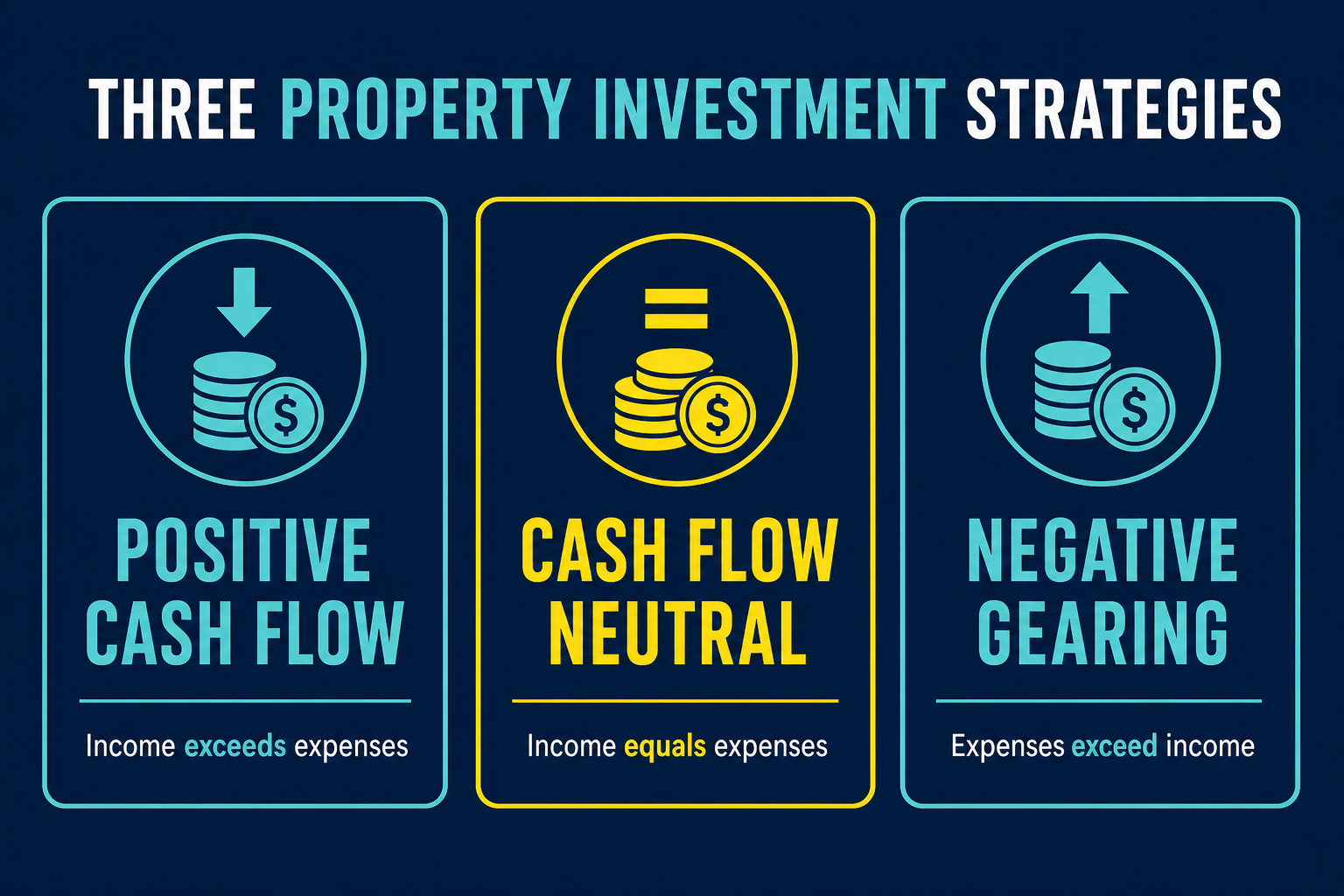
What makes a property genuinely cash flow positive
Gross yield is where most investors start, and where many make their first mistake. A property advertising a 6.5% gross yield can still be deeply negative in practice. Once you account for all holding costs, the real picture often looks very different.
A genuinely cash flow positive outcome means that annual net rental income, after all costs including mortgage interest, exceeds total holding costs and leaves a monthly surplus. The costs that eat into gross yield include:
- Mortgage interest: At 80% LVR with a 6.2% investor rate, the break-even gross yield just to cover interest sits at approximately 5.0%. Add all other costs and the true break-even rises to 6.0% to 6.5% or higher.
- Property management fees: Typically 7% to 10% of gross rent in most Australian markets.
- Council rates, water rates, and land tax: Vary significantly by state and property value.
- Landlord insurance: Often underestimated, particularly in high-risk or regional areas.
- Vacancy allowance: Even in a 1.7% vacancy environment nationally, smart underwriting assumes at least 2 to 3 weeks of vacancy per year.
- Maintenance and capital expenditure reserve: A 1% to 2% annual allowance on property value is a conservative and realistic assumption.
The gap between the headline yield and the actual net result is where portfolio decisions go wrong. A $500,000 property with a 5.5% gross yield might look reasonable on a listing portal, but after all costs it could be neutral at best and negatively geared at worst. Running a full net cash flow analysis before making any offer is non-negotiable.
For a structured approach to this analysis, the property investment due diligence checklist at Buyers Agency Australia covers exactly what to verify before committing to a purchase.
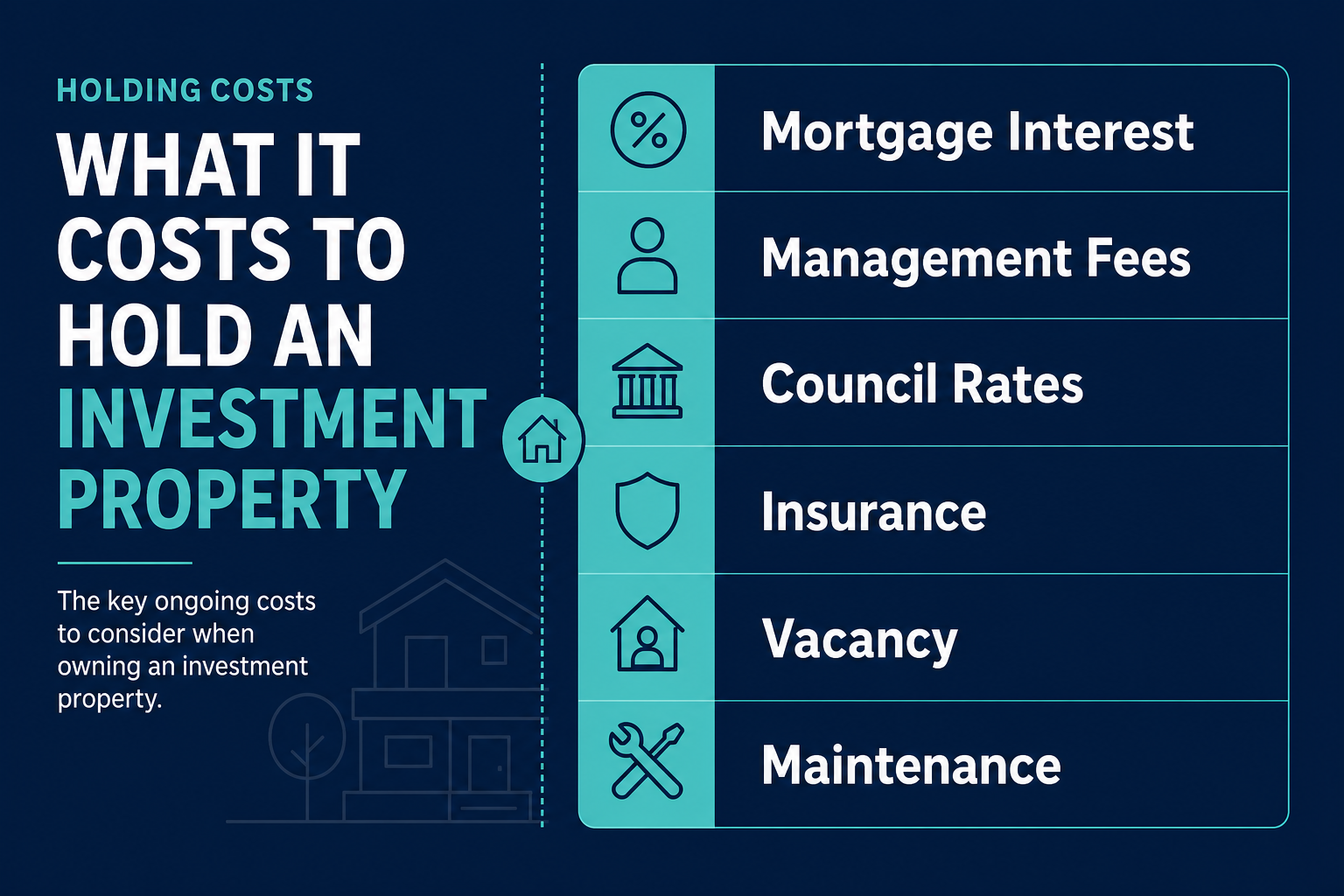
When positive cash flow can support portfolio building
One of the most practical, underappreciated benefits of a cash flow positive property is what it does to your borrowing capacity for the next purchase.
Lenders assess serviceability by looking at all existing debt obligations against income. A negatively geared property adds to your monthly expenses from a lender's perspective. In a market where serviceability buffers have tightened and lenders are scrutinising debt-service coverage ratios more carefully, each negatively geared property effectively reduces your capacity to borrow for the next one.
A cash flow positive property works in the opposite direction. The surplus income it generates is counted as income by many lenders, which can actually improve your capacity to service further debt. For investors with a clear goal of building a multi-property property portfolio, this is a meaningful structural advantage.
This is also why dual-income properties have attracted significant investor interest in 2026. A house with a secondary dwelling or a granny flat can shift a property from a 3.5% to 4.0% gross yield into a 6.0% to 7.0% yield range, depending on the configuration and local rental market. That shift can be the difference between a property that holds back your portfolio and one that funds it. The dual income property strategy for 2026 explores this approach in more detail.
Cash flow positive properties also reduce portfolio pressure during rate volatility. Investors with positive cash flow buffers are better placed to hold through uncertain periods without being forced to sell at the wrong time. In a market where the RBA has shown a willingness to raise rates three times in a single calendar year, that resilience has real value.
Risks and misconceptions to avoid
Chasing yield alone is one of the most consistent ways investors destroy long-term wealth in Australian property. A gross yield of 9% or 10% often signals something the listing portal is not advertising clearly: a regional market with limited population growth, an oversupplied dwelling type, a mining-town exposure, or a price that reflects minimal future demand.
The biggest misconceptions to watch for:
High yield does not mean high quality. Asset quality drives long-term total return. A property in a supply-constrained, economically diverse market at a 5.5% yield will almost always outperform a 9% yield property in a single-industry town over a ten-year horizon. Prioritise asset quality and yield together, not yield in isolation.
Gross yield is not net cash flow. This distinction is covered above but bears repeating. Always model the full holding cost before drawing a conclusion about cash flow.
Positive cash flow is not just a regional play. While regional Queensland, outer WA, and fringe SA markets dominate the cash-flow-positive landscape in 2026, dual-income configurations in metropolitan fringe markets, well-located units in Brisbane and Adelaide, and strategic suburb selection can produce defensible yields without sacrificing all capital growth potential.
Vacancy rates can move. The current 1.7% national vacancy rate is historically very tight. Markets that depend on tourism, seasonal employment, or a single major employer can see vacancy rates double or triple quickly. Run your cash flow analysis on a 5% vacancy assumption minimum, not on today's market conditions alone.
For investors who want a broader view of the mistakes derailing portfolios right now, the biggest property investment mistakes Australians are making in 2026 is worth reading before making any purchase decision.
How a buyers agent can help assess opportunities
Assessing whether a property is genuinely cash flow positive requires more than a quick yield calculation on a listing portal. It requires verified rental data, an honest vacancy assessment, a clear view of comparable sales, a full holding cost model, and the negotiation capability to buy at a price that preserves the cash flow advantage.
This is where Buyers Agency Australia adds specific, measurable value for investors focused on cash flow outcomes. Dragan Dimovski, founder and lead buyers agent with 20-plus years of property investment experience, approaches every brief with a strategy-first mindset. Rather than searching for a property and hoping the numbers work, the process starts with your income position, borrowing capacity, target yield, and portfolio goals, and works backward to a clear purchase criteria.
The practical support covers:
- Market and suburb research: Identifying markets where yield and vacancy fundamentals genuinely support positive cash flow, not just where gross yields look attractive on paper.
- Property due diligence: Full holding cost modelling, rental appraisal verification, building and pest assessment coordination, and title and zoning checks before any offer is made.
- Off-market access: A meaningful share of strong investment-grade properties are transacted off market, and access to these opportunities typically requires buyer-side relationships that individual investors cannot easily replicate.
- Negotiation: Buying at the right price directly affects yield. Every dollar saved on purchase price improves your cash flow from day one.
- Portfolio sequencing: Understanding which purchase to make now, in which market, at which price point, to keep serviceability intact for the next acquisition.
For investors who want to understand what separates a genuinely capable buyer-side advisor from a poor one, what makes a good buyers agent in 2026 covers the key selection criteria and red flags in detail.
To book a free strategy session and map out a cash flow focused purchase plan with the Buyers Agency Australia team, the consultation covers your current position, target markets, and a clear next step forward.
Next steps for investors
Before acting on a cash flow property opportunity, use this checklist to confirm your position is solid:
- Know your current serviceability position. Get an updated borrowing capacity assessment from a mortgage broker familiar with investor lending. This is the ceiling everything else works within.
- Run a full net cash flow model. Include mortgage interest at today's rate, management fees, council rates, insurance, 2-3 weeks vacancy, and a 1% maintenance reserve. Do not rely on gross yield figures from a listing portal.
- Assess the vacancy fundamentals. Check SQM Research or CoreLogic vacancy data for the specific suburb, not just the state average. Look for markets consistently below 2.5%.
- Review asset quality alongside yield. Is the suburb population growing? Is the local economy diversified? Is there meaningful infrastructure investment or employment demand? Yield must be supported by underlying demand drivers.
- Consider the post-Budget tax environment. If you are purchasing an established property after 12 May 2026, understand how the 2027 negative gearing changes affect your modelling. Cash flow positive properties are more resilient to these changes than negatively geared ones.
- Plan the portfolio sequence. Decide whether this purchase is a standalone acquisition or one step in a multi-property strategy. The sequencing affects which market, which price point, and which property type makes the most sense right now.
- Seek professional advice. Property investment advice from a qualified buyers agent and tax advice from a property-specialist accountant are both worth investing in before committing to a purchase of this size.
If you are serious about acquiring a cash flow positive property in 2026, map out your next property move with a strategy session. And if you are ready to speak to the team directly, contact the team to get started.
Frequently Asked Questions
What does positive cash flow mean in property investment?
A property is positively cash flow when rental income exceeds all holding costs, including mortgage interest, management fees, insurance, and maintenance, leaving a monthly surplus.
Is positive cash flow property investing still possible in Australia in 2026?
Yes, but it requires deliberate suburb selection. Regional Queensland, outer WA, fringe SA, and dual-income configurations in metro fringe areas offer the strongest opportunities at current interest rates.
How does a cash flow positive property help with borrowing capacity?
Surplus rental income from positively geared properties is recognised as income by many lenders, which can improve your ability to qualify for finance on subsequent investment purchases.
What is the minimum gross yield needed for positive cash flow in 2026?
At an 80% LVR with a 6.2% investor rate, break-even gross yield before other costs sits around 5.0%. After all holding costs, the threshold rises to approximately 6.0% to 6.5% or higher depending on the property and state.
How do the 2027 negative gearing changes affect cash flow property strategy?
From 1 July 2027, losses on established properties bought after 12 May 2026 cannot be offset against wages. Cash flow positive properties carry less exposure to this policy change because they do not depend on the negative gearing tax benefit to remain viable.
 General
With the RBA cash rate at 4.35% and investor mortgage rates above 6%, positive cash flow property investing...
Manufactured growth is a deliberate approach to building property equity through your own actions, not by waiting for the market cycle to do the work for you. It is one of the more powerful and widely misunderstood concepts in Australian property investing, and understanding it clearly can change the way you think about building a portfolio.
What manufactured growth means in property investing
Most investors are familiar with passive capital growth: you buy, you hold, and you trust that time and market forces will push values upward. That approach has worked well across many Australian cycles, and long-term property investment strategy still forms the backbone of most wealth-building plans.
Manufactured growth, however, adds an active layer to that equation. The idea is that you take a property and increase its value through deliberate decisions, whether that is a structural improvement, a layout change, a secondary dwelling, or a smarter acquisition price in the first place. You are not sitting around hoping the suburb outperforms. You are taking specific steps to improve the asset's position relative to where you bought it.
The distinction matters because passive growth depends heavily on timing and market selection, both of which are outside your control. Manufactured growth gives investors a degree of influence over the outcome, within reason. That does not mean it is easy or risk-free, but it does mean the value creation is not purely a function of waiting.
According to the ABS Total Value of Dwellings data, the mean price of residential dwellings rose to $1,111,100 in the March quarter of 2026, reflecting continued national-level demand. Even within a rising market, investors who enter with a manufactured-growth mindset tend to build equity from a stronger starting position.
Buyers Agency Australia works with investors who want to go beyond hoping for market uplift. The goal is always to identify properties where there is a genuine angle, not just a story.
Common ways investors try to manufacture growth
There is no single method. The right approach depends on the property, the location, the zoning rules, and the investor's budget and capacity. Below are the most common tactics used across Australian markets.
Cosmetic and structural renovation
Renovation remains the most common entry point for manufactured growth. Kitchens, bathrooms, flooring, and landscaping can meaningfully lift a property's market appeal and rental yield without a full structural overhaul. Older homes, deceased estates, and neglected properties often carry the most upside because they are typically priced below their potential.
NAB data shows renovation lending rose 21% in 2025, outpacing growth from the two prior years. Investors are clearly leaning into value-add renovation as a deliberate strategy, not just a cosmetic preference.
The catch with renovation is overcapitalisation. Spending $120,000 on a suburb where comparable properties cap out at a certain valuation does not produce equity; it produces a loss. The numbers have to be stress-tested before any work begins.
Granny flats and secondary dwellings
Adding a compliant granny flat or self-contained secondary dwelling is one of the more efficient manufactured-growth plays available to Australian investors. Research by InvestorKit shows that adding a granny flat can increase a property's overall rental yield by 1.4 to 1.65 percentage points compared to similar homes without one. In a rental market where vacancy rates nationally sit near 1.7%, that income uplift is significant.
Typical build costs range from $100,000 to $200,000 for a self-contained secondary dwelling, with achievable rents of $400 to $600 per week in many metropolitan areas. Granny flat builds are expected to grow substantially through 2026, with the Housing Industry Association tracking surging demand particularly in Sydney and Perth.
Rules differ by state and council, so understanding what is permissible under local planning controls before purchasing a site is non-negotiable. This is an area where understanding how buyers agents find off-market properties gives serious investors a real edge, because suitable sites are rarely listed with their potential clearly stated.
Subdivision
Subdivision involves splitting a block into two or more separate titles, either to sell one portion or develop both. In growth corridors where zoning supports increased density, the land value uplift from a clean subdivision can be substantial. Buying properties with existing Development Approval, or sites with clear rezoning potential, can create meaningful value without significant construction.
This approach carries more complexity: council approval timelines, infrastructure contributions, holding costs, and builder availability all affect outcomes. It is not a strategy for the impatient or undercapitalised.
Layout and floor plan improvements
Not all manufactured growth requires a hammer. Converting a three-bedroom house to a four-bedroom layout by reconfiguring underused space, or adding a home office or second bathroom, can shift a property into a higher comparable bracket at relatively modest cost. These improvements often lift rental yield and broaden the buyer pool at resale, both of which support valuation.
Strategic acquisition price
Buying below intrinsic value is itself a form of manufactured growth, because you enter the market with an immediate equity buffer rather than paying at the ceiling. Sourcing properties with genuine motivated sellers, deceased estates, or off-market conditions often allows a purchase at a price below what an arms-length open-market transaction would produce.
This is one reason off-market property access is so central to a value-add approach. If you start at a fair price, your manufactured growth needs to do all the heavy lifting. If you start below fair value, you already have a margin of safety.
| Manufactured Growth Tactic |
Typical Investor Skill Required |
Timeframe |
Key Risk |
| Cosmetic renovation |
Low to moderate |
2-6 months |
Overcapitalisation |
| Granny flat addition |
Moderate |
3-9 months |
Council approval, cost blowout |
| Subdivision |
High |
12-36 months |
Approval delays, holding costs |
| Layout improvement |
Low to moderate |
1-4 months |
Limited valuation uplift |
| Strategic below-market acquisition |
Moderate (sourcing) |
At purchase |
Limited supply of suitable sites |
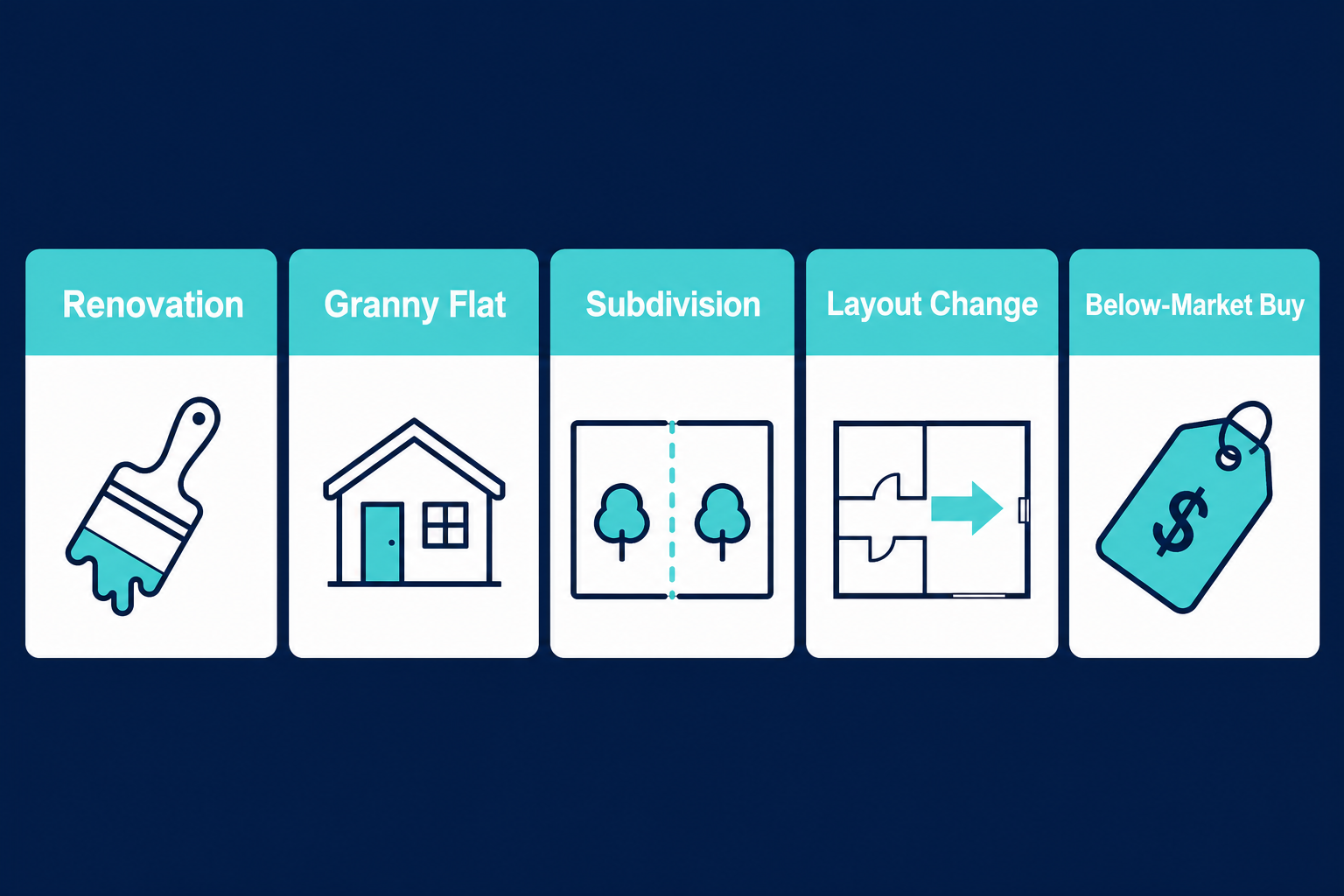
How manufactured growth can support a long-term portfolio plan
The core appeal of manufactured growth within a property portfolio strategy is that it may compress the timeline to meaningful equity. Rather than waiting five to seven years for a market cycle to produce a revaluable equity position, a well-executed value-add play can potentially create usable equity in a shorter window.
That equity, once accessible through refinancing, becomes the deposit or security for the next acquisition. This is the mechanism through which investors build multiple properties without always needing to save additional cash deposits from scratch. How property investors use equity to buy multiple properties explains this mechanic in detail.
Manufactured growth works best as a complement to sound market selection, not a substitute for it. A well-located property with genuine demand drivers and a manufactured-growth angle is significantly stronger than either approach used alone. A poorly located property with a granny flat attached is still a poorly located property.
The broader context matters here. Investment property advice consistently shows that market selection underpins long-term performance. Manufactured growth is the accelerant, not the engine.
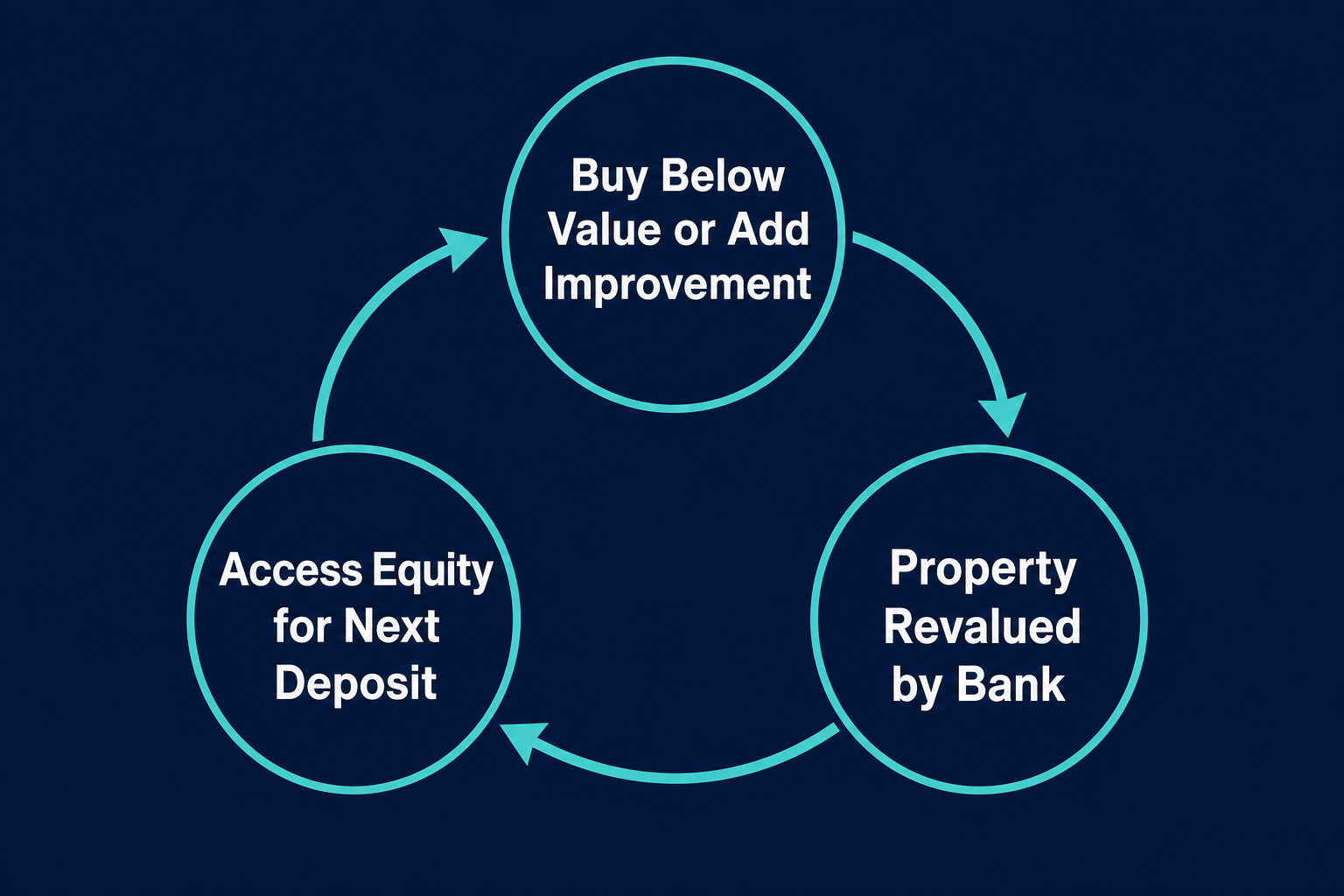
The risks, trade-offs, and due diligence steps
Manufactured growth strategies carry real costs and real risks. Understanding them honestly is part of making a sound decision.
Cost blowout risk: Construction quotes frequently come in higher than anticipated, and materials cost pressures have remained elevated. ABS Producer Price Index data shows building construction prices rose 4.2% in the year to March 2026. Renovation and construction budgets should include a contingency of at least 15 to 20%.
Holding cost risk: Subdivision and development projects can run for 12 to 36 months. During that period, you are servicing debt without necessarily receiving the uplift. If interest rates move adversely or rental income drops, the holding burden increases.
Execution risk: Finding reliable builders, contractors, and certifiers who deliver on time and on budget is genuinely hard in a competitive construction market. One delayed approval or a builder substituting cheaper materials can erode projected margins.
Valuation risk: Banks assess value on comparable sales. If comparable sales in the area do not support the improved valuation, refinancing to access manufactured equity may not go as planned.
Planning and zoning risk: State and local planning rules are not static. What is permissible under today's controls may be subject to change, and council decisions can significantly affect timelines and feasibility.
Due diligence before committing to a manufactured-growth strategy should include:
- Independent feasibility analysis (not a builder's estimate)
- Comparable sales research to confirm ceiling values
- Pre-purchase planning advice from a qualified certifier or town planner
- Confirmation of council requirements, infrastructure contributions, and approval timelines
- Stress-testing the project against a 15 to 20% cost increase and a six-month delay
A thorough property investment due diligence checklist covers many of these steps across the acquisition process.
| Due Diligence Step |
Why It Matters |
| Independent feasibility study |
Avoids relying on builder or agent projections |
| Comparable sales ceiling analysis |
Confirms that uplift will be recognised by the market |
| Pre-purchase planning advice |
Confirms feasibility before exchange |
| Cost contingency modelling |
Protects against the most common failure point |
| Holding cost stress test |
Validates cashflow resilience during the project |
When manufactured growth may suit an Australian investor
Manufactured growth is not the right approach for every investor or every budget. There are scenarios where it makes genuine sense and others where the complexity outweighs the return.
It may suit investors who:
- Have solid borrowing capacity and a cash buffer for construction contingencies
- Are in a position to hold for at least two to three years beyond the project completion
- Can access suitable sites (often off-market) where the improvement upside has not already been priced in
- Have a clear, specific plan rather than a vague aspiration to "add value"
- Are working with an experienced buyers agent and professional team who have done this type of project before
It may be less suitable for investors who:
- Are stretching serviceability to make the purchase work in the first place
- Have limited time or capacity to manage a construction project remotely
- Are looking at a location where comparable improvements have already been absorbed into the market pricing
- Are relying on the manufactured growth to make an otherwise marginal deal viable
The question is not whether manufactured growth sounds attractive in principle. The question is whether the specific property, in the specific location, with the specific improvement plan, produces a margin of safety that justifies the execution risk. That is a data question, not an enthusiasm question.
For investors considering Brisbane, Adelaide, or other outperforming markets, it is worth looking at current property investment hotspots and strategies for 2026 to understand which locations currently present the strongest combined fundamentals.
How a buyers agent can help assess opportunities
Identifying a manufactured-growth opportunity is not straightforward. The properties with genuine upside are rarely sitting on portals at obvious prices with a sign saying "renovate me." They are in off-market networks, vendor-distressed situations, and estates that a well-connected buyers agent sees before the general public does.
Dragan Dimovski, founder of Buyers Agency Australia and a property expert with 20+ years of experience, has built a practice specifically around finding investment-grade properties where the numbers genuinely stack up. That includes sites where a manufactured-growth angle exists, but only when the entry price, location, and improvement plan are all aligned.
The buyers agent's role in a manufactured-growth strategy goes well beyond finding a property. It includes:
- Identifying sites where the improvement potential has not been priced in by the vendor
- Running an independent feasibility check before any offer is made
- Negotiating the acquisition price to create a margin of safety for the project
- Coordinating due diligence with planners, valuers, and building inspectors
- Advising on whether a specific tactic (granny flat versus subdivision versus renovation) matches the investor's capacity, timeline, and broader strategy
Buyers Agency Australia focuses exclusively on the buyer's side and takes no commissions from selling agents or developers. That independence matters when you are relying on someone to tell you honestly whether the numbers work or not.
If you are thinking about a manufactured-growth approach as part of your next acquisition, the best starting point is a structured conversation about your current position, what you can actually build on, and which markets have the right conditions right now. You can book a free strategy session to map out your next move with the team.
Frequently asked questions
What does manufactured growth mean in property?
Manufactured growth means actively increasing a property's value through deliberate improvements or strategic acquisition, rather than relying purely on market-driven capital growth over time.
Is manufactured growth the same as renovating a property?
Renovation is one method, but manufactured growth also includes granny flats, subdivision, layout changes, and buying below market value. Renovation is the entry point; manufactured growth is the broader strategy.
How long does it take to manufacture equity in a property?
Timelines vary. A cosmetic renovation may take two to six months. A granny flat addition typically takes three to nine months. A subdivision project can run 12 to 36 months depending on approval timelines and build complexity.
What are the main risks of a manufactured-growth strategy?
The main risks are cost blowouts, approval delays, valuation shortfalls, and holding cost pressure during construction. A thorough feasibility study and contingency buffer are essential before committing.
Can a buyers agent help with manufactured-growth property selection?
Yes. A buyers agent with investment expertise can identify off-market sites with genuine upside, run independent feasibility checks, negotiate entry price, and coordinate due diligence across the full process.
Manufactured growth works best when the entry is smart, the plan is specific, and the execution team is credible. It is not a shortcut, but it is a legitimate way to build equity faster when the conditions are right. If you want guidance on whether it fits your portfolio, contact the team at Buyers Agency Australia to get an honest assessment of your options.
 General
Manufactured growth is a deliberate approach to increasing a property's value through your own actions rather than waiting...
Not every buyers agent is created equal. In a market where investor activity has surged – with investor loans up 64% from the early 2023 low according to the PropTrack Westpac Investor Report – the stakes of picking the wrong buyers agent have never been higher. This guide cuts through the noise so you can make an informed, confident decision.
Introduction: Why Buyers Agent Quality Matters in 2026
Property investors across Australia are facing one of the most complex buying environments in recent memory. National vacancy rates remain below 1.6% in many capital city markets, mid-cap cities like Brisbane and Adelaide are still posting strong annual growth, and the proposed changes to negative gearing rules from 2027 are reshaping acquisition timelines for many portfolios. Getting the strategy right matters enormously right now.
A good buyers agent for property investment does far more than search for properties on portals. The right buyers advocate reduces risk, brings independent market intelligence to every decision, and ensures that each acquisition is aligned to a defined wealth-building plan rather than a sales quota. The wrong one costs you time, money, and momentum.
Buyers Agency Australia, led by Dragan Dimovski – a property expert with 20+ years of hands-on investment experience – was built on exactly this distinction. What follows is an honest breakdown of what separates a genuinely strategic buyers advocate from one who simply adds cost and complication to your purchase.
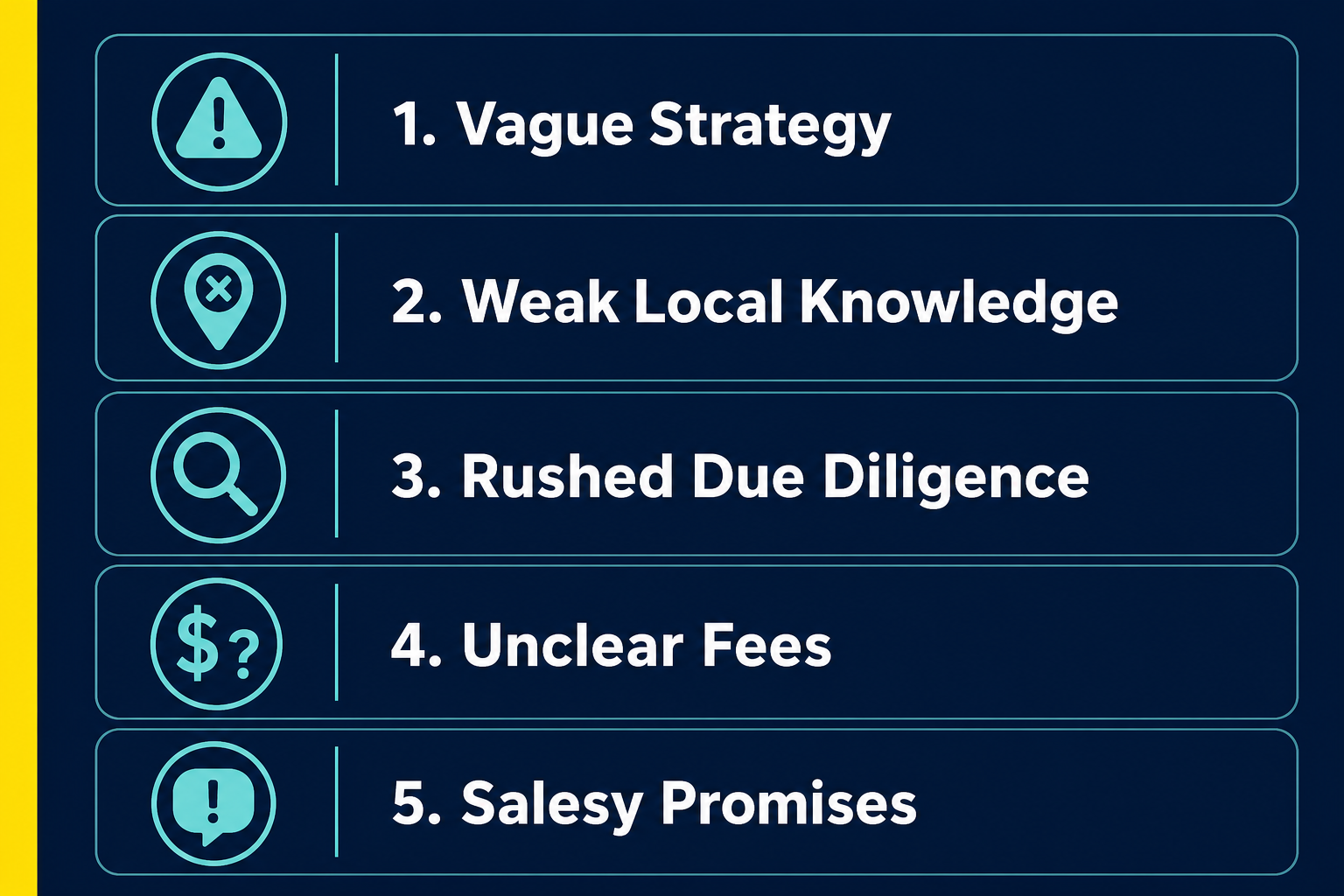
What a Good Buyers Agent Should Do
Before identifying the red flags, it helps to be clear on the benchmark. A quality buyers agent delivers across several interconnected areas.
Strategy alignment: The engagement should start with your goals, your timeline, your borrowing capacity, and your risk profile. A competent buyers advocate builds a clear acquisition thesis before any property search begins. They reverse-engineer the asset type, suburb profile, and price point that serves your 10-year wealth target – not their preferred postcodes.
Suburb and asset research: Independent, data-led suburb analysis is non-negotiable. This means vacancy rates, rental demand trends, infrastructure pipelines, supply constraints, comparable sales, and demographic shifts. For investors building a property investment strategy oriented around long-term wealth, suburb selection is where outcomes are largely determined.
Due diligence and risk assessment: A thorough buyers agent coordinates building and pest inspections, reviews strata records for units, assesses contract conditions, and flags any overlays or planning risks that could affect the asset's value or usability. A full property investment due diligence checklist covers everything from title searches to rental appraisal verification.
Negotiation and purchase support: From structuring the offer and negotiating on price and terms, through to coordinating settlement, a good buyers agent remains present and accountable throughout the entire transaction.
| What a Good Buyers Agent Delivers |
What to Expect in Practice |
| Strategy and acquisition brief |
Written investment brief before any search begins |
| Independent suburb research |
Data-backed shortlist with clear rationale |
| Due diligence coordination |
Inspections, contract review, risk flagging |
| Negotiation and offer strategy |
Evidence-based pricing and terms guidance |
| Settlement and handover support |
Clear communication through to settlement day |
Red Flag #1: Vague Strategy and No Clear Investor Focus
When you speak with a buyers agent for the first time, they should be able to articulate a clear process. What does their acquisition brief look like? How do they define a good investment? What is their process for shortlisting markets and asset types?
If the answers are generic – phrases like "we look at growth areas" or "we focus on high demand suburbs" without any evidence-based substance behind them – that is a problem. A buyers advocate who cannot explain their investment thesis clearly is not thinking strategically about your portfolio; they are thinking about completing a transaction.
For investors who understand why property investment strategy matters more than picking the right suburb, this distinction is critical. Strategy comes first. Suburb selection and asset type follow from a defined goal, not the other way around.
Also watch for agents who present themselves as generalists serving both buyers and sellers in the same market. An agent who earns commission from vendors cannot be fully aligned to your interests as a buyer, regardless of what they claim.

Red Flag #2: Weak Local Knowledge or Generic Suburb Recommendations
Strong suburb knowledge is not simply knowing where a suburb is located. It means understanding the specific streets that outperform within a suburb, recognising which developments are under-supplied, reading rental demand patterns, and knowing which overlays or zoning changes could affect capital growth.
A buyers agent who recommends suburbs based on "what's trending" in property media is a concern. By the time a suburb appears in a mainstream top-10 list, the opportunity window has typically closed and buyer competition has already priced in the growth.
Ask directly: which specific council areas do you focus on, and why? What data sources do you rely on? How have your suburb recommendations performed over the past three to five years? A confident, experienced buyers advocate will answer these questions with precision. Hesitation or vague referrals to "positive sentiment" and "strong fundamentals" should make you cautious.
For investors assessing Brisbane, for example, a well-researched agent should be able to speak to specific conditions across inner, middle, and outer ring markets – not just repeat broad statements about Brisbane's investment property market in 2026.
Red Flag #3: Poor Due Diligence and Rushed Recommendations
One of the clearest warning signs is pressure to move fast without adequate evidence. A buyers agent who tells you that you "need to move today" or that "this one won't last" without supporting the urgency with detailed market analysis is not acting in your interest.
According to Australia's consumer protection regulator, high-pressure selling tactics – including artificial urgency – are a recognised indicator of conduct that may not serve the consumer's best interest. In property, that urgency often comes at the buyer's expense.
Shallow property analysis is another risk. A buyers advocate who skips building inspections, accepts the vendor's rental appraisal without independent verification, or fails to check strata records for units is exposing you to risks that could cost far more than their fee saved. A thorough buyers agent treats every property as a potential risk first and an opportunity second.
The approach at Buyers Agency Australia is the opposite: Dragan Dimovski's team works from a defined brief, runs independent comparable sales analysis, and coordinates all inspections before recommending a purchase. The buyer's interests are protected at every stage – not just the acquisition.
Red Flag #4: Unclear Fees, Scope, and Exclusions
Fee transparency is one of the clearest indicators of a buyers agent's integrity. Before engaging anyone, you should receive a written service agreement that clearly states:
- The total fee structure (fixed or percentage-based)
- What is included in the service (full search, negotiate-only, auction bidding)
- What is excluded (certain property types, geographies, price brackets)
- Any referral arrangements or third-party relationships
- Licensing details and the state in which they are licensed to operate
Buyers agents in Australia are required to hold a real estate agent licence under the relevant state legislation. From 1 July 2026, buyers agents also fall under new AUSTRAC AML/CTF obligations as reporting entities – so working with a properly licensed, compliant agency is now a regulatory as well as a practical consideration.
Percentage-based fees create a structural conflict: the agent earns more when you pay more. A fixed-fee model removes that conflict entirely. At Buyers Agency Australia, fees are structured to reflect the complexity of the search, not the purchase price – so the agent's incentive is always to find the best deal, not the most expensive one.
If an agent is reluctant to put their fee structure, scope of service, or licensing in writing, that reluctance tells you everything you need to know.
Red Flag #5: Salesy Promises and Unrealistic Claims
No buyers agent can guarantee growth. No one can guarantee that a property will be under market value. No one can guarantee exclusive off-market access that no other agent or investor has. These are not promises that any credible buyers advocate should make, and the presence of language like "guaranteed results" or "exclusive deals unavailable elsewhere" should prompt real scepticism.
As Australia's consumer regulator notes, claims that cannot be substantiated and that are likely to mislead consumers may constitute misleading conduct under Australian Consumer Law. In property, these claims are often used to create urgency and lower due diligence.
Authentic off-market access comes from genuine, relationship-driven networks built over years – not a marketing promise. Understanding how buyers agents find off-market properties is useful context here: it is a function of long-term agent relationships and local credibility, not a feature that can be switched on for any buyer at any time.
Also watch for social media-driven outreach and unsolicited messages promising specific off-market deals. In 2026, unsolicited digital solicitation has become one of the more visible patterns among less experienced operators entering the market.
Questions Investors Should Ask Before Engaging a Buyers Agent
Before signing any engagement agreement, use these questions to assess the quality, alignment, and transparency of a potential buyers advocate:
- Experience and track record: How long have you been operating as a buyers agent? How many investment purchases have you facilitated in the last 12 months?
- Investor focus: Do you work primarily with investors, owner-occupiers, or both? What proportion of your clients are building multi-property portfolios?
- Strategy process: How do you develop a brief before searching? What does your acquisition thesis look like for a client in my position?
- Market coverage: Which markets do you operate in? Are you licensed to operate in each state where you recommend properties?
- Due diligence process: What inspections, reports, and checks do you coordinate as part of your standard service?
- Fee structure: Is your fee fixed or percentage-based? What does the engagement agreement include and exclude?
- Conflict management: Do you receive any referral fees, commissions, or benefits from third parties such as property managers, brokers, or developers?
- Communication: How frequently will I receive updates? Who is my main point of contact throughout the process?
- Off-market access: How do you source off-market properties, and can you provide examples from recent transactions?
- References: Can you provide references from investors with similar goals to mine?
A good buyers agent will welcome these questions. A hesitant or evasive response to any of them is itself important information.
How to Choose the Right Buyers Agent for Your Goals
The right buyers agent for an investor building a property portfolio is not necessarily the same as the right agent for an owner-occupier buying their first home. Matching the buyers advocate to your specific context matters.
| Investor Priority |
What to Look For in a Buyers Agent |
| Portfolio growth strategy |
Proven process for multi-property, goal-oriented acquisition |
| Off-market access |
Genuine agent network, not just portal monitoring |
| Capital growth focus |
Data-led suburb analysis with documented rationale |
| Yield and cash flow |
Understanding of rental demand, vacancy, and holding costs |
| Transparent fees |
Fixed-fee structure with written scope of service |
| Independent representation |
No vendor-side conflicts, no developer or project referrals |
For investors who want strategy-led, independent buyer-side representation across Australia's major markets, Buyers Agency Australia offers a structured approach grounded in 20+ years of personal investment experience. The two-speed property market conditions of 2026 – with some cities still performing strongly while others soften – make the quality of suburb selection and asset research more consequential than in a broadly rising market.
If you are exploring how off-market properties change the way strategic buyers search, that context is also worth understanding before you engage any buyers advocate.
When in doubt, book a free strategy session and see whether the conversation is focused on your goals or on their listings.
Frequently Asked Questions
What qualifications should a buyers agent have in Australia?
A buyers agent must hold a valid real estate agent licence under the relevant state legislation. From July 2026, they must also comply with AUSTRAC AML/CTF obligations as registered reporting entities.
How do buyers agent fees typically work in Australia?
Fees are either fixed or percentage-based (commonly 1.5% to 2.5% of purchase price). Fixed-fee models remove the conflict of interest where an agent benefits from a higher purchase price.
Is it worth using a buyers agent for investment property?
For most investors, yes – particularly for off-market access, independent suburb research, negotiation, and due diligence coordination that would otherwise require significant time and expertise.
How can I verify a buyers agent is properly licensed?
Check the relevant state licensing register. In NSW, Fair Trading maintains a public register. In Queensland, the Office of Fair Trading holds licensing records for all real estate agents.
What is the difference between a buyers agent and a buyers advocate?
The terms are used interchangeably in Australia. Both refer to a licensed professional who acts exclusively on behalf of the buyer, not the vendor, throughout the property search and purchase process.
Closing: Choose Expertise, Transparency, and Alignment
In 2026, the Australian property market rewards disciplined, data-informed decision-making. The buyers agent you choose either reinforces that discipline or undermines it. Strategy clarity, suburb knowledge depth, rigorous due diligence, transparent fees, and honest communication are not optional extras – they are the baseline for anyone who genuinely acts in your interest.
The red flags covered in this guide are not hypothetical. They show up regularly in investor experiences across the country, and they carry real financial consequences. Choosing a buyers advocate who ticks the right boxes from the beginning is far less costly than course-correcting after a poorly structured acquisition.
If you want to work with a team that puts your strategy first, map out your next property move with Buyers Agency Australia. For any specific questions about the process or how the team works, contact the team directly.
 General
A practical 2026 guide for Australian property investors on identifying a quality buyers agent, spotting five critical red...
Understanding SMSF property investment rules is one of the most important steps any Australian investor can take before acting. The rules are specific, the ATO's enforcement is firm, and the cost of getting it wrong can far outweigh any tax advantage gained. This guide explains the core framework clearly so you can make informed decisions.
Important: This article contains general information only and does not constitute personal financial, legal, or tax advice. Always consult a licensed financial adviser, SMSF specialist, and solicitor before proceeding with any SMSF property strategy.
What SMSF property investment rules mean in Australia in 2026
Australia's self-managed super fund sector has grown substantially. According to the ATO's December 2025 quarterly SMSF statistical report, there are now 663,867 SMSFs holding an estimated $1.06 trillion in assets across more than 1.2 million members. That scale reflects genuine demand for control over retirement savings, and property sits at the centre of many investors' thinking.
Buying property through an SMSF is permitted under Australian superannuation law, but the framework that governs it is tightly defined. The Superannuation Industry (Supervision) Act 1993 (SIS Act) and related ATO rulings set strict boundaries around how property can be acquired, held, and used within a fund. These rules exist to protect the integrity of the retirement system and to ensure that super assets are not misused for personal benefit before retirement.
The foundational principle is the sole purpose test. Under section 62 of the SIS Act, every investment decision an SMSF makes must be directed at providing retirement benefits to fund members, not current personal benefit to trustees, members, or their related parties. That single test underpins every rule discussed in this guide.
For Australian property investors thinking about property investment strategy within a super structure, understanding this framework at a high level is the essential starting point before speaking with any licensed adviser.
Who an SMSF property strategy may suit
Not every investor benefits from buying property through super. The structure tends to suit a specific profile: typically, investors who already have a meaningful SMSF balance, a long investment horizon, and the discipline to manage compliance obligations over time.
Common suitability indicators include:
- A fund balance generally above $200,000 to $500,000, where annual compliance costs represent a smaller proportion of returns
- Members who are more than a decade from retirement, allowing capital growth to compound inside the concessional tax environment
- Business owners looking to hold commercial premises through their SMSF and lease the property back to their business at market rates (one of the few related-party exceptions permitted under the rules)
- Investors who want direct control over asset selection and are prepared to meet trustee obligations, including annual audits and ATO reporting
According to ATO statistics for 2023-24, the average SMSF held $1.63 million in assets, up 29% over the prior five years. That average masks a wide distribution, and investors with smaller balances should weigh annual administration costs carefully before committing to a property acquisition structure.
SMSF property is not suited to everyone. Investors who need liquidity flexibility, who are close to the pension phase, or who have limited super balances may find that direct property significantly reduces their fund's ability to meet drawdown obligations. This is an area where professional investment property advice is genuinely valuable before any structure is chosen.
Core rules to understand before buying property through an SMSF
The compliance framework for SMSF property investment covers several distinct areas. Each one carries real consequences if misunderstood.
The sole purpose test
As noted above, every SMSF investment must satisfy the sole purpose test. In practical terms for property, this means no fund member or related party can live in, holiday in, or use an SMSF-owned residential property in any way before retirement. The ATO is unambiguous on this point. Even allowing a family member to stay for a weekend at no charge can constitute a breach.
Limited Recourse Borrowing Arrangements (LRBAs)
An SMSF cannot use a standard residential mortgage to purchase property. If the fund needs to borrow, it must do so through a Limited Recourse Borrowing Arrangement. Under an LRBA structure, the property is held in a separate bare trust until the loan is fully repaid, at which point legal title transfers to the SMSF. The "limited recourse" element means that if the fund defaults, the lender can only recover the property itself, not other fund assets.
Key LRBA rules to understand:
- One property per LRBA; each acquisition requires a separate bare trust
- Borrowed funds cannot be used to improve the property, only to acquire it (maintenance costs can be paid from fund income, but structural improvements that change the property's character are not permitted under borrowed funds)
- The bare trustee entity must be separate from the SMSF trustee, and the bare trust deed must be executed before or on the settlement date
- Related-party loans under an LRBA must meet the ATO's safe harbour terms under PCG 2016/5 to avoid non-arm's length income (NALI) penalties
Related-party acquisition restrictions
An SMSF generally cannot purchase residential property from a related party. Business real property (commercial premises used wholly and exclusively in a business) is one of the few exceptions, and even then, the transaction must occur at market value and on arm's length terms.
In-house asset rules
No more than 5% of an SMSF's total assets can be invested in related-party assets. This rule has direct implications for any arrangement where the fund's property intersects with a trustee's business or personal interests.
Tax treatment
Rental income received by an SMSF is taxed at 15%, compared to up to 47% at an individual's marginal rate. Capital gains on property held for more than 12 months are taxed at 10% within the fund. In pension phase, where the fund is paying retirement income streams, both rental income and capital gains may attract 0% tax, subject to the member's transfer balance cap (currently $2 million for the 2025-26 financial year, rising to $2.1 million from 1 July 2026).
For context on how recent tax policy changes may affect overall property investment strategy, it is worth reviewing the 2026 budget implications alongside your adviser.
| Rule Area |
Key Requirement |
| Sole purpose test |
Property held for retirement benefit only; no personal use by members or related parties |
| LRBA structure |
Separate bare trust required; one asset per arrangement; no borrowing to improve |
| Related-party purchases |
Residential property generally cannot be bought from a related party |
| In-house asset limit |
No more than 5% of fund assets in related-party assets |
| Annual compliance |
Independent audit, ATO annual return, documented investment strategy required |
Common compliance mistakes to avoid
Most SMSF property breaches are not the result of deliberate rule-breaking. They typically arise from misunderstanding the rules or acting on incomplete advice. The consequences, however, can be severe: the ATO can declare a fund non-complying, resulting in the fund's assets being taxed at 45% rather than 15%.
Mistakes that regularly attract ATO attention:
- Incorrect bare trust setup: Using the same company as both the SMSF trustee and the bare trustee invalidates the LRBA structure. Setting up the bare trust after settlement rather than before or on the settlement date is another structural flaw that creates significant compliance risk.
- Personal use of residential property: Any use of the property by a member, family member, or related party, regardless of how brief, can breach the sole purpose test. The ATO is specific on this, and the risk does not diminish simply because the use seems trivial.
- Related-party loan terms not at arm's length: If the fund uses a related-party loan under an LRBA and does not apply the ATO's safe harbour interest rates, the income generated from that arrangement can be reclassified as non-arm's length income and taxed at the top marginal rate.
- Borrowing to renovate: Borrowed funds under an LRBA cannot be used to improve the property. Renovations that change the property's fundamental character must be funded from the fund's own cash, and even then the rules around what constitutes an "improvement" require careful interpretation.
- No documented investment strategy: Every SMSF must maintain a written investment strategy that accounts for liquidity, diversification, risk, and the fund's retirement objectives. Acquiring property without updating this document is a compliance failure in itself.
For a broader view of mistakes investors commonly make in the Australian property market, the property investment mistakes Australians are making in 2026 covers both SMSF and non-SMSF scenarios worth reviewing.
Property types and asset-selection considerations
The type of property an SMSF can hold matters as much as the structure itself. Understanding the differences between residential and commercial property within a super environment is part of any sound property investment strategy.
Residential property is the most commonly considered option for SMSF investors. The key constraint is that the property cannot be leased to any related party and must not be used personally by any fund member or their relatives. It must produce genuine rental income from an arm's length tenant at market rates.
Commercial property (business real property) offers more flexibility in one important respect: the fund can lease commercial premises to a related party, including a trustee's own business, provided the lease is at market rates and documented properly. This is a common and legitimate use case for small business owners who want to hold their business premises inside super.
From an asset-selection standpoint, the considerations that apply to any property due diligence process remain relevant inside an SMSF: location quality, rental yield, vacancy risk, liquidity, and capital growth potential. The difference is that within a super fund, an illiquid or underperforming property can create pressure on the fund's ability to meet pension obligations, especially as members approach retirement.
Geographic diversification matters too. Concentrating a fund's entire property allocation in a single asset in a single market increases risk in ways that standard portfolio theory would caution against. Investors researching where Australian property markets are heading in 2026 can read where investors should focus in 2026 for current market context.
Dragan Dimovski, founder of Buyers Agency Australia with 20+ years of property experience, consistently notes that asset selection within an SMSF requires even more discipline than standard investment property acquisition, because the margin for error is narrower when the asset is inside a regulated retirement structure.
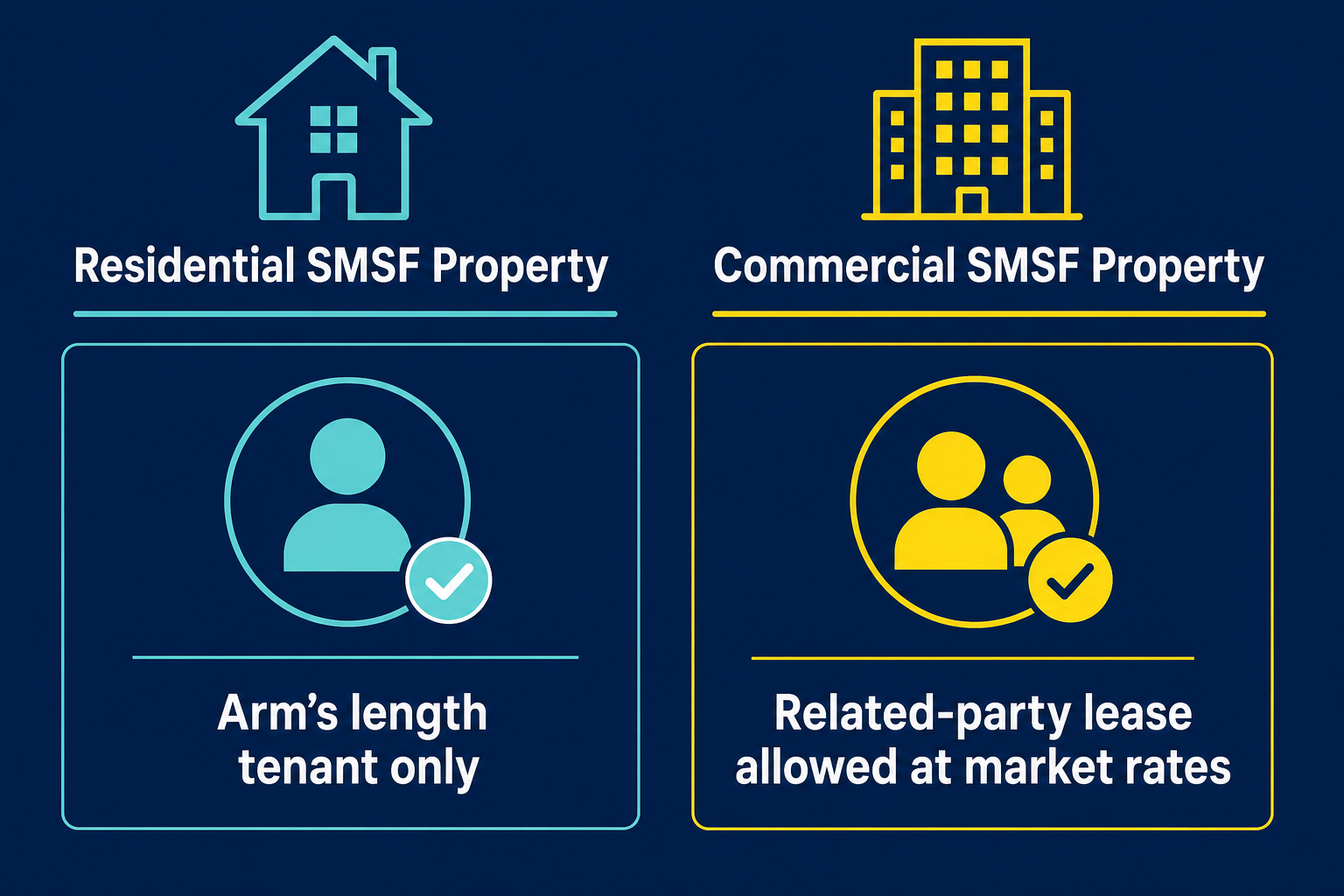
Step-by-step checklist before acting
Before taking any steps toward purchasing property through an SMSF, working through a structured pre-purchase checklist reduces the risk of costly errors.
Pre-purchase SMSF property checklist:
- Obtain personal financial advice from a licensed financial adviser who specialises in SMSF structures
- Confirm your fund's current balance and whether it is sufficient to support a property purchase without creating liquidity risk
- Review and update the fund's written investment strategy to reflect the intended acquisition
- Engage a specialist SMSF solicitor to establish the bare trust structure before exchanging contracts
- Confirm the property meets the sole purpose test and is not connected to any related-party arrangement that would breach the rules
- Check whether LRBA lending is required and engage a lender familiar with SMSF loan products (the SMSF lending market is significantly smaller than the standard residential mortgage market)
- If using a related-party loan, confirm the interest rate and loan terms are consistent with the ATO's safe harbour guidelines under PCG 2016/5
- Commission an independent property valuation to confirm the purchase price reflects market value
- Complete thorough property due diligence covering building and pest inspections, title searches, zoning, and rental comparables
- Confirm the fund's annual compliance obligations, including independent audit requirements, are clearly understood before settlement
For investors wanting a broader step-by-step framework for property acquisition, the guide to buying an investment property in Australia covers the full purchase process in detail.
| Pre-Purchase Stage |
Key Action |
| Financial advice |
Engage a licensed SMSF financial adviser |
| Legal structure |
Set up bare trust before contract exchange |
| Lending |
Confirm LRBA eligibility and lender options |
| Property selection |
Conduct full due diligence and independent valuation |
| Compliance review |
Update investment strategy; confirm audit obligations |
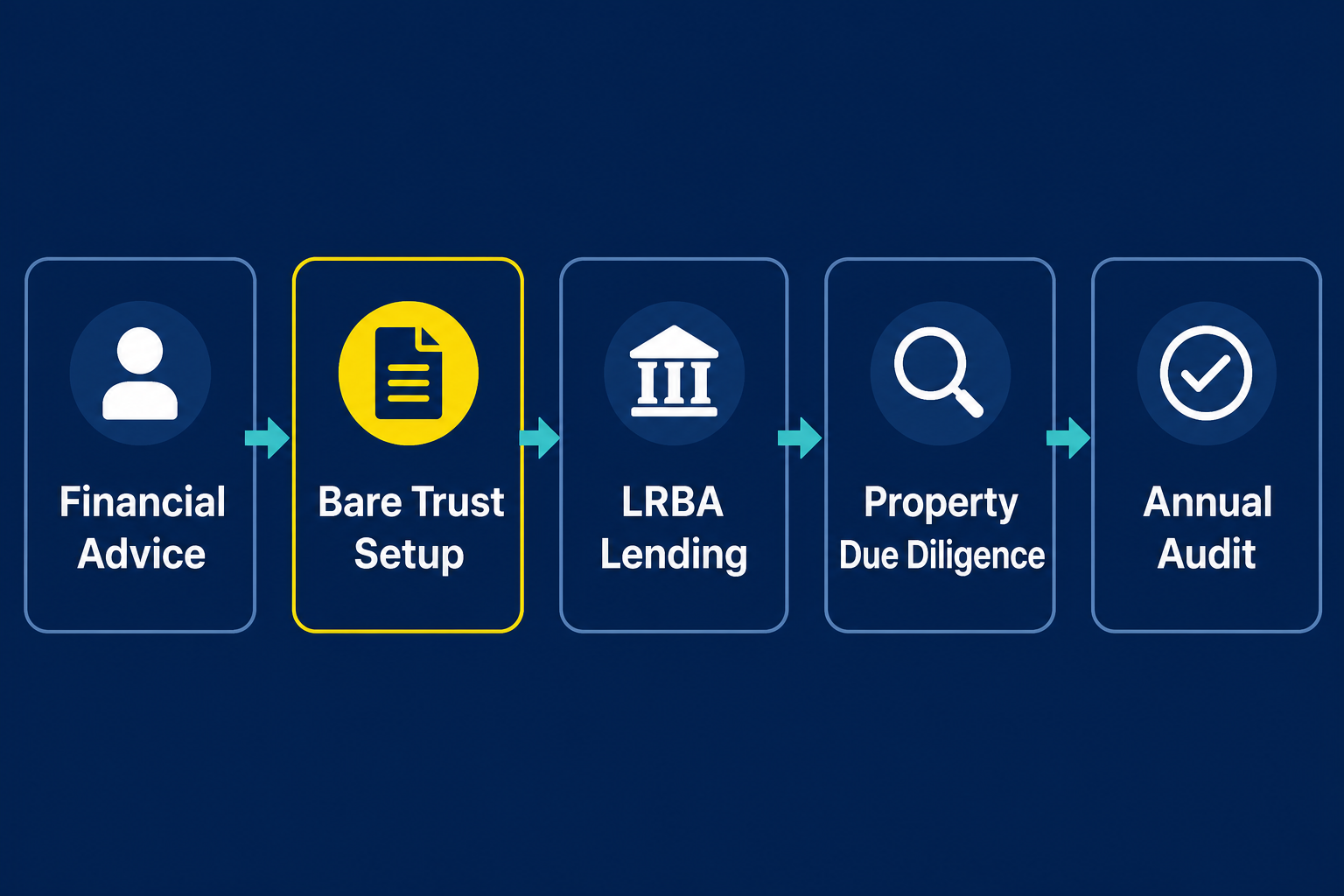
When to speak with an adviser
SMSF property is not a structure that rewards a DIY approach. The complexity of the rules, the volume of compliance obligations, and the severity of potential penalties mean that specialist advice is not optional: it is part of the process.
You should speak with a licensed professional before acting if:
- You are considering establishing an SMSF for the specific purpose of buying property
- Your existing SMSF does not currently hold property and you are evaluating whether to add it
- You are close to retirement or in the pension phase, where liquidity demands increase
- You are a business owner considering using an SMSF to hold commercial premises
- You have received a sales pitch from a property promoter encouraging an SMSF purchase without first directing you to a licensed financial adviser
The advice team you need typically includes three professionals: a licensed financial adviser who holds an SMSF authorisation, an SMSF specialist solicitor for trust structure and conveyancing, and a qualified tax agent or accountant familiar with SIS Act compliance. Each plays a distinct role, and gaps in any one area tend to create the structural problems that attract ATO scrutiny later.
At Buyers Agency Australia, the team works alongside investors who have already taken those advice steps and are ready to focus on what the property search and acquisition process actually looks like: which markets, which property types, and how to secure the right asset on the right terms. That is where a specialist buyer's agent adds genuine value within the SMSF process.
If you have done the groundwork with your advisers and are ready to map out your property strategy, book a free strategy session to talk through your situation with the Buyers Agency Australia team.
Frequently Asked Questions
Can I live in a property my SMSF owns before I retire?
No. Residential property owned by your SMSF cannot be occupied by any fund member or related party at any point before retirement. Doing so breaches the sole purpose test.
Can my SMSF buy a property from a family member?
Generally no. Residential property cannot be acquired from a related party. Business real property is a limited exception, provided the transaction is at market value and on arm's length terms.
What happens if my SMSF breaches the compliance rules?
The ATO can declare the fund non-complying, which means fund assets are taxed at 45% instead of 15%. Administrative penalties and civil or criminal liability are also possible in serious cases.
How much do I need in my SMSF before buying property makes sense?
Most specialists suggest a minimum balance of $200,000 to $500,000 before property is cost-effective inside super, as annual compliance costs can erode returns in smaller funds.
Do I need a buyer's agent when buying property through an SMSF?
A buyer's agent is not legally required, but engaging one for investment property advice and asset selection can significantly improve the quality of the acquisition, particularly for investors purchasing in unfamiliar markets.
SMSF property investing remains a genuine strategy for the right investor profile in 2026. But it demands structured advice, careful asset selection, and a clear understanding of rules that have real compliance consequences. When you are ready to move beyond the research stage, contact the team at Buyers Agency Australia to discuss how a specialist buyer's agent can support your property acquisition within a compliant, strategy-led approach.
 General
A clear guide to SMSF property investment rules in Australia for 2026, covering compliance basics, LRBA structures, and...
Brisbane's 2026 property market remains one of Australia's strongest performers, but the conditions have shifted enough that investors need a sharper lens than the broad headlines suggest. Population growth, tight supply, and Olympic-era infrastructure all remain in play, yet rising interest rates and affordability pressure mean suburb selection and portfolio fit matter more than ever.
Brisbane property outlook for 2026
Anyone tracking the Brisbane market closely knows this is no longer the underdog story it was in 2020. Median dwelling values hit $1,116,180 in April 2026 according to Cotality data, representing annual growth of 19.7 per cent that comfortably outpaces every other major capital city. That pace is moderating, but the direction has not reversed.
Bank forecasts for full-year 2026 growth range from roughly 4.4 per cent (NAB, Queensland-wide) to 12 per cent (CBA), a span that reflects genuine uncertainty about how far the current rate-hiking cycle will travel. ANZ sits at 9.7 per cent, while Westpac adopts a more measured 7 per cent view. The spread matters: investors should plan around a moderate-case outcome rather than the optimistic end.
The most useful framing is not whether Brisbane is rising, but whether growth is broad or selective. The April 2026 data shows Brisbane's southern and south-western corridors leading on annual gains, while the auction clearance rate dipped to 48.8 per cent in recent weeks, signalling that buyers are applying more price discipline even as listings remain constrained. Understanding which parts of Australia's two-speed property market are actually moving is the first question serious investors should ask before committing to a Brisbane purchase.
| Bank / Research House |
Brisbane 2026 Price Forecast |
| CBA |
+12.0% |
| ANZ |
+9.7% |
| KPMG |
+9.3% (houses +10.9%, units +7.8%) |
| Westpac |
+7.0% |
| NAB |
+4.4% (Queensland-wide) |
Sources: Major bank economic research desks and KPMG Australia, 2026.
What is driving Brisbane's investment appeal?
Four structural forces continue to make Brisbane a credible investment destination for portfolio-focused buyers.
Population growth and migration. Greater Brisbane added 58,200 residents in 2024-25, a 2.1 per cent population growth rate that ranked second nationally behind Perth, according to ABS Centre for Population data. Of those arrivals, 33,900 came from overseas migration and 11,100 from interstate, predominantly from NSW. The Centre for Population projects Greater Brisbane to add around 44,000 people in 2026-27, sustaining pressure on a housing stock that is not keeping pace.
Structural undersupply. CBRE forecasts just 3,100 new inner-city dwellings per year from 2026 to 2031, a fraction of what demand implies. Construction costs are up substantially over five years, builder insolvencies continue to restrict the pipeline, and Queensland dwelling approvals have been volatile, trending flat rather than accelerating. The gap between population growth and completions is widening, not closing.
Tight rental conditions. Brisbane's vacancy rate sat at just 0.8 per cent in April 2026 according to SQM Research, well below the 2 to 3 per cent range typically associated with a balanced market. Annual rent growth of 6.7 per cent matched Perth as the highest of any Australian capital. For investors targeting both yield and capital growth, Brisbane's rental market currently delivers a stronger income profile than Sydney or Melbourne.
2032 Olympics infrastructure. Projects including Cross River Rail, Brisbane Metro, and broader venue precinct upgrades represent a multi-billion-dollar city-shaping pipeline. The infrastructure story is real, but it warrants care: not every suburb benefits equally, and delivery timelines can shift. The Olympics accelerates what was already happening rather than replacing fundamental asset selection.
For a broader view of how these tailwinds compare across markets, the top property investment hotspots and strategies for 2026 provides useful context on where Brisbane sits relative to Adelaide, Sydney, and Melbourne.
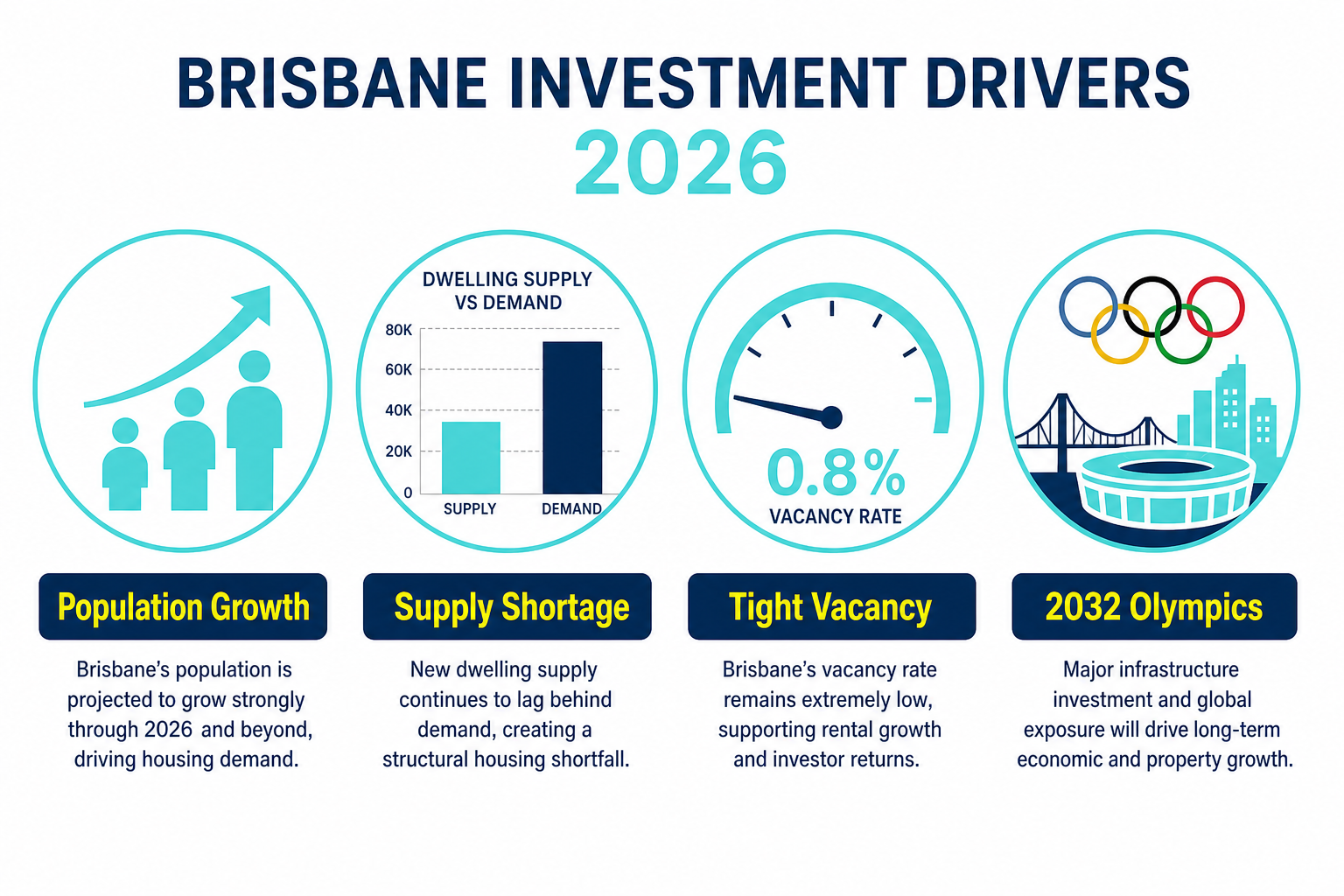
Key risks investors should weigh before buying
Brisbane is not a risk-free market, and the current environment carries headwinds that were not present three years ago.
Interest rate pressure. The RBA raised the cash rate to 4.35 per cent in May 2026, the third consecutive hike of the year, fully unwinding the cuts made in 2025. Each 0.25 per cent move trims roughly $12,000 off a single-income borrower's capacity, and the cumulative three hikes in 2026 have meaningfully eroded what investors can borrow. APRA also activated DTI limits in February 2026 that cap high-DTI lending at 20 per cent of an authorised deposit-taker's new mortgage book, adding another layer of credit constraint for investors carrying existing debt.
Affordability ceiling. Brisbane's median house value has roughly doubled since early 2020. At over $1.2 million, the city is no longer an affordable alternative to Sydney for most interstate migrants. A narrower buyer pool means price growth depends more on local demand dynamics and less on the migration tailwind that drove the prior cycle.
Oversupply in specific segments. Not all Brisbane product is equal. Off-the-plan apartment stock in certain inner-city precincts carries higher vacancy risk and valuation risk at settlement, particularly where developer pipelines have been running hard. Established houses and well-located townhouses with genuine owner-occupier appeal are a different story. Treating the Brisbane market as a single entity is one of the most common mistakes investors make.
Softening auction results. Clearance rates below 50 per cent suggest that vendor and buyer price expectations are diverging in some segments. Days on market for prestige stock are extending. Neither signal points to a sharp correction, but they do indicate that the exceptional seller conditions of 2024 and early 2025 are fading.
Before committing capital, investors should work through a thorough property investment due diligence checklist that covers contract terms, building and pest, strata records, rental history, and local planning constraints. In a market where the margin for error is thinner, due diligence is not optional.
Which Brisbane areas may suit different strategies?
Different investment goals point toward different parts of Greater Brisbane. Broad suburb recommendations in any market can age quickly, so the following is offered as a strategic framework rather than a shortlist.
Established inner and middle-ring suburbs (5 to 15 km from CBD). Suburbs with genuine lifestyle appeal, character housing stock, and strong owner-occupier demand tend to hold value through rate cycles because the buyer pool is more diverse. These areas trade at premium prices, but the track record on capital growth and resale liquidity is stronger. Investors with a long holding period and sufficient serviceability buffer are most suited here.
Middle-ring affordability pockets (10 to 20 km from CBD). The April 2026 data shows Brisbane's strongest annual gains concentrated in the southern and south-western corridors, where buyers priced out of closer suburbs have been redirecting demand. Logan, Moreton Bay, and parts of Redland City continue to attract buyers seeking more value per dollar. Gross rental yields in some of these pockets sit between 4.5 and 5.5 per cent, offering a better income return than inner-ring houses.
Growth corridors tied to infrastructure. Suburbs near confirmed Cross River Rail stations and the Brisbane Metro network present a longer-horizon opportunity. The key qualifier is "confirmed": investors should distinguish between projects that are funded and under construction versus aspirational proposals. Infrastructure delivery risk is real, as Cross River Rail's own timeline and cost history demonstrates.
Units and townhouses for yield. Brisbane unit values posted 22.6 per cent annual growth to April 2026, outpacing houses over that period. Units also offer a lower entry point at around $876,000 median, with gross yields in desirable pockets running 5 to 5.5 per cent. New off-the-plan product in oversupplied precincts is a different risk profile to established, well-located units with proven rental demand.
For investors considering a dual-income structure to boost cash flow, dual income properties in Australia can be a relevant strategy in the right Brisbane context.
How to assess whether Brisbane still fits your portfolio
The question "is Brisbane a good investment?" is less useful than "does Brisbane fit my portfolio right now?" The following framework helps answer that more precisely.
Borrowing capacity and buffer. With the cash rate at 4.35 per cent and APRA stress-testing loans at three per cent above the actual rate, an investor's real assessment rate is approaching 10 per cent. Any purchase analysis should model holding costs at current rates, not at a hoped-for future rate cut. A meaningful cash-flow buffer, typically three to six months of holding costs, is prudent in the current environment.
Holding period. Brisbane's structural supply-demand imbalance points to continued price support over a medium to long horizon. Investors with a minimum five-year holding period are better placed to absorb short-term rate pressure and any interim softening. Those looking for a 12 to 18-month flip face a very different risk profile than they would have in 2022.
Yield expectations. Houses are returning gross yields of approximately 3.1 per cent, while units sit closer to 3.9 to 5 per cent depending on location. Investors targeting neutral or positive cash flow need to focus on the higher-yield segments, which generally means middle-ring units and townhouses rather than prestige houses.
Diversification fit. For investors already holding Sydney or Melbourne assets, Brisbane can add geographic and cycle diversification to a portfolio. For investors with concentrated Brisbane exposure, the more useful question may be whether a second or third Brisbane property adds diversification or compounds concentration risk.
For a structured view of how Brisbane fits within broader Australian market conditions, the property investment trends shaping 2026 covers the macro forces most relevant to this decision.
| Investor Profile |
Brisbane Suitability (2026) |
Key Consideration |
| Long-term (5+ years), strong serviceability |
High |
Focus on established suburbs with owner-occupier demand |
| Yield-focused, middle-ring budget |
Medium-High |
Units and townhouses in 10-20 km ring |
| Short-term (under 3 years) |
Lower |
Rate cycle and softening auction conditions add timing risk |
| Already Brisbane-heavy portfolio |
Reassess |
Consider diversification before adding more Queensland exposure |
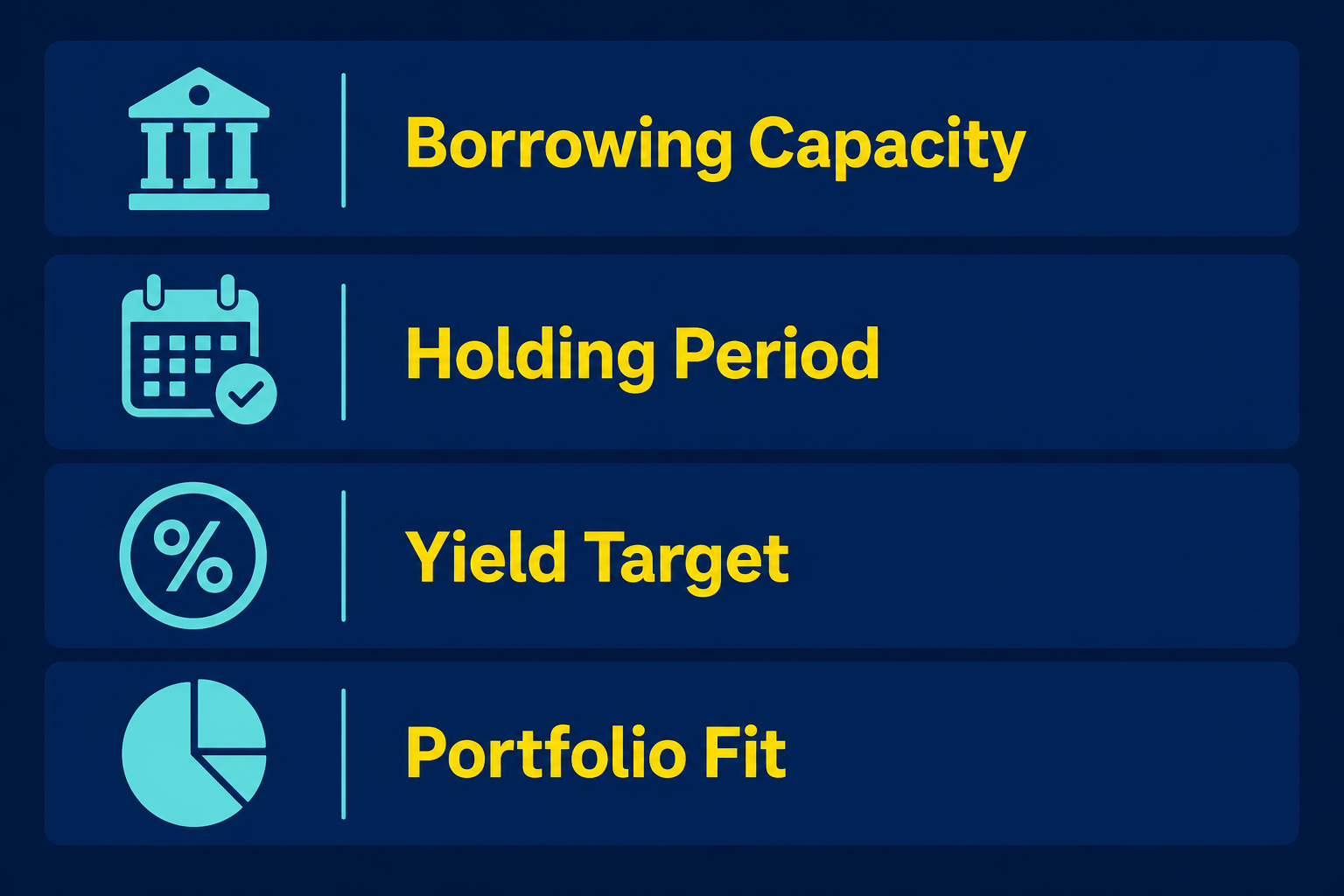
When to work with a buyers agent in Brisbane
The conditions that made Brisbane an easy "set and forget" decision in 2021 have passed. Selecting the right suburb, the right asset type, and the right price in a market where the margin for error has narrowed is where expert guidance genuinely earns its place.
A buyers agent in Brisbane working exclusively on the buyer's side brings three distinct advantages in the current market. First, access to off-market and pre-market opportunities: a meaningful share of well-located Brisbane properties transact before public listing, and agents with established selling agent relationships can surface stock that never appears on portals. Second, suburb-level due diligence grounded in current data, rather than twelve-month-old headlines. Third, negotiation discipline at a time when vendor expectations and buyer capacity are diverging, which is precisely when securing the right price requires experience rather than optimism.
Dragan Dimovski, the principal of Buyers Agency Australia with over 20 years of property experience, works with investors nationally to build portfolios built around strategy rather than sentiment. The approach covers initial goal-setting through to settlement support, with fixed-fee positioning that keeps incentives aligned with the buyer rather than the sale price.
For investors questioning whether Brisbane suits their specific financial position, holding period, and portfolio composition, the most useful step is a structured conversation before committing to search. Book a free strategy session to map out whether Brisbane fits your next property move, or explore the best property investment strategies in Australia for 2026 for a broader strategic framework.
Frequently asked questions
Is Brisbane property still a good investment in 2026?
Brisbane remains one of Australia's stronger markets in 2026, with solid population growth and tight supply. Asset selection and holding period now matter more than in prior years.
What are the biggest risks of investing in Brisbane in 2026?
Rising interest rates, a narrowing buyer pool due to affordability, and oversupply in some apartment precincts are the key risks investors should model before buying.
What rental yield can I expect from Brisbane investment property?
Houses are returning roughly 3.1 per cent gross, while well-located units and townhouses can deliver 4 to 5.5 per cent gross depending on suburb and property type.
Which areas of Brisbane offer the best investment potential right now?
Established middle-ring suburbs within 10 to 20 km of the CBD with strong owner-occupier demand and proximity to confirmed infrastructure tend to offer the strongest fundamentals.
Do I need a buyers agent to invest in Brisbane?
Not mandatory, but a strategy-led buyers agent provides off-market access, independent due diligence, and negotiation support that is increasingly valuable as Brisbane's market becomes more selective.
General
A balanced, data-backed look at Brisbane's 2026 investment case, key risks, area strategies, and when to engage a...